|
Design Principle |
How the Best Checkout Pages Apply It |
|
Speed and simplicity |
Fewer fields, single-page flows, address autofill, fast loading |
|
Transparency |
Full costs shown early, delivery dates confirmed before payment |
|
Trust at the point of action |
Security badges, reviews, and return policies placed next to payment fields |
|
Flexibility |
Multiple payment methods, guest checkout, saved details for return visits |
How KwikAds helped Shop Unrush boost ROAS by 37% in 3 months
How KwikAds helped Shop Unrush boost ROAS by 37% in 3 months
How KwikAds helped Shop Unrush boost ROAS by 37% in 3 months
How KwikAds helped Shop Unrush boost ROAS by 37% in 3 months
Kwik Engage
15 E-Commerce Checkout Page Design Examples To Increase D2C Conversions
 28 Mar 2026
 12 Min Read
Atul leads marketing at GoKwik, championing D2C brand building, growth strategies, scalable GTM for e-commerce, and data-driven customer acquisition. A former Amazon leader and IIFT MBA alumnus based in Bengaluru, he brings 15+ years scaling business across e-commerce, and fintech.
Read this blog on your favourite platform
Every online shopping journey leads to one destination. The payment screen is the ultimate test of your store interface. A confusing layout pushes shoppers away at the most critical moment, and a seamless experience secures revenue that your marketing budget already paid for.
Finding the perfect E-Commerce checkout page design requires careful planning. Many D2C founders struggle to balance aesthetics with functionality. They often clutter the screen with unnecessary fields or hide crucial shipping information. These friction points destroy consumer trust.
Studying the best checkout pages across industries reveals patterns that recur in every high-performing store. Top retailers consistently prioritize speed, transparency, mobile responsiveness, and payment flexibility above everything else.
In this guide, we explore 15 checkout page examples from leading brands, extract the design decisions that make each one work. We will also see how Kwik Checkout transforms your payment flow into a high-converting machine.

What Makes a High-Converting Checkout Page?
Before reviewing the best checkout page examples, you must understand the core elements driving their success. Most of the great checkout page design ideas always incorporate these critical pillars:
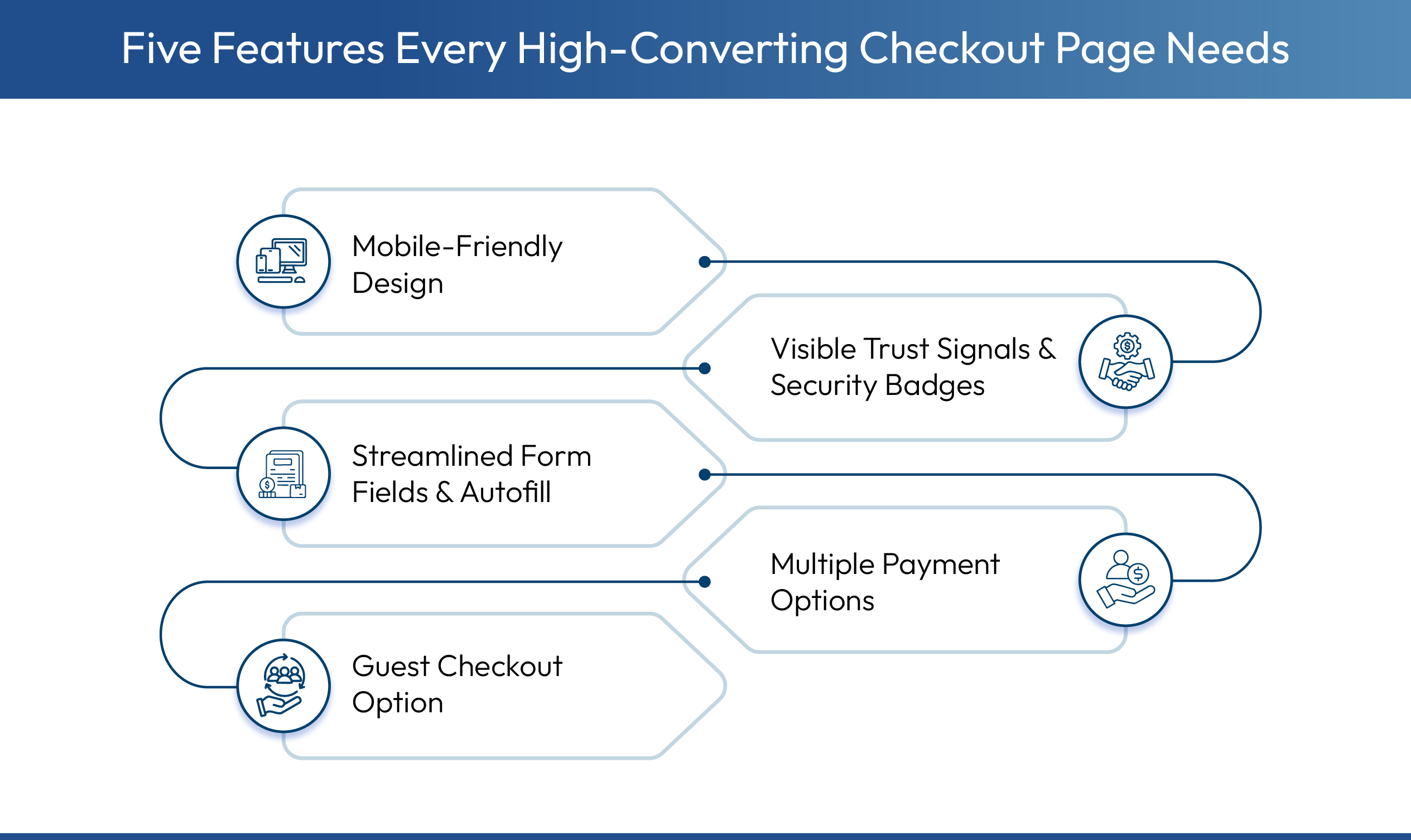
- Guest Checkout Availability: Forcing users to create an account before paying creates unnecessary friction and slows down first-time buyers. Offering a guest checkout option removes that barrier immediately, respects the customer's time, and keeps purchase momentum intact.
- Frictionless Form Fields: Long checkout forms overwhelm shoppers, particularly on mobile, where typing is slower, and errors are more common. Using address autofill, minimal required fields, and smart input formatting significantly reduces the time to complete a purchase.
- Transparent Pricing Breakdown: Hidden fees destroy consumer trust instantly. Displaying exact shipping costs and taxes upfront prevents unpleasant surprises at the final payment step.
- Visible Trust Signals: Shoppers hesitate before entering payment details on an unfamiliar storefront, and that hesitation costs real money. Adding SSL certificate badges, recognized payment icons, and a clear returns policy directly on the checkout page makes users feel secure.
- Mobile Optimization: A majority of Indian ecommerce orders are placed on smartphones, making the mobile-first checkout process a crucial revenue requirement. A checkout page that fails on mobile loses the largest share of your traffic before a single payment is processed.
15 Checkout Page Examples for Design Inspiration
The right checkout page design inspiration comes from studying how real brands handle real buyer psychology. These 15 checkout page examples are grouped by the primary design strategy each one executes best.
Minimalist and Single-Page Checkout Designs
These checkout page designs prove that removing elements often converts better than adding them.
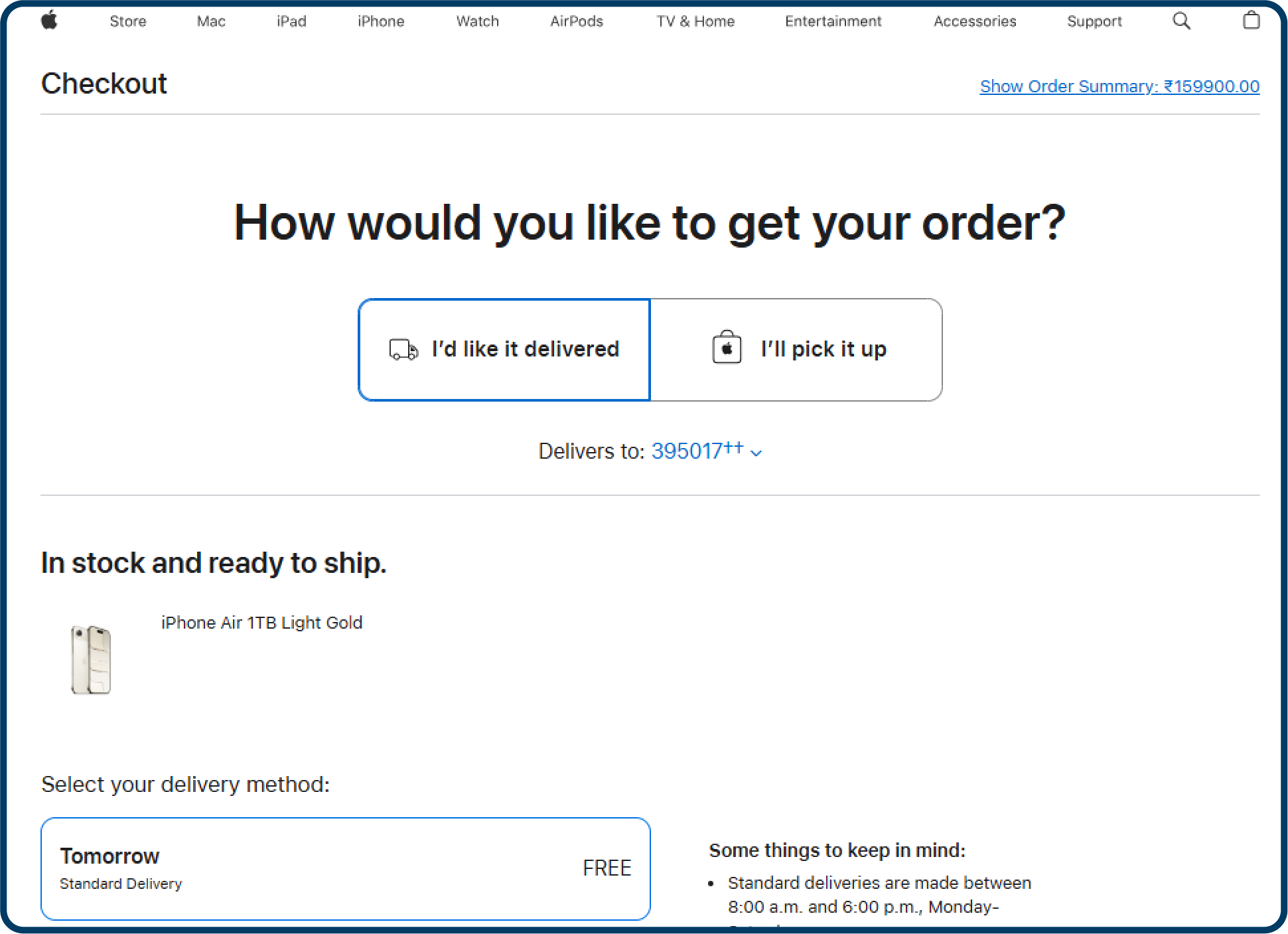
- Apple: Apple strips every non-essential element from the checkout screen and keeps the order summary visible throughout the entire flow. No promotional banners, no account creation pressure, and no visual clutter compete with the payment action. The shopper focuses entirely on completing the order, and that clarity alone drives higher completion rates.
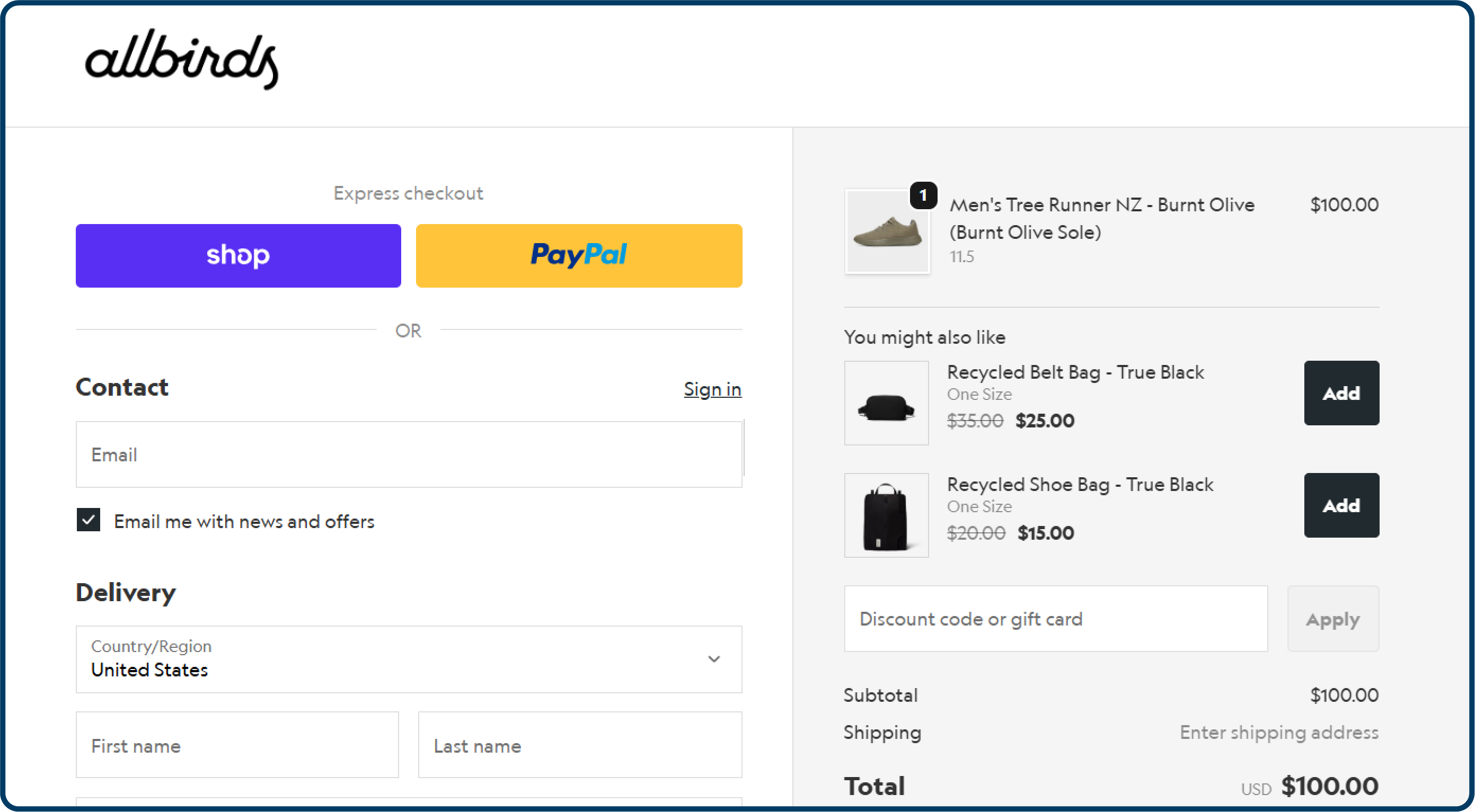
- Allbirds: Allbirds carries its sustainability identity directly into the checkout page, reinforcing the values that motivated the purchase. A visible carbon-neutral offset note sits beside the payment form, giving eco-conscious shoppers an additional reason to follow through. The distraction-free layout signals that the brand respects the shopper's time.
Mobile-First E-Commerce Checkout Pages
These ecommerce checkout pages are engineered for the thumb, not the mouse.
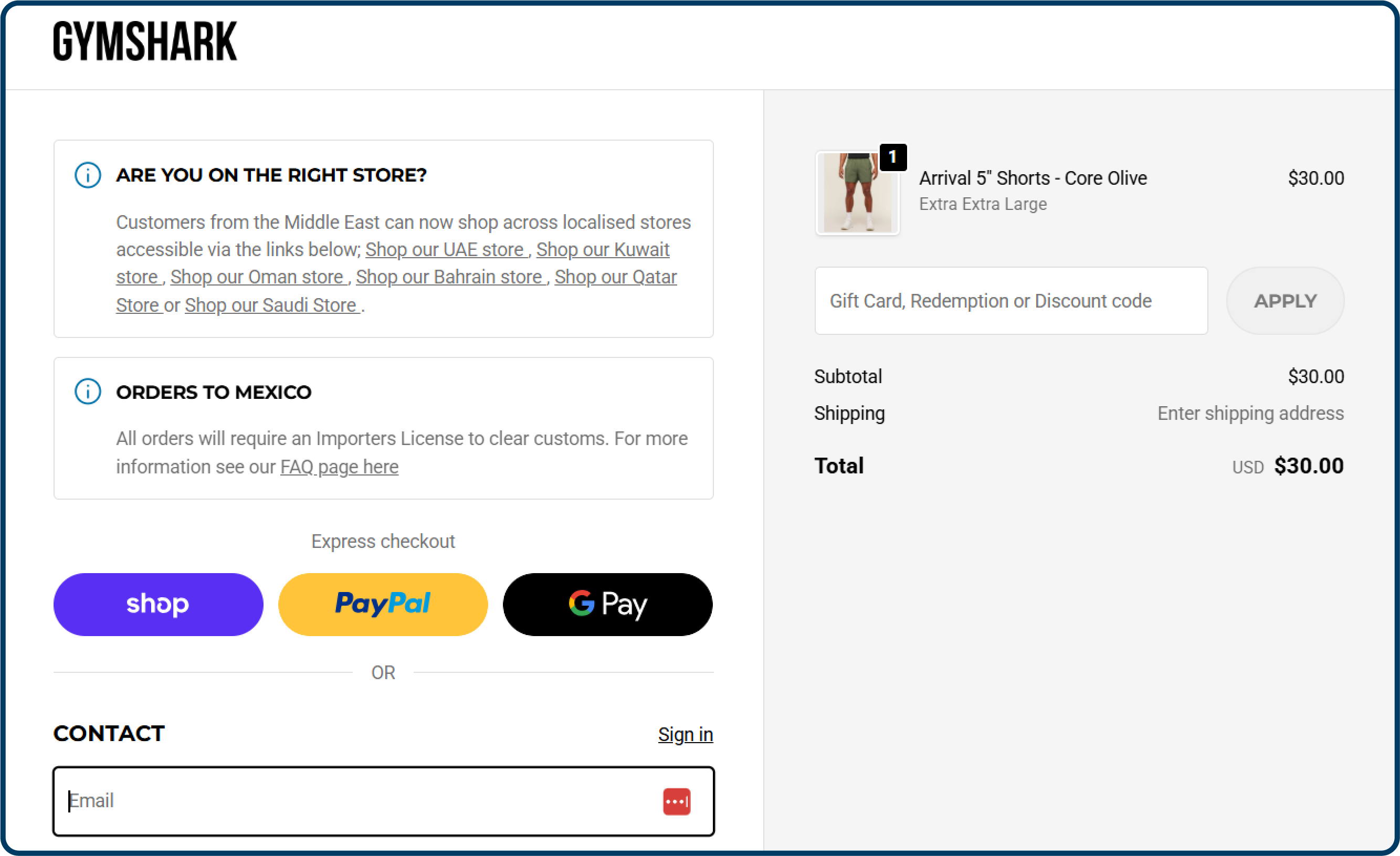
3. Gymshark: Gymshark leads with express payment options at the very top of the screen, letting mobile shoppers skip the form entirely. The single-column layout flows naturally for one-handed use, the CTA stays fixed at the bottom, and real-time validation flags errors as the shopper types rather than after submission.
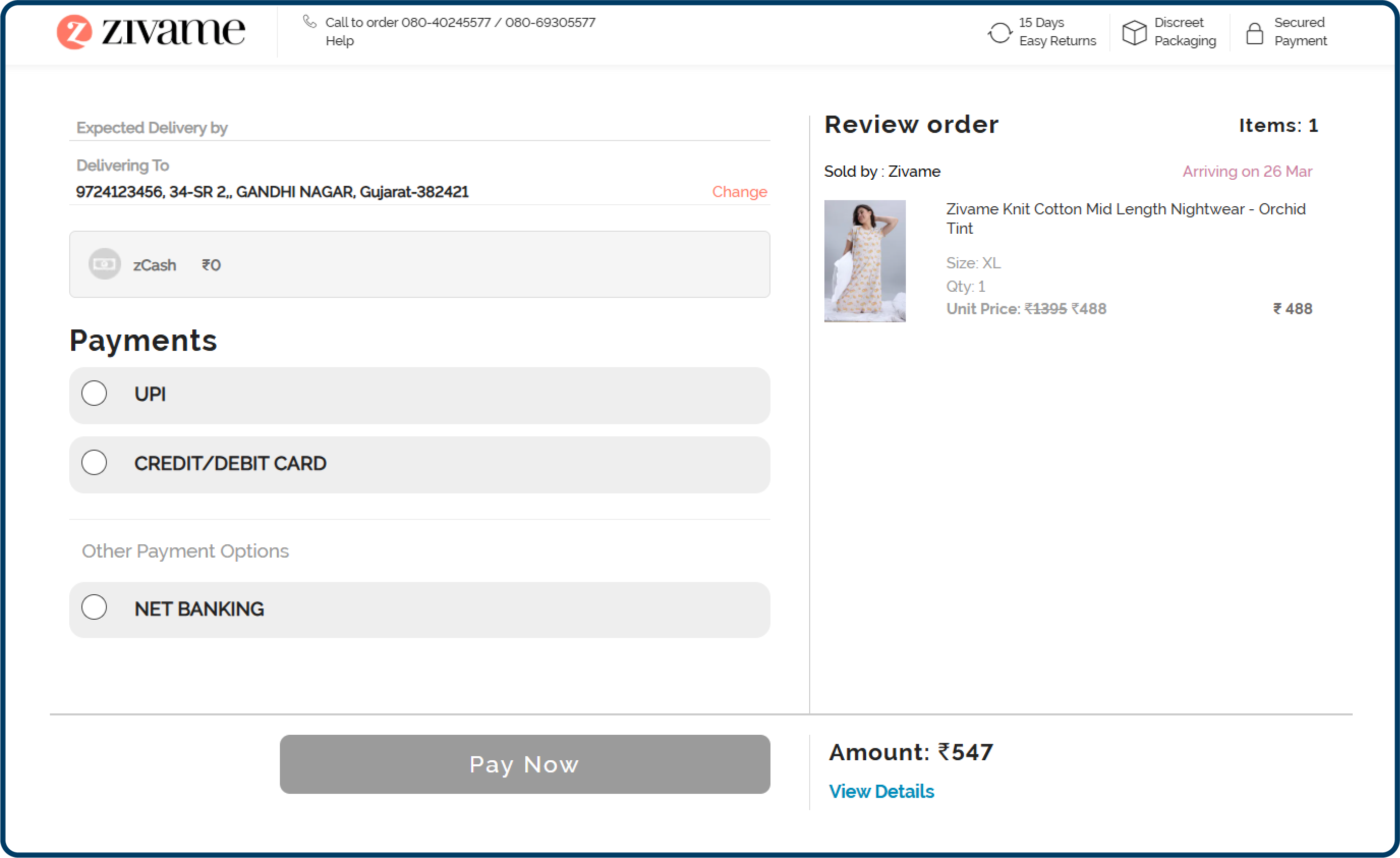
4. Zivame: Zivame treats guest checkout as the default path, which removes a significant barrier for first-time shoppers browsing without an account. Account creation is offered only on the confirmation screen after the transaction is complete. This sequence captures the same customer data without blocking the purchase at any point.
Trust-Building Checkout Page Designs
These checkout page designs place confidence-building signals exactly where purchase hesitation is highest.
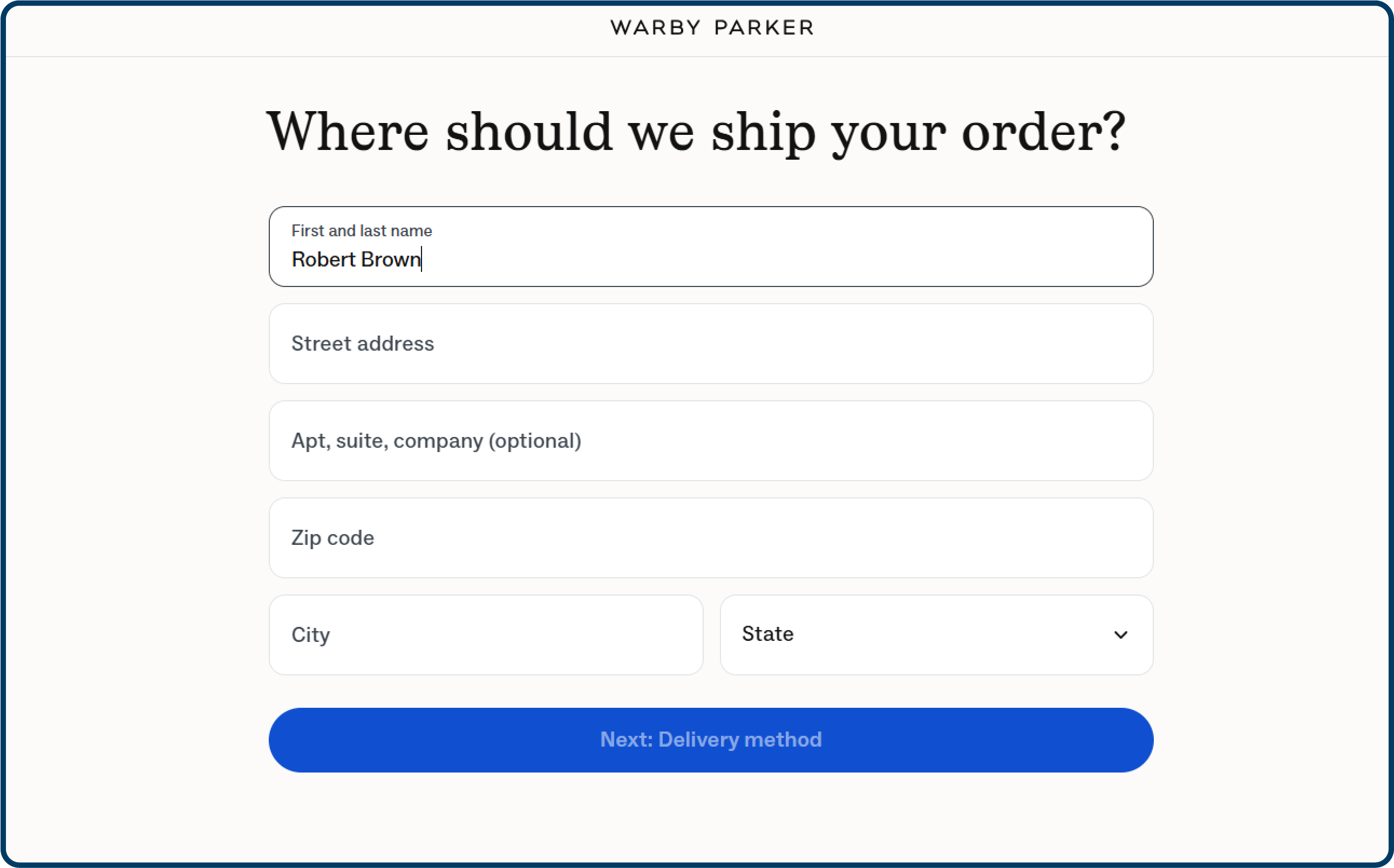
5. Warby Parker: Warby Parker places its SSL badge and PCI compliance icon directly beside the card number field, addressing security concerns at the exact moment they arise. The returns policy is stated in plain language on the same screen. A live chat icon lets shoppers resolve last-minute questions without leaving checkout.
6. Mamaearth: Mamaearth carries social proof into the checkout order summary by displaying star ratings and bestseller labels beside each item the shopper is about to pay for. These signals address second-guessing that triggers late-stage abandonment. A post-purchase referral prompt on the confirmation screen turns every completed sale into an acquisition opportunity.
_1774332671.png)
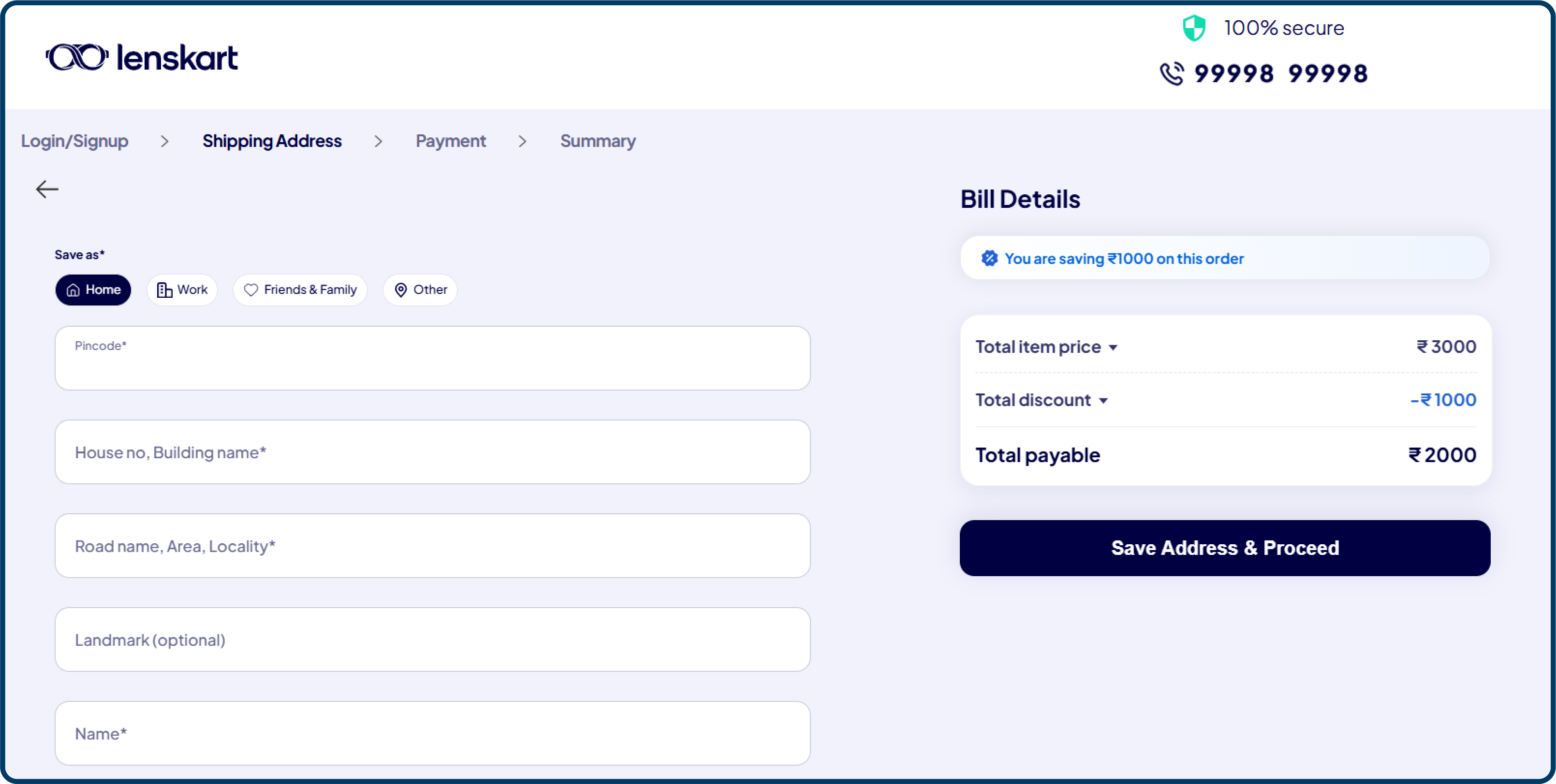
7. Lenskart: Lenskart shows an estimated delivery date per item before the shopper reaches the payment section, removing the timing uncertainty that drives abandonment in gifting and prescription categories. Entering a PIN code updates the delivery estimate in real time. An express delivery option with upfront pricing is available for urgent orders.
India-First and Localized Checkout Pages
These checkout page examples are designed around how Indian shoppers actually pay, not how global platforms default.
8. Levis: Levis offers a seamless checkout experience with secure OTP-login, prefilled addresses, multiple discount offers and payment options such as UPI, cards, and wallets. They use a combination of Kwik Checkout and Kwik Pass to offer frictionless checkout experience. The checkout page highlights benefits such as “Free Delivery” and discounts on different payment methods for higher conversions.
_1774330357.png)
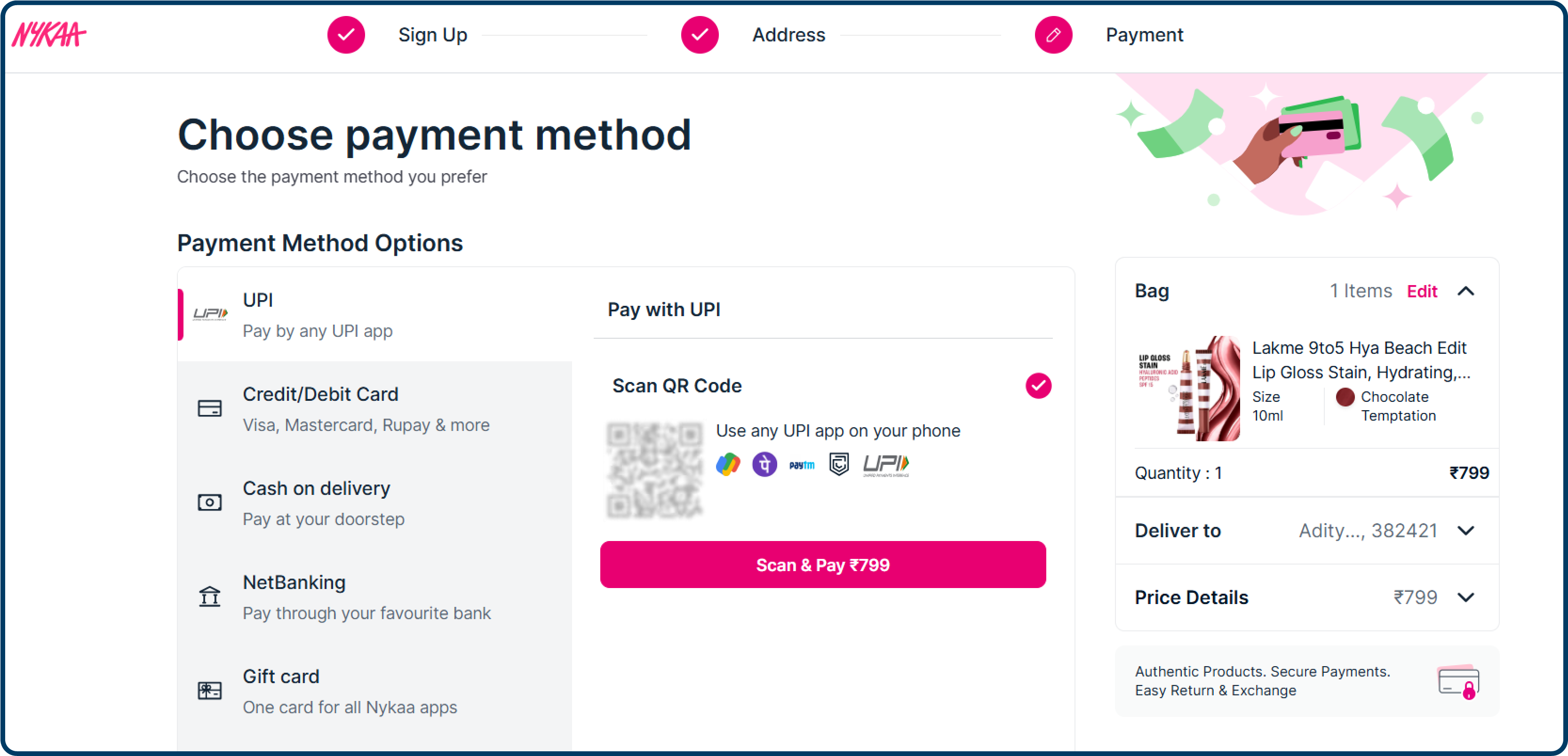
9. Nykaa: Nykaa presents UPI as the first and most prominent payment option, reflecting the actual behavior of its audience rather than defaulting to card entry. EMI options are available directly at checkout for higher-cart-value orders. Saved addresses appear as one-tap selections for returning customers, cutting repeat-buyer checkout time significantly.
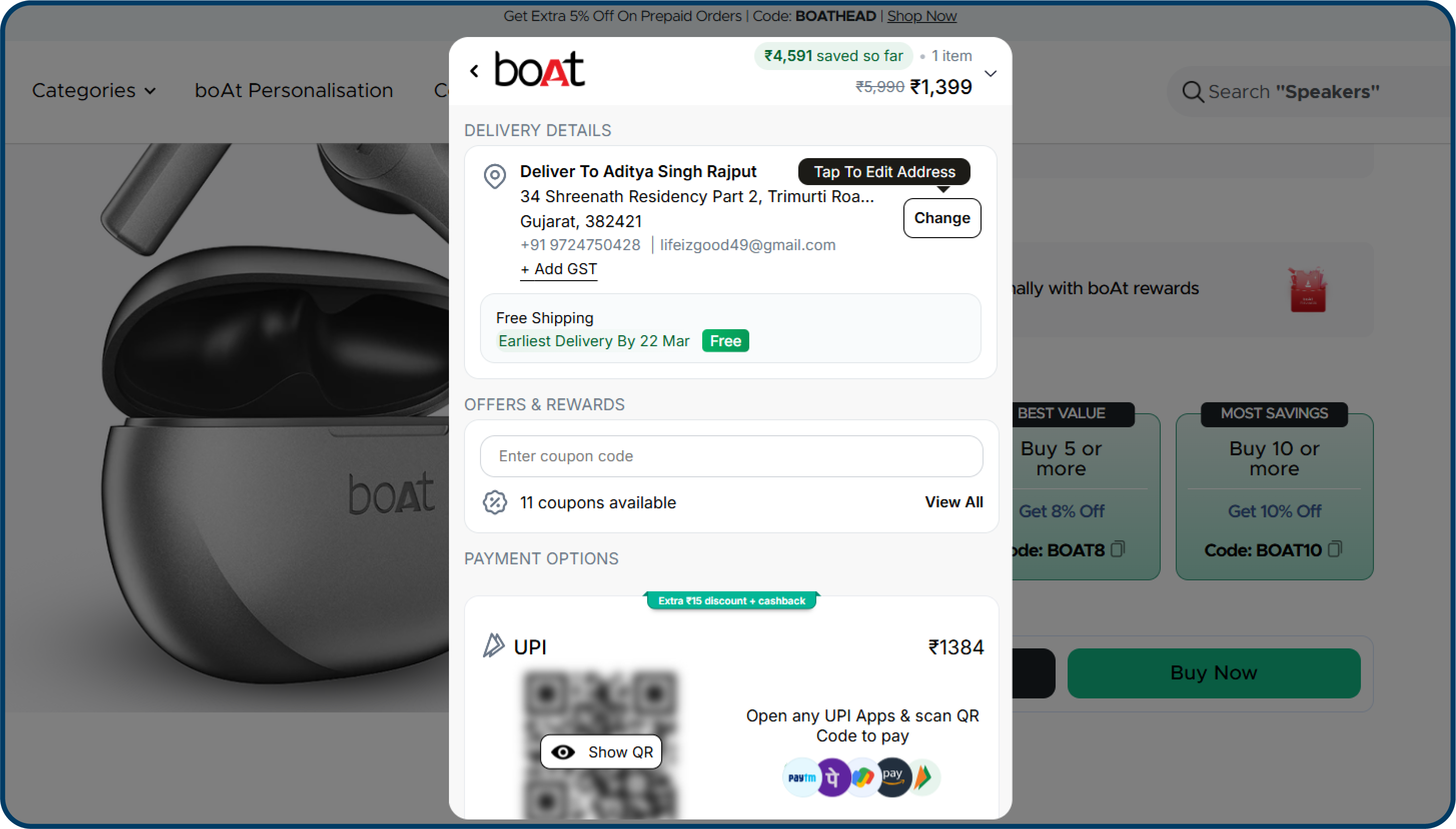
10. boAt: boAt offer one-click login to all its customers powered by GoKwik which identifies if the shopper has
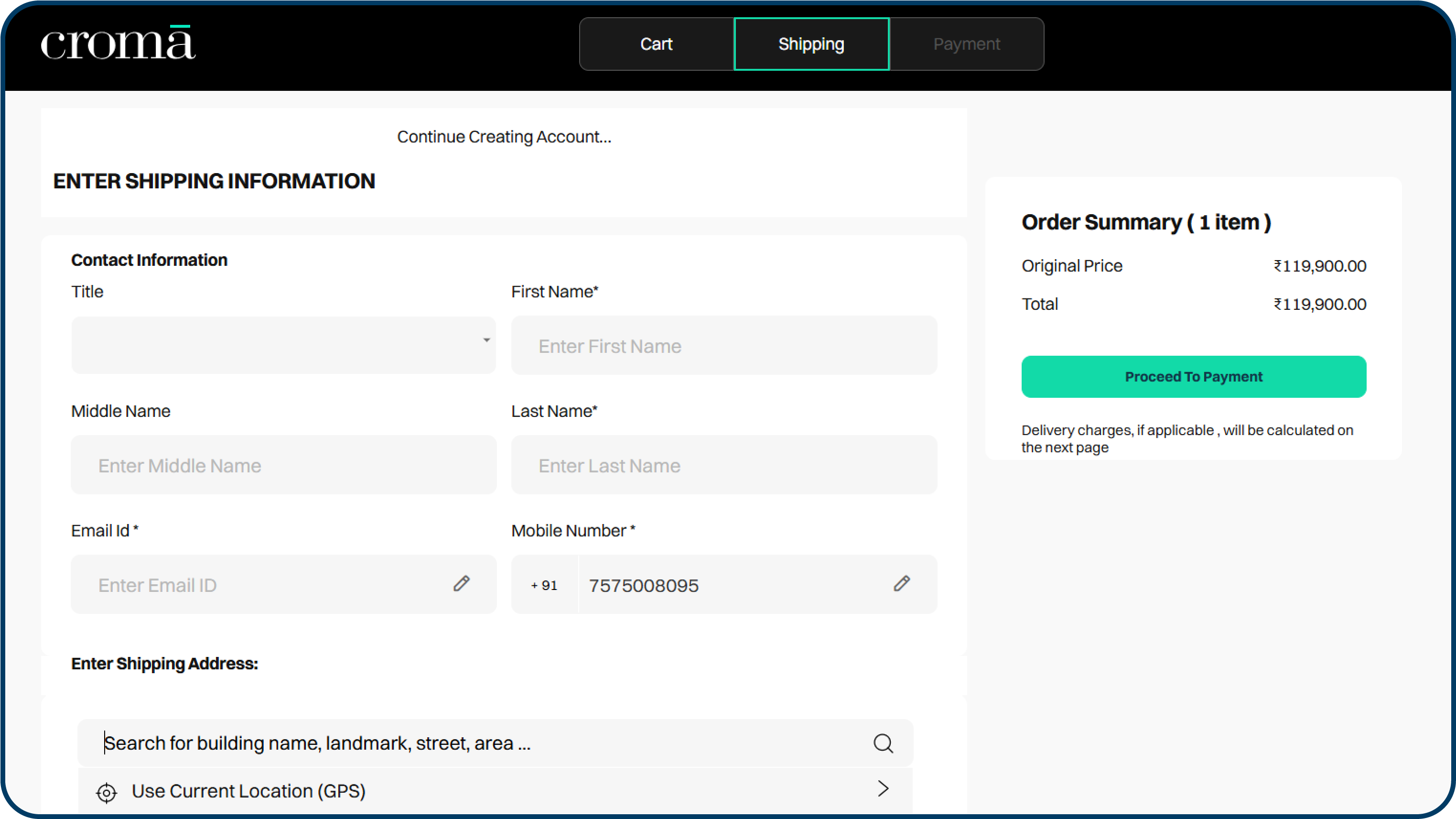
11. Croma: Croma uses a two-column layout that keeps the order summary visible on the right while address and payment forms run down the left. EMI and financing options carry the same visual weight as UPI and card. An inline warranty add-on sits within the order summary, generating revenue without a separate upsell page.
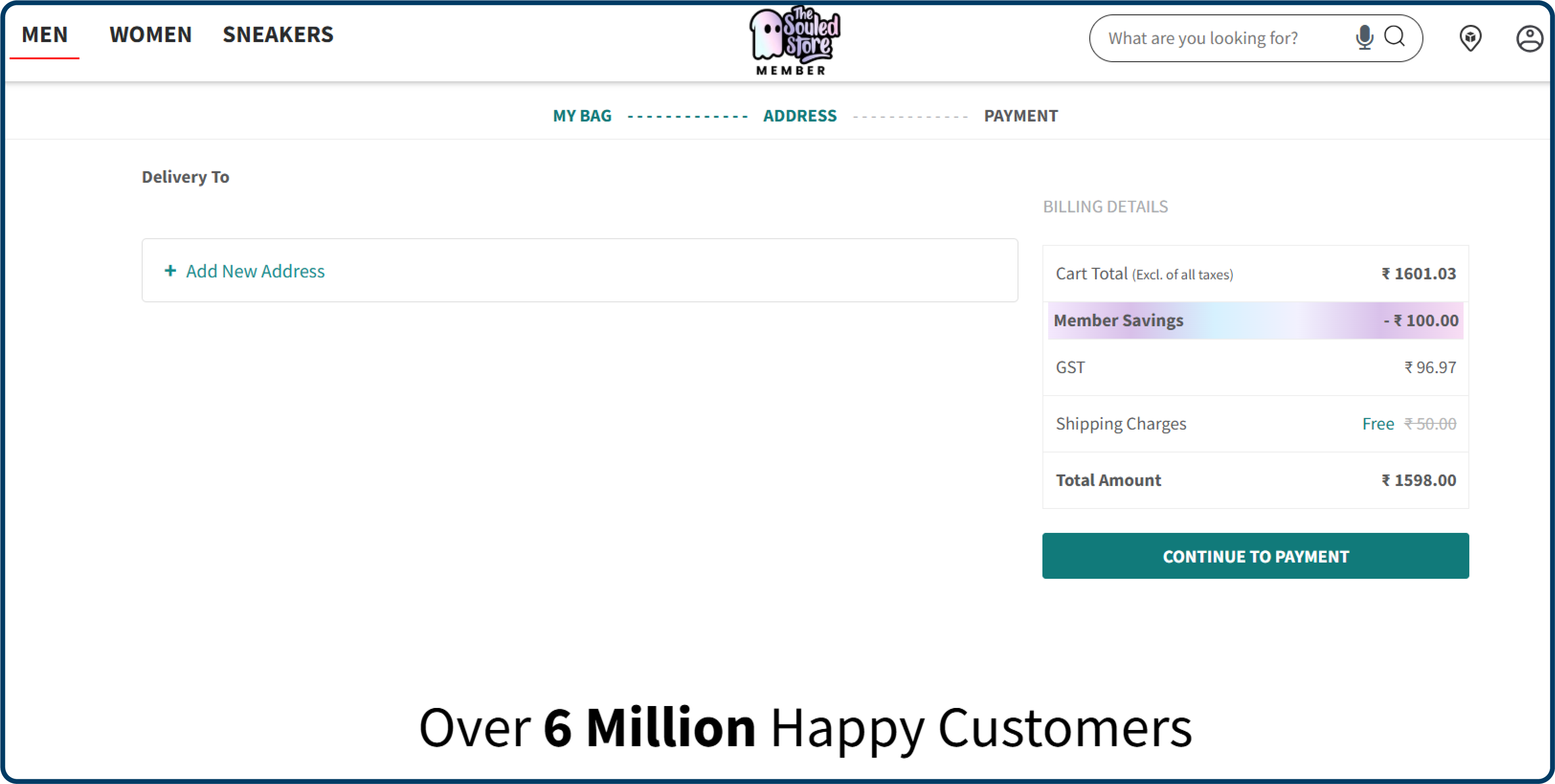
12. The Souled Store: The Souled Store maintains its casual brand voice throughout every line of checkout copy, from button labels to error messages, so the payment screen feels like a natural continuation of browsing. A loyalty points preview incentivizes order completion. A WhatsApp opt-in checkbox builds a direct marketing channel at peak purchase intent.
High-Converting Checkout Pages That Lift AOV
These checkout page designs do more than complete a transaction. They increase the value of each one.
13. Dollar Shave Club: Dollar Shave Club places a one-time price and a subscription price side by side on the checkout page, with the subscription option selected by default. The savings are immediately visible, and a plain-language ‘cancel anytime’ note removes the primary concern that stops shoppers from committing to a recurring order.
_1774330357.png)
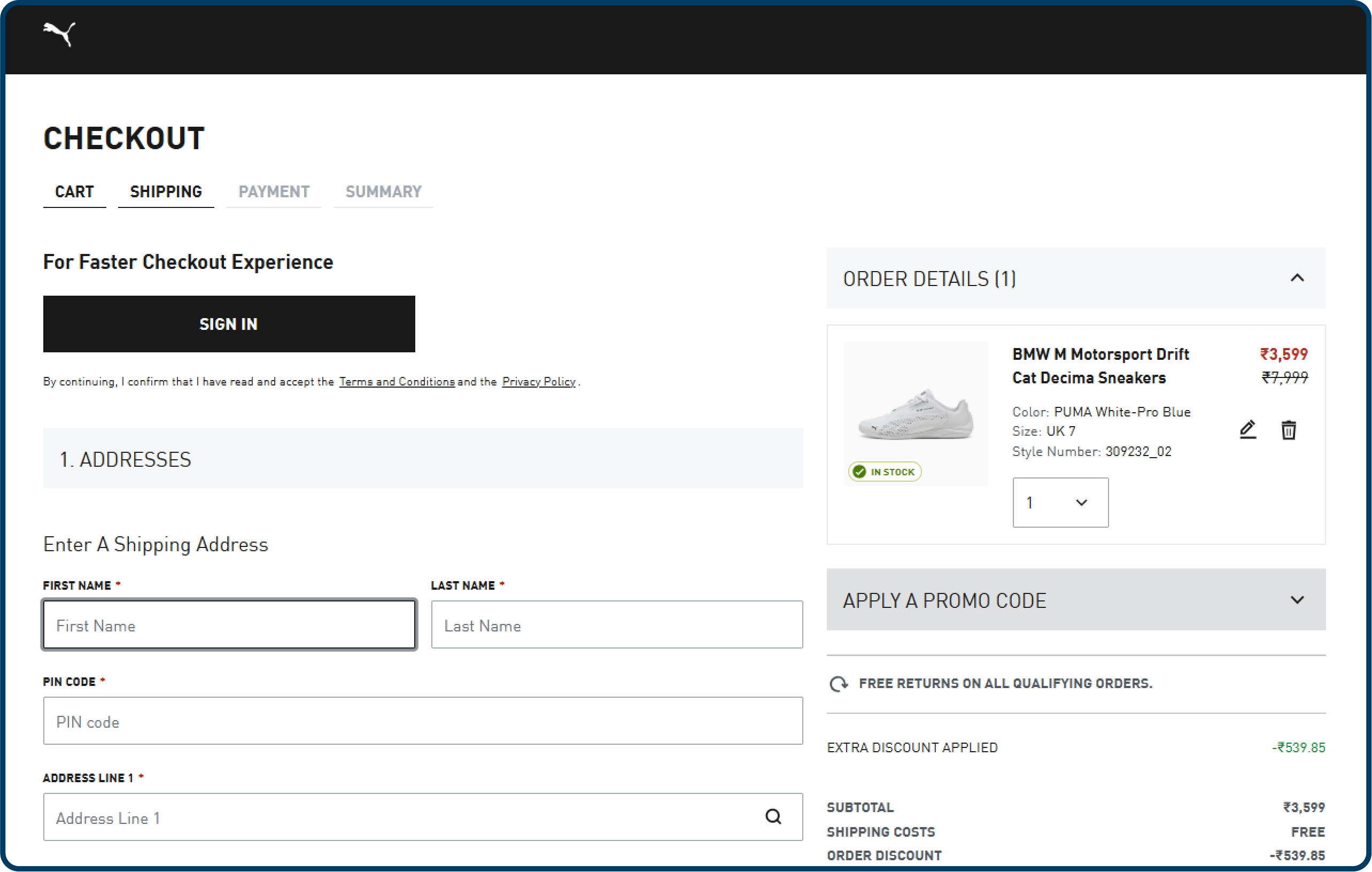
14. Puma: Puma positions its discount code field above the order total rather than hiding it behind a collapsed link. Shoppers with a promo code can apply it without searching the page. Savings reflect instantly with no page reload, and specific error messages for invalid codes tell shoppers exactly what went wrong.
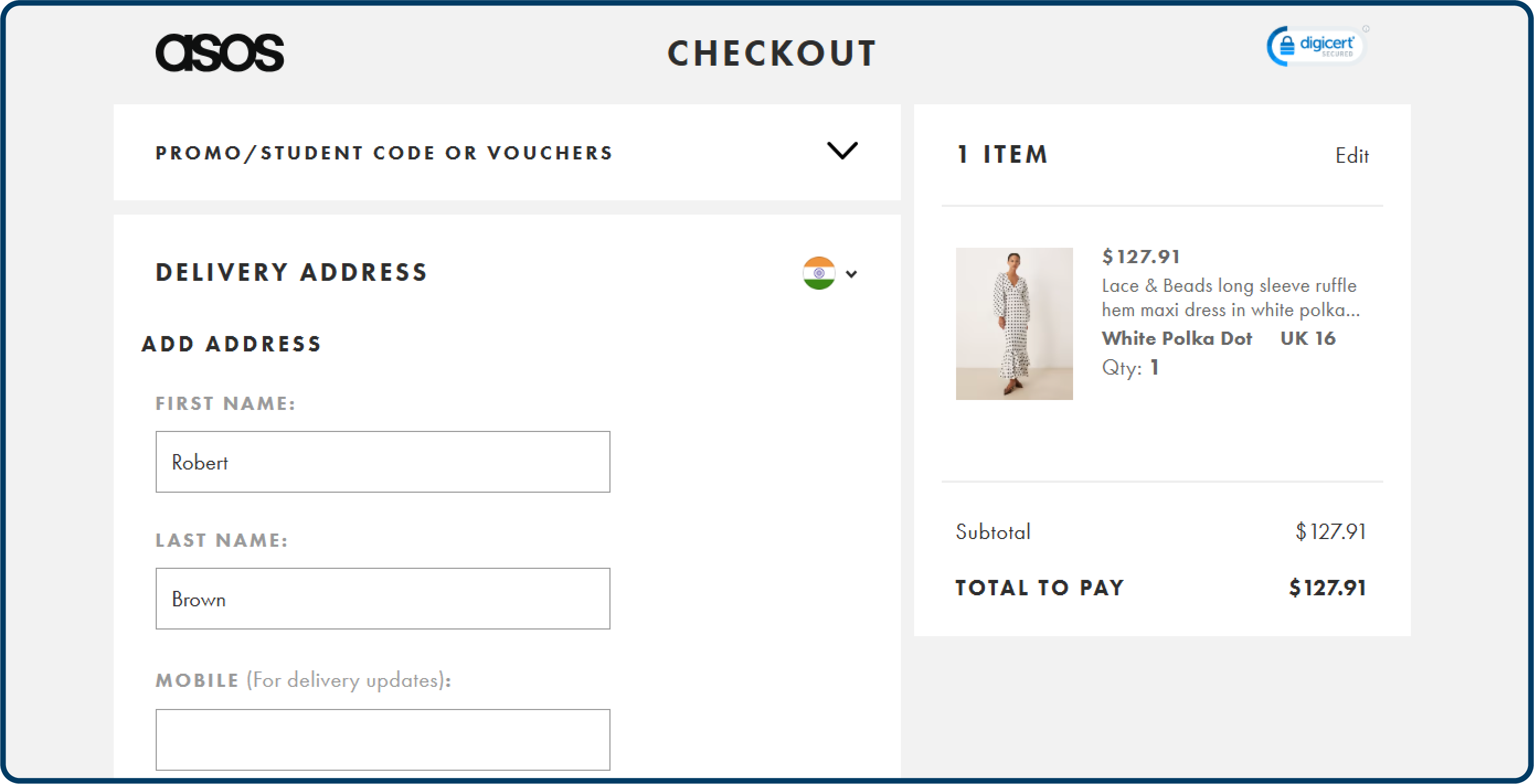
15. ASOS: ASOS uses a named progress bar across the top of the checkout screen so shoppers always know how many steps remain. Cart data is saved automatically for returning users, letting anyone who exits mid-flow pick up exactly where they left off without re-entering any details.
What Do All These Checkout Page Examples Have in Common?
Across all 15 e-commerce checkout pages, four consistent patterns emerge to define success.
These are not aesthetic preferences. Each principle maps directly to a documented cause of checkout abandonment. Stores that address all four consistently outperform those that address only one or two.
Common Mistakes Ruining Your Checkout Page UI Design
The following errors appear most frequently in underperforming ecommerce checkout pages and each one is entirely avoidable.
- Surprise Shipping Costs: Revealing delivery fees only at the final payment step gives the shopper a reason to leave at the worst possible moment. State all additional charges clearly on the product page and inside the cart view, so the total the shopper sees at checkout matches what they already expect.
- Aggressive Upselling: Stacking multiple product recommendations between the cart and payment confirmation pulls the shopper's attention away from completing the transaction in front of them. A single, contextually relevant add-on placed at the right moment in the flow lifts average order value. A wall of upsells kills the sale entirely.
- Limited Payment Options: Indian shoppers have strong preferences around how they pay, and those preferences vary significantly by age, city tier, and purchase category. Stores that default to card-only checkout or exclude UPI and Pay Later options create a mismatch that sends buyers to competitors who accommodate their preferred payment method. Understanding RTO and payment behavior across your customer base is the first step to fixing this.
- Complex Password Requirements: Requiring shoppers to create a password with specific character rules during an active purchase decision is one of the most reliable ways to lose a first-time customer. Move account creation to the post-purchase screen where the transaction is already complete and the shopper has no reason to leave.
Upgrade Your Checkout Experience With Kwik Checkout
Studying the best checkout page designs tells you what to aim for. But building those features from scratch requires significant engineering investment, ongoing maintenance, and India-specific infrastructure that most platforms do not provide out of the box.
Kwik Checkout by GoKwik gives D2C ecommerce brands immediate access to a checkout layer that applies every principle covered in this guide, without a custom build.
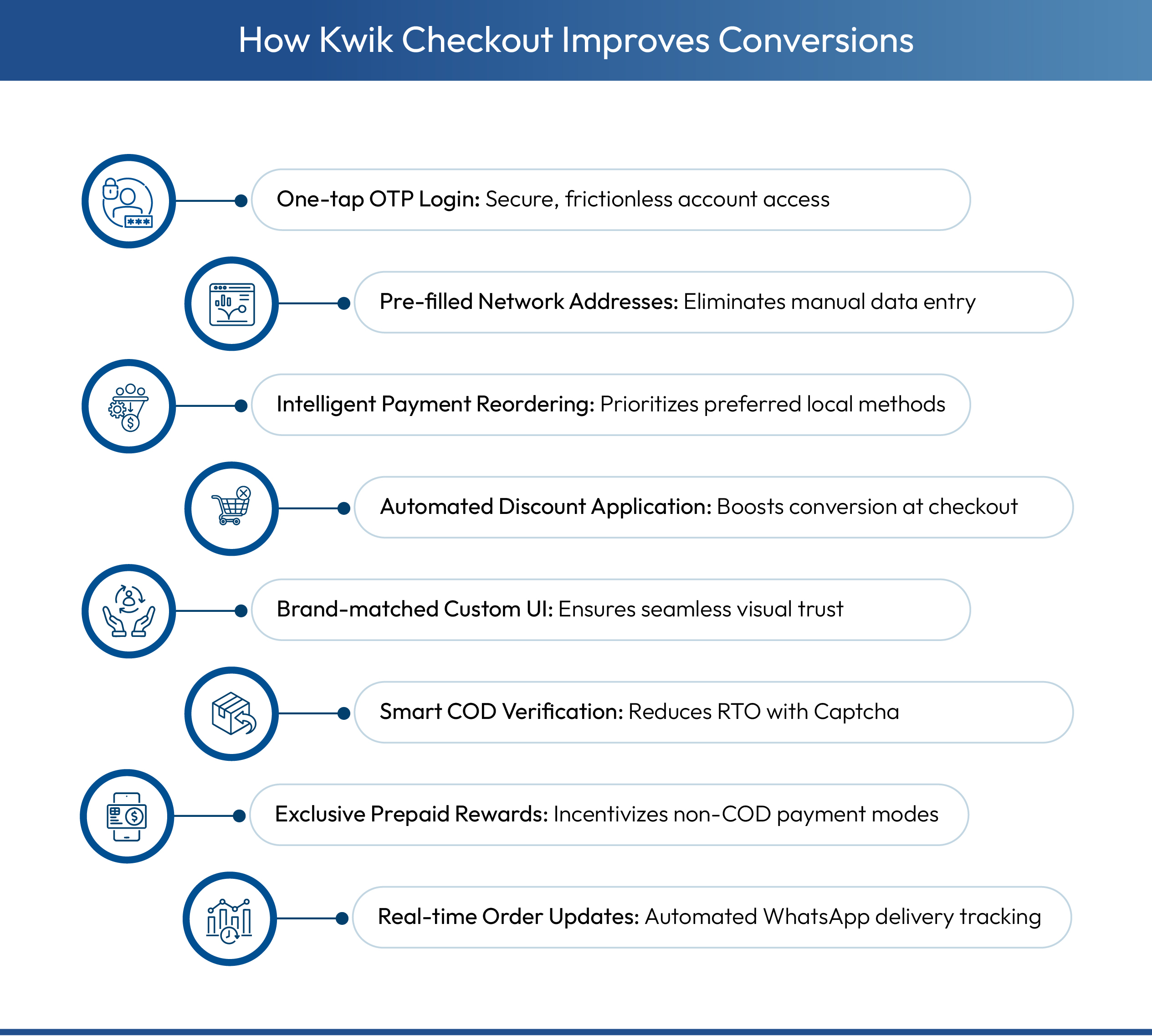
- India-First Payment Infrastructure: UPI, cards, wallets, Pay Later, and EMI options are natively supported and ordered based on the actual payment preferences of Indian shoppers. No configuration is needed to present UPI first to shoppers who prefer it over card entry.
- One-Click Checkout for Returning Shoppers: Shoppers who have previously purchased from any brand within the GoKwik network have their address, payment method, and contact details pre-filled automatically. Returning customers complete their purchase in seconds, not minutes, which is one of the most direct drivers of reducing shopping cart abandonment at the final step.
- Prepaid Order Incentivization: Kwik Checkout displays instant discount offers for prepaid orders directly on the payment screen, converting shoppers who arrived with a COD intent. This improves cash flow, reduces RTO risk, and lowers fulfillment costs simultaneously.
- RTO Risk Scoring at Checkout: GoKwik's machine learning model scores each order for return-to-origin risk in real time. High-risk COD orders are nudged toward prepaid alternatives or additional verification steps, protecting the brand's revenue without blocking genuine buyers from completing their purchase.
- Custom Checkout Page Aligned to Brand: Kwik Checkout renders as a native part of the brand's storefront with no third-party redirect. The page aligns with the brand's visual identity, which builds trust through the final payment step and removes the disorienting transition that can cause hesitation on unfamiliar checkout screens.
- Checkout Page Analytics and A/B Testing: GoKwik provides granular data on exactly where shoppers drop off, which payment methods they select, and how checkout designs perform across different segments. Brands use this data to run A/B tests on their checkout flow and optimize based on actual customer behavior rather than industry benchmarks.
Final Thoughts: Stop Losing Sales at the Finish Line
The checkout page is where your entire marketing effort gets tested. Every rupee spent on ads, content, and influencer campaigns only pays off if the shopper completes the transaction. A complicated or untrustworthy checkout page wastes that entire upstream investment in a matter of seconds.
Building beautiful checkout pages with the right payment options, transparent pricing, and a mobile-first layout does not require starting from scratch. GoKwik's Kwik Checkout provides D2C brands with checkout infrastructure already optimized for the Indian market. It is trusted by thousands of merchants and has already proven to increase conversion rates from the day it goes live.
Your next sale is one checkout away. Set up Kwik Checkout by GoKwik and convert more orders starting today.
Frequently Asked Questions
What is the checkout page?
The checkout page is the final stage of the online shopping process where a customer reviews their selected items, enters their delivery address, selects a payment method, and confirms the order. It is the most conversion-critical page on any ecommerce store because it determines whether a browsing session turns into a completed purchase.
How to design a checkout page?
A well-designed checkout page keeps form fields minimal, shows full pricing early including shipping and taxes, places trust signals directly next to the payment section, and supports multiple payment methods. Single-page layouts with address autofill and a persistent order summary consistently outperform multi-step flows in conversion rates on both desktop and mobile.
What makes a good checkout page?
A good checkout page is fast, transparent, and frictionless. It offers guest checkout, shows no hidden fees, works flawlessly on mobile, and gives the shopper enough trust signals to enter their payment details with confidence. The best checkout page designs also support local payment methods relevant to the shopper's market.
What is a checkout screen?
A checkout screen refers to the interface a shopper sees when they are ready to finalize a purchase. It includes the order summary, delivery address fields, payment selection, and the confirmation button. On mobile, this is often a single scrollable screen. On the desktop, it may follow a two-column layout separating the form from the order summary.
How does a checkout work?
When a shopper clicks "Proceed to Checkout," the store collects their delivery address, calculates applicable shipping fees and taxes, presents available payment methods, and processes the transaction through a connected payment gateway. After a successful payment, the order is recorded in the merchant's system, the customer receives a confirmation, and the fulfillment process begins.

AUTHOR
Atul Bansal
Head of Marketing