How KwikAds helped Shop Unrush boost ROAS by 37% in 3 months
How KwikAds helped Shop Unrush boost ROAS by 37% in 3 months
How KwikAds helped Shop Unrush boost ROAS by 37% in 3 months
How KwikAds helped Shop Unrush boost ROAS by 37% in 3 months
Kwik Checkout
WhatsApp Commerce: 6 Best Strategies To Market & Sell Products
 25 Mar 2026
 09 Min Read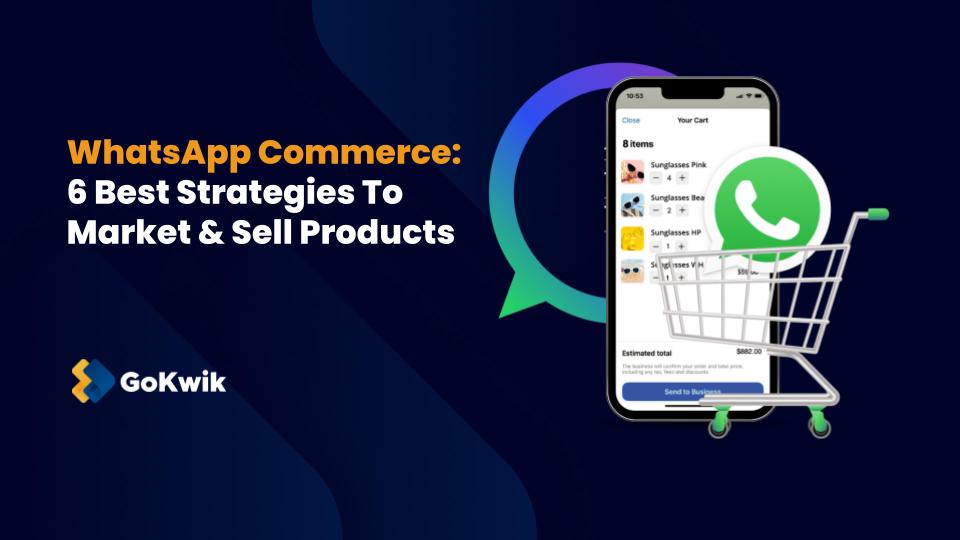
Parousia leads product marketing strategies at GoKwik, and she is an expert in driving e-commerce optimisation, conversion growth, and innovative GTM strategies. She crafts compelling messaging and creates content pertaining to D2C commerce.
Read this blog on your favourite platform
Every couple of years, there’s one technology that brings about a new revolution in the market. Take chatGPT for example. No one was expecting this AI-driven content generation tool to become this big a hit that people built entire businesses on its functionality. Similarly, in the Indian eCommerce industry, Whatsapp Commerce has brought the next revolution.
An app built to enable free global communication including sharing images, videos, documents, and personal moments, today it’s turned into a source of revenue generation. WhatsApp via its Business app, is enabling companies across the globe to offer a seamless shopping experience to customers and giving brands a quicker way to tap new market streams.
In the coming years, WhatsApp commerce will continue to expand and offer a wide range of services to the brands enabling them to leap forward and think beyond just the basics.
In this article, we will discuss why brands need to prepare for this paradigm shift and some strategies that businesses must consider to leverage WhatsApp commerce to the fullest.
Let’s start by first understanding the need for WhatsApp Commerce in India.

1. WhatsApp Commerce: Recent Developments
Recently, Facebook invested about USD 5.7 billion in Reliance Jio. Following this partnership, users of Reliance Retail and Jio Mart built a new platform on WhatsApp giving its customers the ease of shopping on the communication app itself. This partnership served as a signal pointing to WhatsApp’s intention to play a critical role in the Indian retail industry.
Another significant development was the peer-to-peer payment feature called ‘WhatsApp Pay’. Went live in India in November 2020, it allowed 20 million users to avail of the service in its testing phase. Mark Zuckerberg, CEO, of Facebook, then declared to roll this feature out across other nations over the years, strongly emphasising that the impact of this development will be there in all the retail marketplaces across the globe.
2. COVID-19: Demand For Contactless Shopping
In the wake of the pandemic, the need for contactless shopping spiked. WhatsApp Commerce usage during this period went up by 40% making it one of the most preferred platforms for consumers.
3. The Strength Of WhatsApp Features
Over the years the platform has also introduced a variety of elements to make the conversational eCommerce experience much simpler and interactive. These include
- Quick reply buttons
- WhatsApp Business App (meant for small businesses)
- a catalogue feature, WhatsApp business API), etc.
6 Strategies to Market and Sell Products and Services Via WhatsApp Commerce
Effective brand communication is about first identifying and then connecting with potential customers. The nature of the app is such that it helps to maintain a smooth communication process between the brand and its customers, thereby minimising friction as much as possible.
Listed here are some of the most effective WhatsApp commerce/shop strategies that businesses must include in their WhatsApp marketing process:
Strategy 1: Customer Acquisition
Using various customer acquisition methods offered by WhatsApp, brands can easily initiate one-on-one communication with their current as well as potential customers. These conversations have resulted in lowered drop-off rates and increased users’ interest in the services/products offered by the brand. This can be accomplished using:
- Chat Bubbles on Website: Incorporating chat bubbles in the website helps in providing seamless technical as well as end-to-end user experience from discovery to after-sale services. Businesses can customise the chat button according to the brand image for a boost!
- Click to WhatsApp Ads on Facebook: With the help of PPC campaigns on Facebook, brands can initiate conversations with potential customers on WhatsApp. An automated whatsapp marketing message flow specifically directed towards the ongoing campaigns can guide users through the entire purchase cycle on WhatsApp
- QR Codes: Adding QR codes on various offline and online paid media campaigns can significantly drive engagement on the channel. This strategy not only helps the brands to have direct communication with the end user but also gives a parameter based on which the success of the promotional campaign can be measured.
Strategy 2: Personalised User Experience
Building a two-way communication strategy between brands and their customers is one of the most important steps that brands must consider. Two-way communication ensures a personalised experience for the customers, helps to reduce customer drop-off rates and increases engagement and interest. This can be achieved by using:
- WhatsApp Business API: Installing a WhatsApp businessapp is the basis of all WhatsApp e-commerce strategies. The app is especially for growing enterprises which require advanced tools for customer engagement and personalisation. Some of the key benefits include integrated features with third-party software, tracking the e-commerce key metrics and performance, etc.
- Listing Messages And Quick Reply Buttons: List buttons are one of the most requested features from the brands. It helps customers to choose from the list of 10 alternatives such as ongoing offers, past orders, shopping lists etc. which makes the customer purchasing experience 3x faster than before. The Quick Reply Buttons help users to just select the reply buttons according to their requirements rather than typing the complete answers. The Labels feature can help businesses organise their chats and keep track of important conversations, making it easier to provide personalised service to customers.
Strategy 3: WhatsApp Business Premium
WhatsApp Business Premium offers optional premium tools that help businesses to run more efficiently and engage a wider audience base. This can be done using:
- Easy Payment Options In 2 Clicks: The 2-click payment option helps the customer to make direct payments rather than navigating between multiple apps. This significantly helps in reducing the drop-off rates. Brands can set payment reminders and ensure a frictionless payment collection process.
- AI-powered Recommendation Engine: This increases the upsell and Cross-sell opportunities to a great extent by suggesting products to the marketer based on users’ intent and past behaviours and orders.
Strategy 4: WhatsApp Customer Services
Having a robust after-sale service is mandatory in today’s business scenario. This is another way to leverage WhatsApp commerce for brands to place customer support at the forefront of a brand’s business strategy. For a smooth process:
- Brands need to be prepared to go that extra mile while providing after-sale services on WhatsApp.
- Making the team available 24*7 in shifts and responding to queries swiftly are necessary. This can be done by informing customers about stock updates, providing delivery tracking services, sending receipts timely, subscription renewals, etc.
Strategy 5: WhatsApp Customer Feedback
WhatsApp can be an excellent platform for collecting customer feedback, as it allows businesses to engage with their customers in real-time and get instant feedback.
- Brands can use WhatsApp to send surveys to their customers and ask for their opinions on products, customer service, and overall experience.
- By using WhatsApp for customer feedback, businesses can improve their offerings and provide a top-class experience for customers
Strategy 6: Recover Abandoned E-commerce Carts
Last but not least, using WhatsApp to recover abandoned E-commerce carts. It has been estimated that approximately 7 out of 10 online shopping carts are facing abandoned cart issues regularly, i.e. customers do not make it up to the checkout stage and thus, the sale is lost.
- One of the easiest ways to recover or avoid this issue is to partner with authentic online platforms that help brands facing difficulties with their buying experiences especially in the E-commerce platforms.
- WhatsApp plugins are also readily available in the market that enable brands to send out automated cart abandonment recovery messages to the customers and try to convert them into a sales. Such plugins are only possible with WhatsApp Business API integrations.
In A nutshell,
WhatsApp commerce has immense potential to make brands stand out from the curve and provide a rich customer experience. The only hack is to understand and implement the marketing strategies accordingly that fit the business!
What is WhatsApp commerce?
WhatsApp commerce in India allows businesses to sell products and services directly to customers through the messaging app. It involves sharing catalogs, facilitating orders, and providing support, all within WhatsApp. GoKwik helps D2C brands in India optimize their WhatsApp commerce strategy to boost sales, enhance customer engagement, and streamline the buying experience for nationwide shoppers.
Is WhatsApp Business legitimate?
Absolutely, WhatsApp Business is a legitimate and widely adopted platform for businesses in India. Developed by Meta, it offers secure features for customer engagement and sales. Many brands trust it to facilitate efficient WhatsApp commerce, building strong customer relationships. It's a verified, reliable tool for official business communication.
How do you unlock the potential of WhatsApp commerce?
Unlock the full potential of WhatsApp commerce by integrating smart solutions for seamless shopping experiences. In India, GoKwik helps D2C brands convert chats into sales with efficient checkout flows and RTO protection. Leverage personalized engagement and secure payments directly on WhatsApp to drive higher conversions and enhance customer experience successfully.
How does WhatsApp commerce work?
WhatsApp commerce in India enables businesses to connect with customers directly on the app. Merchants can showcase products, share catalogs, answer queries, and process orders via chat. Customers can browse, place orders, and make payments seamlessly within WhatsApp. This direct engagement makes shopping easy and personalized, driving conversions for D2C brands.
How do I fix WhatsApp violating my commerce policy?
To fix a WhatsApp commerce policy violation, meticulously review their Commerce Policy. Identify and adjust any non-compliant product listings or services immediately. Ensure all your messaging and offerings strictly meet their guidelines. Consistent adherence is crucial for smooth WhatsApp commerce operations, maintaining your D2C brand presence effectively.
Is it safe to use WhatsApp Business?
WhatsApp Business is designed with security, offering end-to-end encryption for messages, protecting both businesses and customers in India. It provides official tools for secure customer interaction and sales. Engaging in WhatsApp commerce with verified accounts and adhering to WhatsApp's guidelines ensures a safe and trusted experience for all users.
What is the difference between WhatsApp and WhatsApp Business?
WhatsApp is for personal communication, whereas WhatsApp Business offers features specifically for companies. It includes tools like business profiles, product catalogs, and automated messaging. This distinction is vital for businesses in India looking to leverage WhatsApp commerce effectively, providing a professional platform to engage customers and drive sales directly.

AUTHOR
Parousia Khan
Senior Product Marketing Manager @GoKwik