A new product launch is one of the most natural occasions to run a limited-time special offer. The novelty creates curiosity; the launch window creates urgency. An introductory price available only for the first few days or for the first batch of orders turns a product page visit into a purchase decision without the "manufactured urgency" that today's shoppers recognise and scroll past.
Example of a new launch offer
_1783331286.jpg)
Caption: Plixlife new launch offers at discount prices
Source: Plixlife
Plixlife attaches a 7-44% introductory discount directly to new product listings visible on the product page, no coupon hunting required. The "New Launch Offer" label does two things simultaneously: it signals to the shopper that this product is fresh (novelty trigger) and that the price won't stay this low (scarcity trigger).
This Introductory offer solves a specific problem that every new product faces: the shopper has no purchase history with this SKU, no reviews to trust, and no social proof to lean on. The introductory price lowers the risk of trying something unfamiliar. But unlike a general sale, it doesn't condition customers to expect permanent discounts, because the reason for the lower price is logical: "This just launched, we want early buyers."
Pro tip: The single biggest mistake brands make with launch offers is targeting everyone at once. Split the launch into two waves: give your email or WhatsApp subscriber list 24–48 hours of early access at the introductory price before opening it publicly. This does three things: it rewards your existing audience, generates early reviews and UGC before the public launch, and creates a second "news moment" when the product opens to everyone.
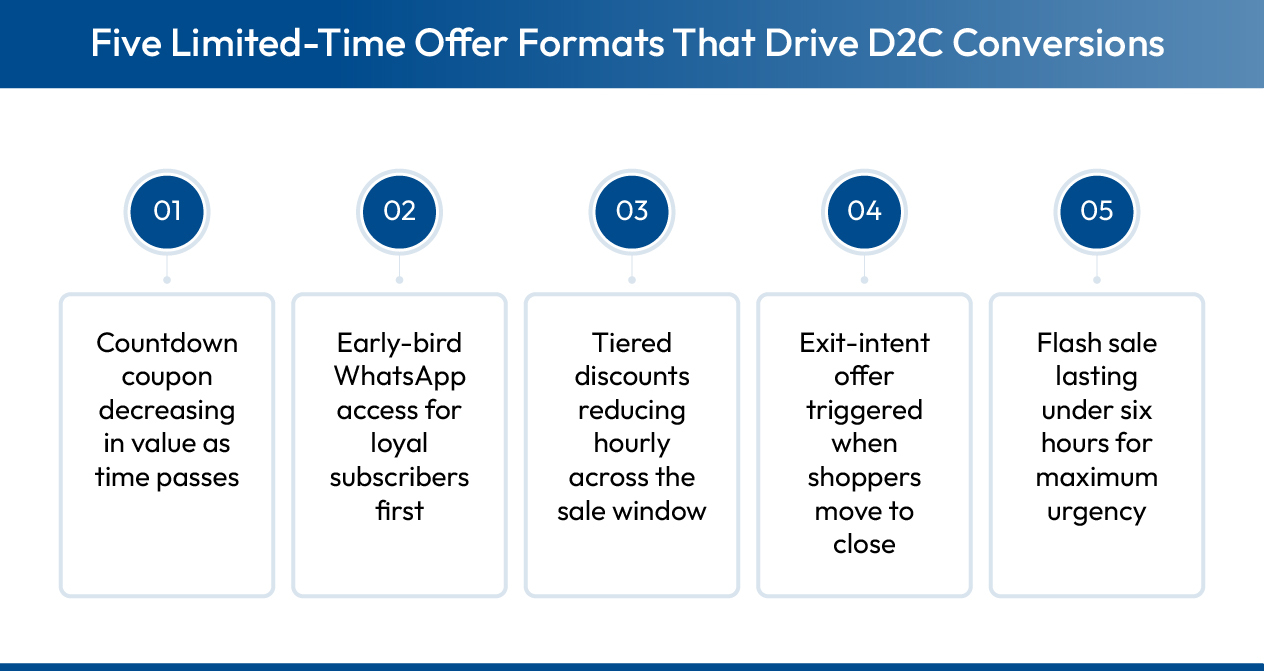
Each of these limited-time offer examples activates urgency differently. The right choice depends on your margin structure, your campaign objective, and the segment you are targeting, which is exactly what the psychology behind limited-time offers helps you decode.
_1775463694.jpg)




_1790076136.png)