How KwikAds helped Shop Unrush boost ROAS by 37% in 3 months
How KwikAds helped Shop Unrush boost ROAS by 37% in 3 months
How KwikAds helped Shop Unrush boost ROAS by 37% in 3 months
How KwikAds helped Shop Unrush boost ROAS by 37% in 3 months
Kwik Checkout
Guide to eCommerce Post Purchase Experience for Customer Retention
 12 Mar 2026
 12 Min Read
Suhag spearheads D2C growth strategies at GoKwik, focusing on e-commerce optimisation, conversion funnels, and sales enablement. Based in Bengaluru and an MICA alumnus, he excels in crafting GTM playbooks and marketing campaigns tailored for D2C brands.
Read this blog on your favourite platform
We’re living in an age where ecommerce brands can’t even think that they’re the best option available to a customer. Consumers have at least ten brands to choose from, no matter what product or service you sell. Gone are the days when customers made purchases only because the brand offered discounts.
If you’re selling something at a discounted rate, know that someone can provide a similar product at a much lower cost. That’s why, more than these marketing tactics, consumers now crave a good shopping experience. And the more customers you retain, the less you’ll have to spend on acquisition.
However, while most brands ensure to implement the right marketing strategy to help consumers complete their purchase seamlessly, many lose out on what happens after the purchase. This eventually leads to a negative experience.
Imagine the number of times you have struggled to contact a brand about your order. Or the last time you faced pain points wanting to return a product and had to go through a series of steps just to request it. A broken post purchase experience leads to low retention rates in the eCommerce industry. In this blog we will help you plug this leaky funnel forever.

What Is Post Purchase Experience?
For eCommerce businesses, the post purchase experience is like the cherry on top of a sundae. It’s the final touch that can make or break a customer’s overall satisfaction with a brand.
Post purchase experience is how you treat your customers after they’ve made the purchase. It also indicates how customers feel about purchasing from you, whether they’ll return to shop again, or if they’d recommend your brand to their family or friends.
It starts when a customer clicks “buy” and continues throughout the delivery process, returns process, refunds, exchanges, and after-sales support. It covers the entire customer journey beyond the transaction.
Why a Stellar Ecommerce Post-Purchase Experience is Non-Negotiable?
While you’re doing everything in your power to offer consumers the best products and a seamless purchase experience, why shouldn’t you also focus on providing an excellent ecommerce post purchase experience?
Here are some reasons why D2C eCommerce businesses take this leap.
1. Tackles Increasing Competition
When it comes to making an online purchase, consumers now have endless options to choose from. According to statistics published by Clickpost,
India is home to over 360,000+ independent eCommerce stores, and it’s getting more competitive with each passing day. With so many brands selling online, it is difficult for consumers to recall your brand or stay loyal to you. Astudy by American Express found that as many as 60% of customers consider switching brands if they have just one bad experience after making the purchase.
When you provide an excellent post purchase experience, you create a lasting impression in the customer’s mind that stays for a long time. This impression ensures they remember your brand and maintain brand loyalty.

2. Optimizes Cost Of Customer Acquisition
The cost of acquiring a new customer goes hand-in-hand with the competition. You have to pay less to acquire a new customer if there’s less competition.
However, since competition in the eCommerce industry is soaring, customer acquisition cost (CAC) has also increased. On average, CAC has increased by 60% across industries in the past five years.
This means companies need to prioritise customer retention as much as acquisition, if not more. A positive post purchase experience will ensure your customers see the value you offer and feel satisfied. When customers are happy, they don’t have any reasons to explore your competitors, increasing their customer lifetime value.
Here is a guide on effective strategies to reduce customer acquisition cost for your online store.
3. Meets Changing Customer Expectations
Many leading retailers have set the benchmark high in terms of personalisation. Due to this, customers now expect more from brands than ever before. They are more likely to buy from a brand that offers quality products and delivers a positive experience.
And not just buy, a majority of customers are willing to pay more to buy from such brands. Every eCommerce business that provides a positive post purchase experience is more likely to meet and exceed these expectations, leading to higher customer satisfaction and loyalty.
4. Bridges The Gap Between Customers And Brands
You see opportunities for customer conversations when you focus on delivering an excellent post purchase experience. These conversations can result in first-hand insights into what they liked and where your brand can improve.
For example, a post-purchase survey can help you uncover if they liked the delivery experience. From the time of delivery, your logistics partner, product packaging, and more, customer feedback can answer the most crucial elements that add to the overall experience.
5. Improves Retention And Drive Repeat Sales
Brands that sell online are spending more on customer experience than ever. Why? Because how customers feel after making the purchase determines if they will generate repeat business.
For example, customers feel satisfied when you take ownership if something goes wrong (good post-purchase example). On the other hand, if you don’t take ownership, dissatisfied customers can post negative reviews, which will affect your sales.
A 5% increase in customer retention rate can increase your revenue by almost 30 percent. And you can achieve this by delivering a tremendous post purchase experience to your repeat customers.
6. Reduces Return-to-origins (RTOs)
From GoKwik’s internal analysis, we’ve also noticed that a good post purchase experience helps reduce return-to-origins (RTOs). It is a situation wherein a customer rejects an order at the time of delivery or cancels it when the shipment is in transit.
When you constantly inform customers about the order status such as estimated delivery date, transit stage, etc., and convey messaging around the product such as “how to enable warranty,” “how to use the order item” and so on, this builds a level of confidence in the minds of your customers about their order.
Such post purchase communication helps reduce returns and keep your business profits intact. Besides this, using techniques like order reconfirmation, especially in the case of cash-on-delivery orders, can significantly reduce the number of impulsively placed orders. By asking shoppers to rethink their order, you’ll be able to lower RTOs to a great extent.
5 Proactive Strategies to Master Post-Purchase Communication
Now that you know why post purchase experience matters in the eCommerce industry, let’s take a look into how you, as a D2C brand, can create a positive after-sales journey for your customers.
1. Automate Order Tracking Notifications
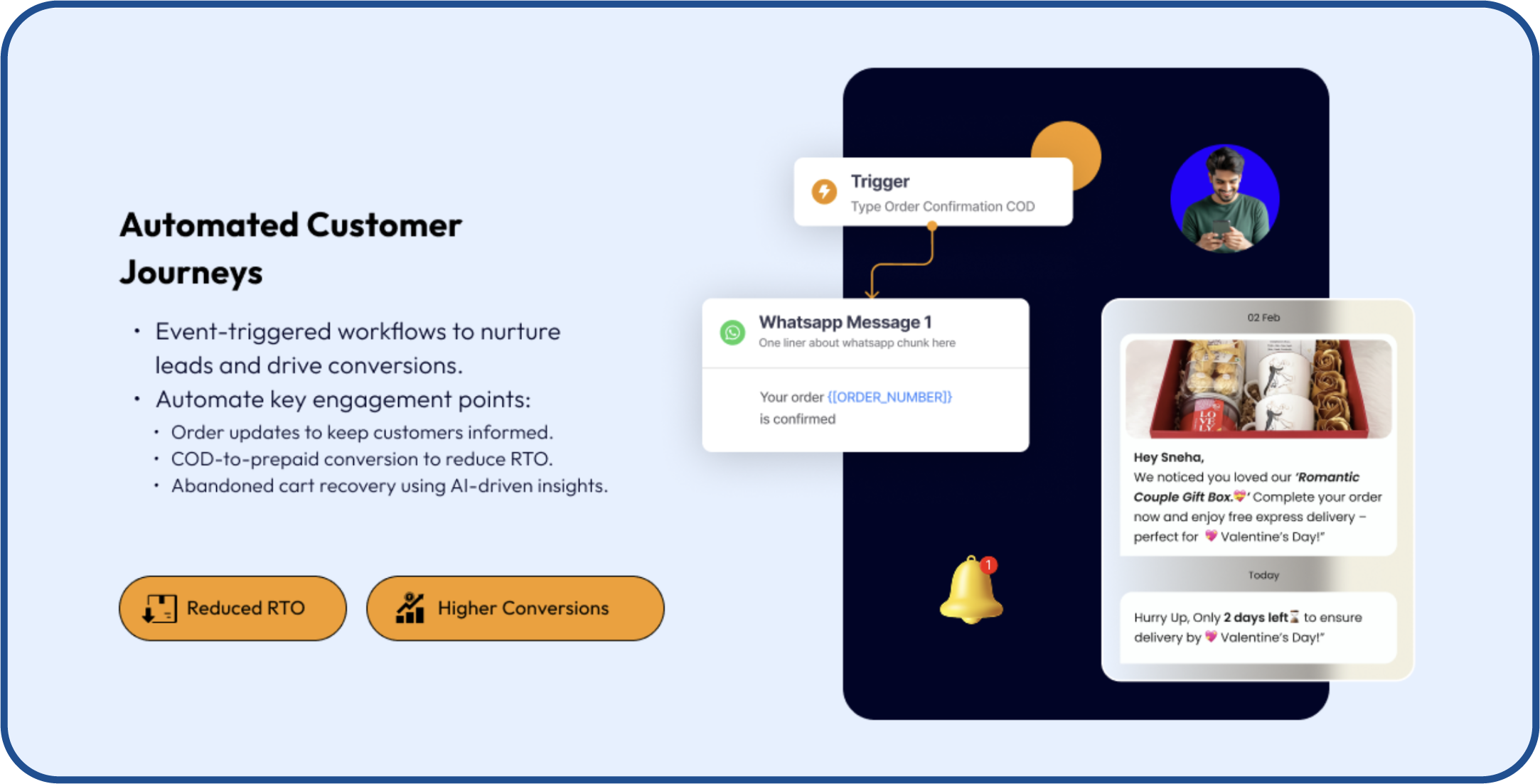
Keeping customers informed about their order status is essential. But ensuring that these notifications don’t go unnoticed is even more crucial. Apart from the typical automations set on email, we also recommend automating order tracking notifications on actively used channels like WhatsApp.
The good thing is that these notifications are easy to automate and effective in reducing RTOs. GoKwik ensures that as soon as an order is received by an eCommerce store, merchants trigger proactive communication messages at various stages to update customers. This gives their customers peace of mind regarding their delivery.
GoKwik also helps you add steps like order reconfirmation on the payment page or through WhatsApp. This helps stop impulsive shopping before it leads to a return. In fact, a GoKwik poll shows that 51% of merchants believe these steps help lower RTO rates and make their brand look more professional and reliable.
2. Offer Post-sales Support
Customer support should never stop. It should continue throughout. Using conversational commerce like WhatsApp commerce, you can address WISMO queries and other critical issues.
For example, if you have products that require assembly, you can send them a “how-to” video via WhatsApp once the product is delivered. You can also set up automation that lets them request assembly services from your support team or via live chat.
Post-sales support helps you increase customer satisfaction and the chances of converting them into repeat customers.
GoKwik helps you take this a step further by automating these check-ins. Instead of waiting for a customer to complain, you can send a message the moment they receive their package to see if they need help. This proactive support keeps customers happy and makes them much more likely to shop with you again.
3. Make Refunds, Returns And Exchanges Easy
Making an online purchase is not always easy. Despite the product descriptions, sizing guides, and visuals available to consumers, the chances of error remain. But when a business's return rates, refund, or exchange policy is unclear or complex, it can impact both conversions and the post purchase experience.
If you are using WhatsApp for broadcasts or sending order confirmation notifications, go one step further. Let consumers request a refund, return or exchange by simply dropping you a message on the app.
Using customer input as a trigger, you can set up automations to introduce them to your policies or provide clear instructions on what they need to do next. Simplifying this can reduce buyer’s remorse and improve satisfaction.
To truly stand out, many brands even offer instant refunds to build trust and ensure customers are not left waiting for their money turning a pain point into a loyalty-building moment.
Here is our detailed guide on instant refunds for more information on this topic.
4. Personalize the 'Unboxing' Beyond the Box
The physical unboxing is the first tangible touchpoint, but you can enhance it digitally to build an emotional connection. Include a QR code on the packaging that leads to a personalized "Welcome" video from the founder or a curated playlist matching the product vibe.
Encourage users to share their unboxing on social media for a chance to be featured, enhancing your brand reputation.
You can also trigger an automated message right after delivery asking, "Did you love the packaging?" This small gesture makes the unboxing experience feel exclusive and encourages positive reviews.
5. Stay In Touch
After the purchase, it is important to keep the conversation going with your customers. You can send them personalized product recommendations, gather feedback, and request product reviews to keep the interaction relevant.
Instead of using traditional one-way channels like email, you can automate these marketing messages directly through Kwik Engage. Because WhatsApp is conversational by nature, your messages become a two-way dialogue rather than a simple push notification. This naturally leads to better open rates and builds a relationship that encourages the next purchase.

Role of Technology in Scaling Your Post Purchase Experience
Technology acts as the backbone for delivering consistent and personalized experiences at scale. By leveraging advanced tools, brands can automate routine tasks, predict issues before they happen, and ensure every customer feels valued without overwhelming their support teams.
The Power of Proactive Automation
Automation tools allow you to send timely updates without manual intervention. From the confirmation email to delivery alerts, WhatsApp automation platforms like Kwik Engage ensure customers are always in the loop. This reduces anxiety and builds trust, turning a standard transaction into a great experience.
AI-Driven Return-To-Origin Prediction
Using AI, brands can predict which orders are high-risk for RTO before they even ship. GoKwik’s intelligence analyzes customer data to flag potential cancellations, allowing you to intervene with a WhatsApp message or call to reconfirm the order, saving logistics costs.
Unified Support Dashboards
A unified dashboard consolidates tickets from email, chat, and social media into one view. This empowers customer service teams to respond faster and have full context of the order number and history, solving common issues efficiently and improving CSAT scores.
Dynamic Tracking Pages
Instead of a boring carrier link, use branded tracking pages. These pages can display the delivery date, show new product arrivals, and offer educational content while the customer waits. It’s a great way to keep engagement high even during transit.
KPIs to Measure Success for Your Post Purchase Experience
To truly understand the impact of your strategies, you need to track specific metrics. These KPIs reveal how well your post purchase experience is driving loyalty and where there is room for improvement in your funnel.
- Repeat Purchase Rate (RPR): Measures the percentage of customers who return for future purchases, indicating strong loyalty and satisfaction with your brand.
- Return-to-Origin (RTO) Percentage: Tracks failed deliveries. A lower percentage means better address verification and effective post purchase communication strategies.
- Net Promoter Score (NPS) or CSAT: Gauges customer satisfaction by asking how likely they are to recommend your brand to others.
- WISMO Ticket Volume: Measures the number of "Where is my order" inquiries. Lower volume means your proactive tracking updates are effective.
Have You Optimised Your Post Purchase Customer Experience Yet?
Keeping customers around is the most important thing you can do. Focusing on the experience after a customer buys helps you get more repeat orders and build a brand people actually trust.
Using tools like WhatsApp and automation opens up new ways to grow your business. While most brands only focus on making the first sale, the smartest ones also focus on how they manage their customer relationships.
If you are ready to improve your post-purchase experience and help your site succeed, we are here to help. Book a demo to see how WhatsApp automation platforms like Kwik Engage can help you create successful post purchase experiences for your eCommerce store.
What is post-purchase experience in eCommerce?
The post-purchase experience encompasses every interaction a customer has with your brand after buying products. It includes order tracking, delivery, unboxing, and after-sales support. A positive experience during this phase is critical for building lasting brand loyalty and securing high customer retention rates.
What is an example of a post-purchase experience in eCommerce?
A prime example is proactive communication through automated WhatsApp notifications. Instead of customers asking "Where is my order," the brand sends real-time updates on transit stages and delivery dates. This transparency reduces anxiety, builds trust, and effectively lowers return-to-origin (RTO) rates for the business.
How does Kwik Engage help automate post purchase experiences for Shopify stores?
Kwik Engage automates the journey using AI-powered WhatsApp marketing to send personalized order updates and reconfirmation messages. It simplifies complex processes like returns and exchanges through conversational dialogue. This proactive automation helps Shopify merchants reduce RTOs, handle support queries efficiently, and drive significant repeat sales.

AUTHOR
Suhag Vamja
Head of Product Marketing @ GoKwik