How KwikAds helped Shop Unrush boost ROAS by 37% in 3 months
How KwikAds helped Shop Unrush boost ROAS by 37% in 3 months
How KwikAds helped Shop Unrush boost ROAS by 37% in 3 months
How KwikAds helped Shop Unrush boost ROAS by 37% in 3 months
Kwik Engage
Exit Intent Pop-ups for Ecommerce: 9 Ideas and 6 Best Practices
 06 May 2026
 14 Min Read
Atul leads marketing at GoKwik, championing D2C brand building, growth strategies, scalable GTM for e-commerce, and data-driven customer acquisition. A former Amazon leader and IIFT MBA alumnus based in Bengaluru, he brings 15+ years scaling business across e-commerce, and fintech.
Read this blog on your favourite platform
Roughly 70% of online shoppers leave a store without completing a purchase. For every 100 visitors your ads bring in, fewer than 30 buy anything. The rest walk away, and most never come back.
That gap is recoverable. The exit intent pop-up integration has evolved from a blunt overlay into a precision intervention, one that connects with CRM systems, ecommerce backends, and post-exit WhatsApp flows to create a traceable recovery funnel.
The pop-up is the entry point into that system, not the endpoint. Brands that treat it as a standalone tactic recover some revenue. Brands that connect it to segmentation, retargeting through digital marketing ads and automated follow-up campaigns recover far more.
This guide covers what exit intent pop-ups are, how they work, 9 actionable ideas with real examples, and 6 best practices. We will also cover how Kwik AI Pop-ups and Kwik Engage help D2C brands recover revenue before and after shoppers leave.

What is an Exit Intent Pop-up?
An exit intent pop-up is a targeted overlay triggered by specific exit signals, cursor velocity toward the browser chrome on desktop, or rapid upward scrolling on mobile. It activates at the right moment in a session without interrupting the user experience.
Modern versions go beyond simple detection. Intelligent tools identify the target audience segment and risk level in real time to select the best offer. They pull from behavioral data to decide which offer, format, and timing will produce the best outcome. The difference between a generic pop-up and an intelligent one is measurable in conversion rate.
- The pop-up activates only when the visitor crosses a clear behavioral threshold confirming exit intent.
- It appears once per session to avoid frustrating shoppers who are still engaged.
- It delivers a single focused value proposition with one CTA and no competing messages.
- It surfaces different offers based on page type and the visitor's current funnel stage.
How Exit Intent Pop-ups Work
Understanding the mechanics of exit intent technology helps brands configure triggers more precisely and avoid the common mistakes that cause pop-ups to fire too early or too late.
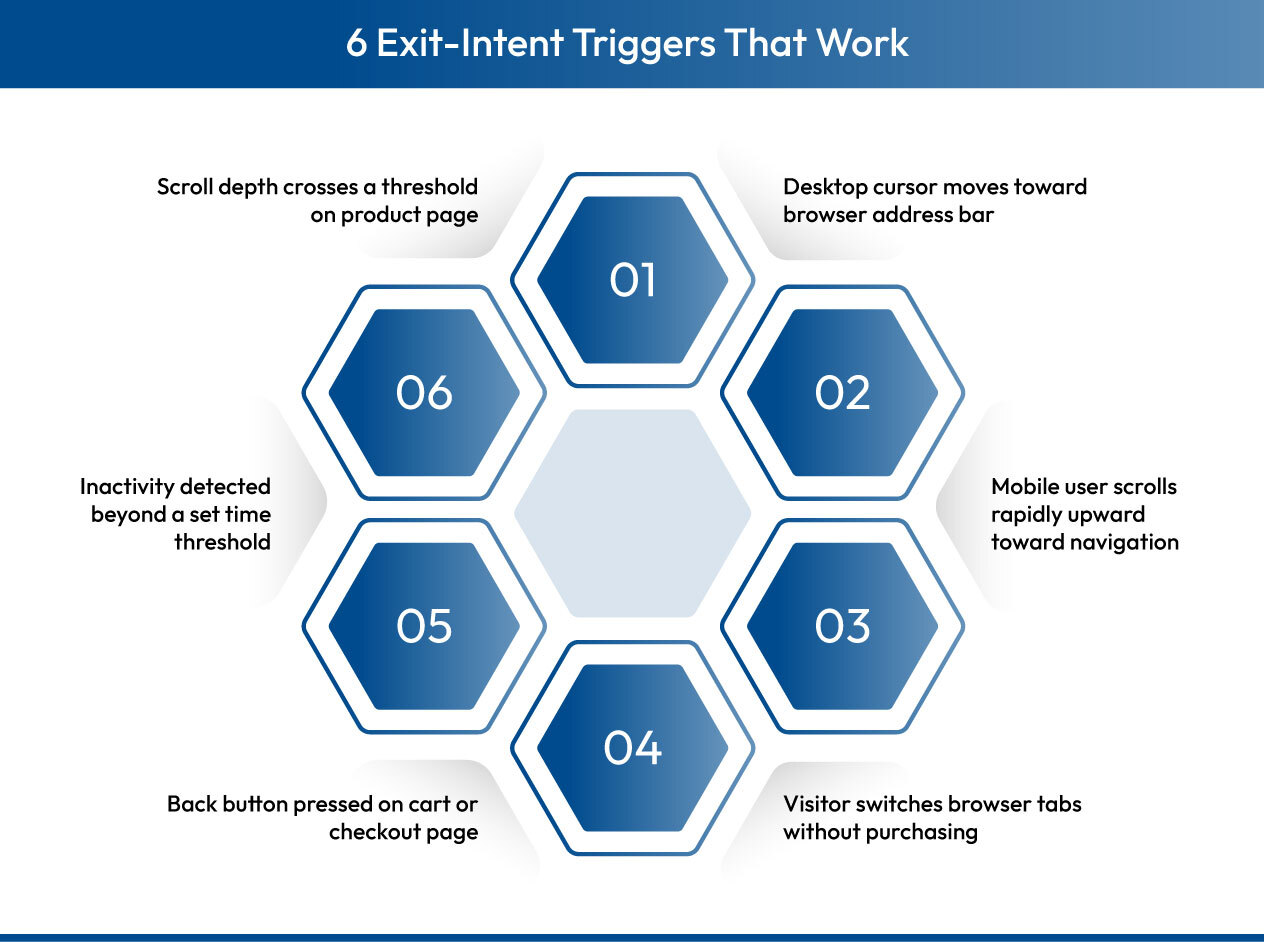
- Behavioral threshold monitoring: A lightweight script tracks mouse movement, scroll velocity, and tab-switching behavior. On the desktop, it watches the cursor approach the browser address bar or tab row. Once specific thresholds are crossed, the pop-up fires before the tab closes.
- Desktop vs. mobile signal differences: Desktop relies on browser chrome proximity and rapid cursor deceleration. Detection on mobile devices uses back-button presses and rapid upward scroll velocity since cursor movement does not exist.
- Data routing after capture: Once a visitor submits an email or claims an offer, the captured data routes into the brand's CRM or retargeting pipeline in real time, feeding segmented email marketing sequences, WhatsApp recovery flows, and paid retargeting audiences.
9 Exit Intent Pop-up Ideas for Ecommerce
Each idea below is a distinct execution pattern, different trigger, different offer type, different visitor segment. Use them as a menu: pick the ones that match the hesitation your shoppers actually show.
Discount and Coupon-Led Ideas
Idea 1: First-order discount paired with a value stack
On exit intent from any product or listing page, show a pop-up that leads with a discount code for first-time visitors and reinforces it with 3 supporting trust signals, free shipping, easy returns, and exclusive content and special collections. Ask for a mobile number to unlock the code. Headline: "Get 15% off your first order. Use code: FIRST15."
Why this works:
A standalone discount is easy to dismiss. Adding trust signals, shipping policy, exchange window, exclusive access, answers the objections that price alone cannot. The visitor is not just getting a coupon; they are being shown why the purchase is low-risk.
_1776084446.png)
Idea 2: Sign-up discount on high-ticket product pages
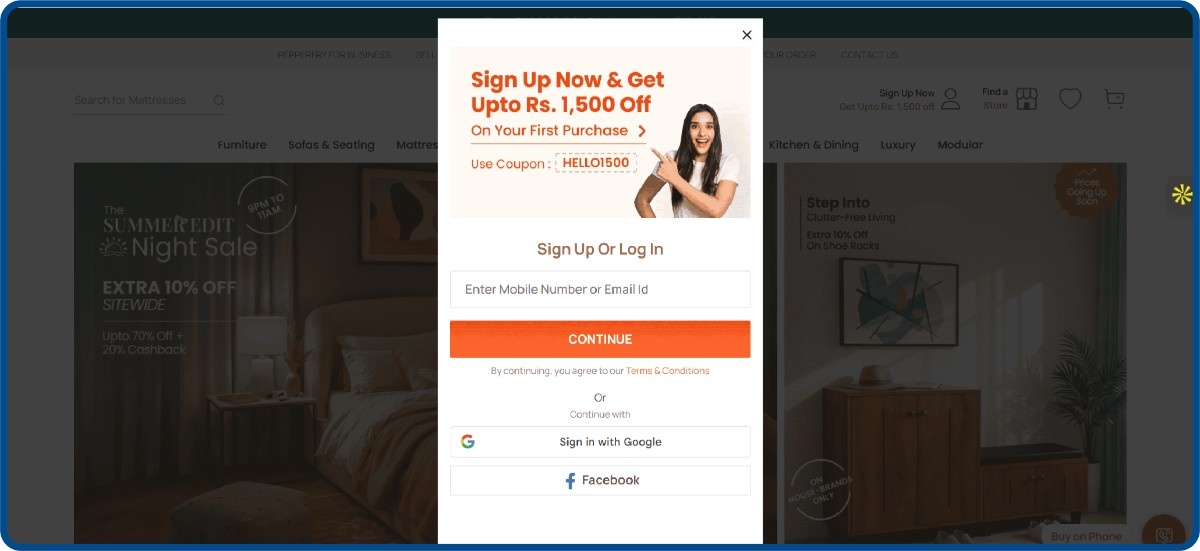
On pages where the item price crosses a defined threshold like furniture, appliances, premium electronics, fire a sign-up pop-up when exit intent is detected. Offer a rupee-value coupon (not a percentage) in exchange for a mobile number or email. Headline: "Sign up and get up to ₹1,500 off your first purchase."
Why this works:
On high-ticket items, shipping cost and total outlay are both significant hesitation drivers. A rupee-value coupon feels more concrete than a percentage discount, ₹1,500 off reads as more tangible than "10% off." Targeting this trigger specifically to high-value pages means the offer is deployed where it has the most impact on conversion.
Free Gift and BOGO Ideas
Idea 3: BOGO offer at the product page exit point
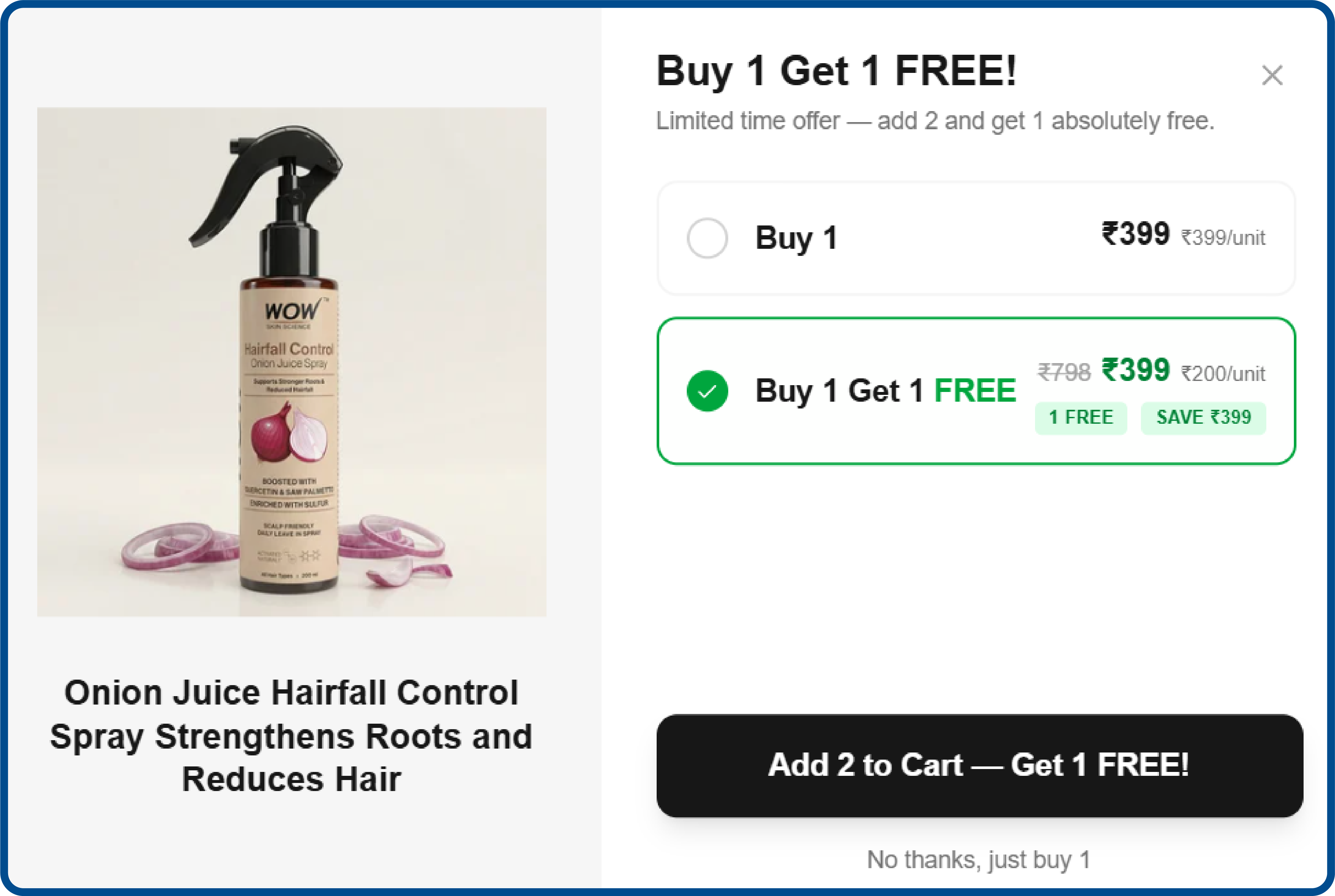
When exit intent fires on a product page, show a pop-up presenting a Buy 1 Get 1 Free offer as a limited-time incentive. Display both units side by side with the saving clearly shown. CTA: "Add 2 to Cart, Get 1 FREE." Include a low-friction secondary option: "No thanks, just buy 1."
Why this works:
The BOGO framing shifts the decision from 'should I buy this?' to 'should I leave a free product behind?' Loss aversion is a stronger motivator than the prospect of saving money. The secondary CTA reduces pressure and paradoxically increases trust, the shopper does not feel trapped, which makes them more likely to take the primary option.
Gamified Ideas
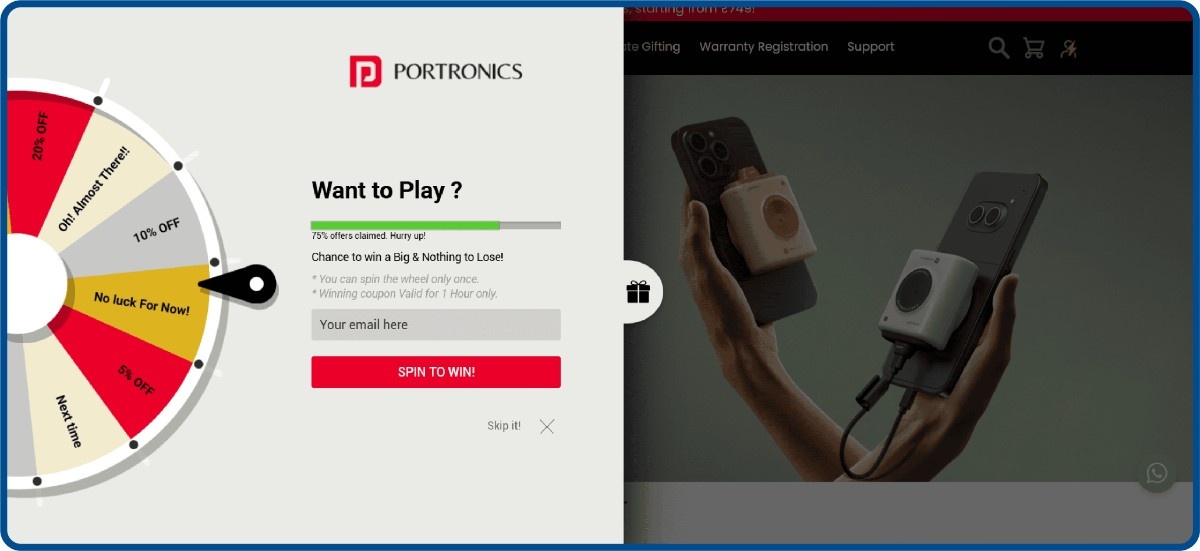
Idea 4: Spin-to-win wheel with a progress bar to create urgency
On exit intent from the cart or product page, show a spin wheel offering varying outcomes, 5% off, 10% off, 20% off, free shipping, or "next time." Ask for an email to spin. Add a progress bar showing how many offers have already been claimed: "75% of offers claimed. Hurry up!" Winning coupon is valid for 1 hour only.
Why this works:
Variable reward psychology makes the interaction feel like a game, not a sales overlay. The shopper does not know what they will win until they engage, and that uncertainty creates enough curiosity to overcome the resistance a flat discount pop-up might face. The progress bar and 1-hour validity add two independent urgency signals without feeling manufactured.

Subscriber Capture Ideas
Idea 6: Seasonal campaign pop-up with phone number capture
Tie the exit pop-up to an active campaign, a summer sale, a festive offer, or a new category launch. Show the campaign creative at the top (product imagery, code, and offer terms) and a phone number capture form below it. Headline: "Summer Hot Deals, Buy and get exciting freebies on orders above ₹999. Code: SUMMER."
Why this works:
Anchoring the pop-up to an already-running campaign removes the need to create a standalone incentive. The shopper has likely seen the campaign banner already, the pop-up at the exit moment serves as a direct reminder. Capturing a phone number rather than just an email feeds a WhatsApp recovery channel with higher open rates than email follow-up.
_1776086540.jpeg)
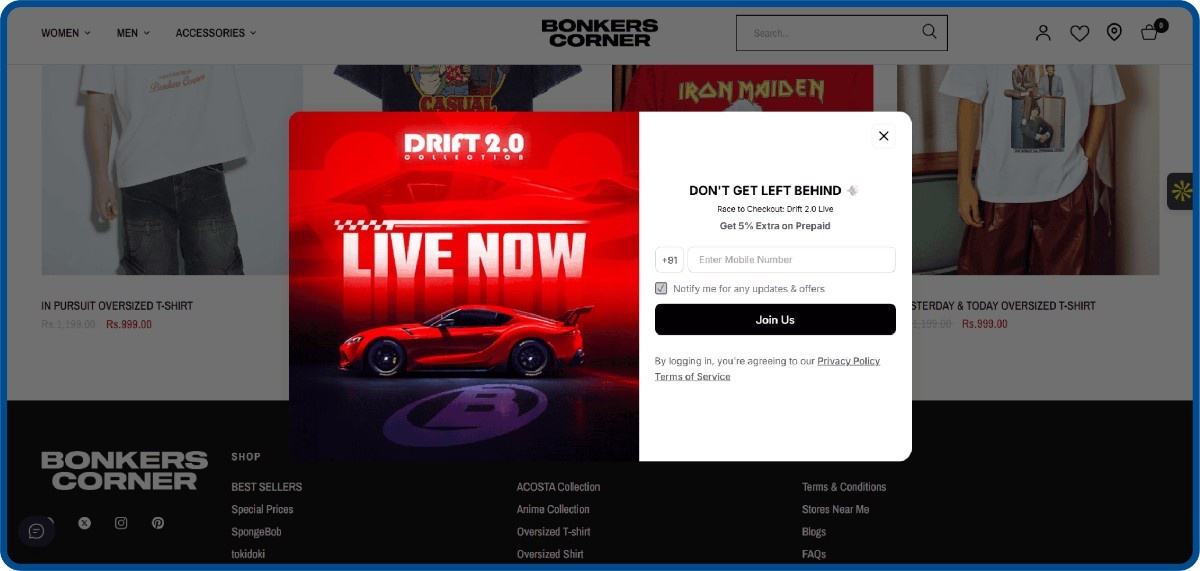
Idea 7: New collection launch pop-up for early access capture
When a new product line or collection goes live, use an exit pop-up that leads with the launch visual, bold campaign creative, collection name, and a benefit for early shoppers. Ask for a mobile number. CTA: "Join Us." Headline: "Don't get left behind, [Collection Name] is Live Now. Get 5% extra on prepaid."
Why this works:
For visitors browsing without immediate purchase intent, a discount often fails because they are not in a buying mindset. Early access to a new launch appeals to brand interest rather than purchase urgency, it captures a contact from a segment that a price-led pop-up would miss. The mobile number collected feeds directly into WhatsApp and SMS re-engagement flows.
Loyalty and Reward Ideas
Idea 8: Loyalty reward sign-up pop-up with an instant points offer
On exit intent from a product or category page, show a sign-up pop-up that leads with an instant loyalty reward, reward points, wallet credit, or tier access. Headline: "Register now and get 2000 reward points instantly." Ask for a mobile number, offer OTP login, and include social sign-in options to reduce friction.
Why this works:
Points-based rewards appeal to a different shopper psychology than a flat discount, they signal a longer-term relationship rather than a one-time transaction. For categories where repeat purchase rate matters, building loyalty at the exit moment is more valuable than converting a single session. The instant gratification of the points offered still provides the urgency needed to drive action now.
_1776086540.jpeg)
Free Resource and Lead Magnet Ideas
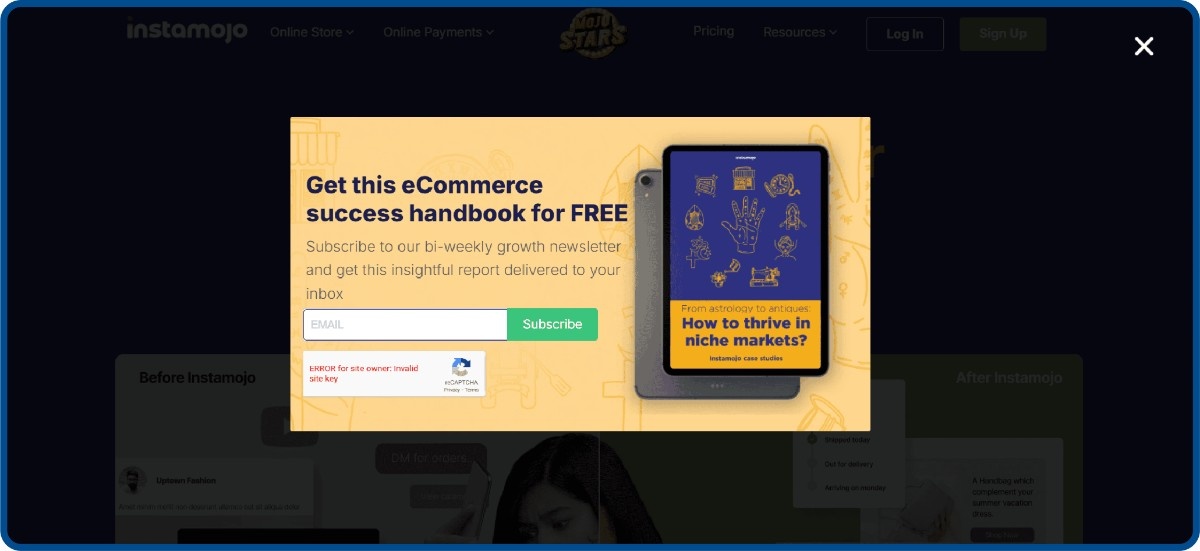
Idea 9: Free resource offer for low-intent visitors
For visitors who have browsed extensively but show no purchase signals, multiple pages, no add-to-cart, no category focus, fire an exit pop-up that offers a free resource in exchange for an email. The resource should be directly relevant to why they are on the site. Headline: "Get this eCommerce success handbook for FREE, subscribe to our bi-weekly growth newsletter."
Why this works:
A discount pop-up fails for visitors who are not yet in a buying mindset. A free resource offer addresses a different need, information, guidance, or tools, and captures a contact without requiring any purchase intent. Email subscriber lists built this way contain engaged, relevant contacts who are more likely to convert on a follow-up sequence than someone who gave an email for a one-time coupon code.
6 Exit Intent Pop-up Best Practices That Actually Work
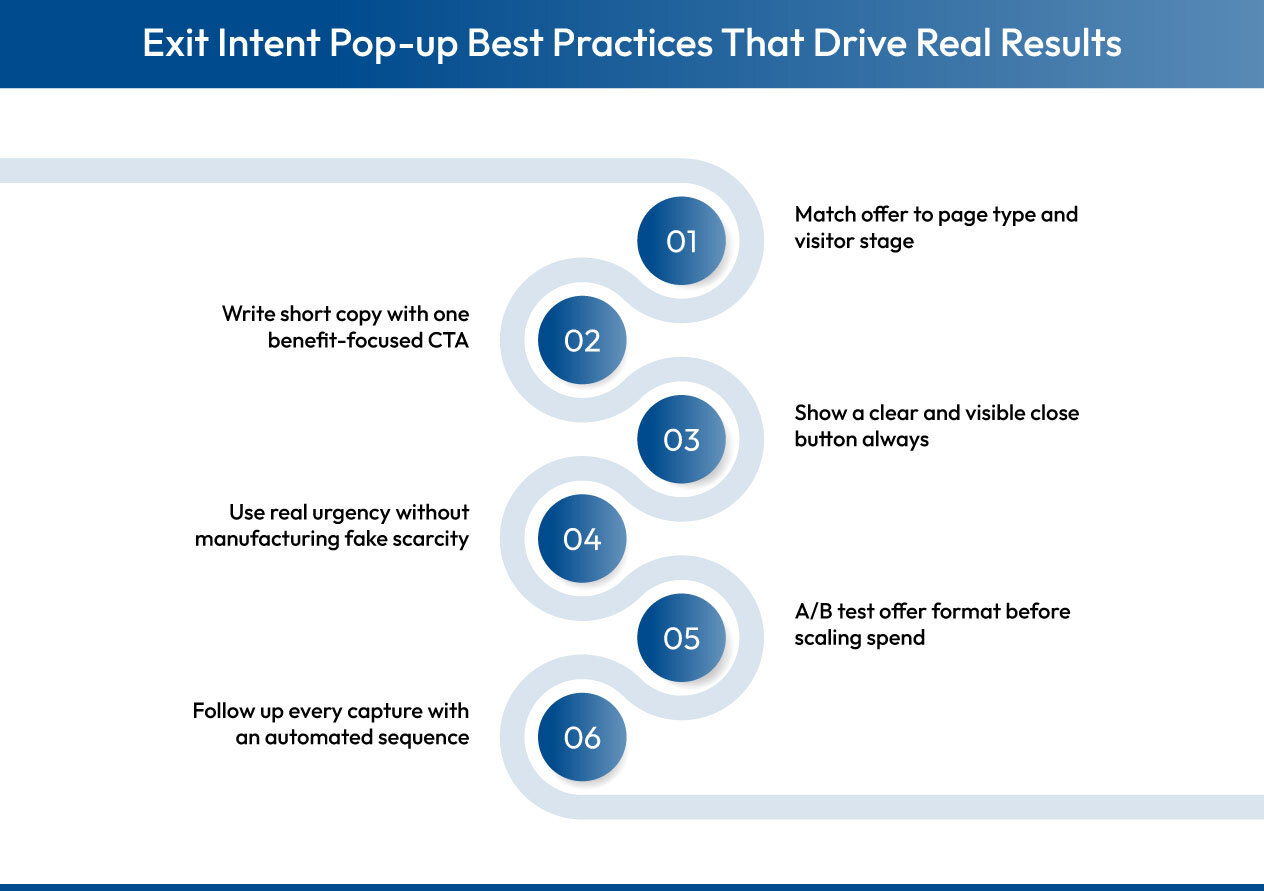
The brands that consistently outperform benchmarks follow all six of these, not just the ones that are easiest to implement.
- Match the offer to the page and the visitor's funnel stage: A visitor on a product page needs a different intervention than one on the checkout page. Map your pop-up type to where the shopper is, discount for cart exit, scarcity for checkout exit, resource offer for browse-only sessions.
- Keep copy short and the CTA benefit-focused: The CTA should communicate the offer's value in under eight words. "Claim your ₹200 off" outperforms "Submit" every time.
- Always show a visible, easy-to-find close button: Visitors who can dismiss without friction are more likely to return. Trapping shoppers in a pop-up damages trust and increases bounce rate.
- Use real urgency, never fake scarcity: Countdown timers tied to genuine stock levels or time-limited offers convert consistently. Fake timers that reset on refresh erode long-term trust with repeat visitors.
- A/B test offer format before scaling spend: Test the incentive structure, BOGO vs. percentage discount, resource vs. coupon, not just headline copy. The format drives more variance in conversion than the words do.
- Follow up every capture with an automated sequence within 24 hours: The pop-up capture is only valuable if it feeds an immediate follow-up. A WhatsApp message or email referencing the exact offer seen converts significantly better than a generic drip.
How GoKwik Empowers D2C Brands with Advanced Exit-Intent Popups and Funnels
An exit intent pop-up catches some of the visitors leaving your store. It does not catch all of them. Mobile app exits, rapid bounces, and shoppers who leave before the detection script fires all represent segments that standard pop-up tools miss entirely.
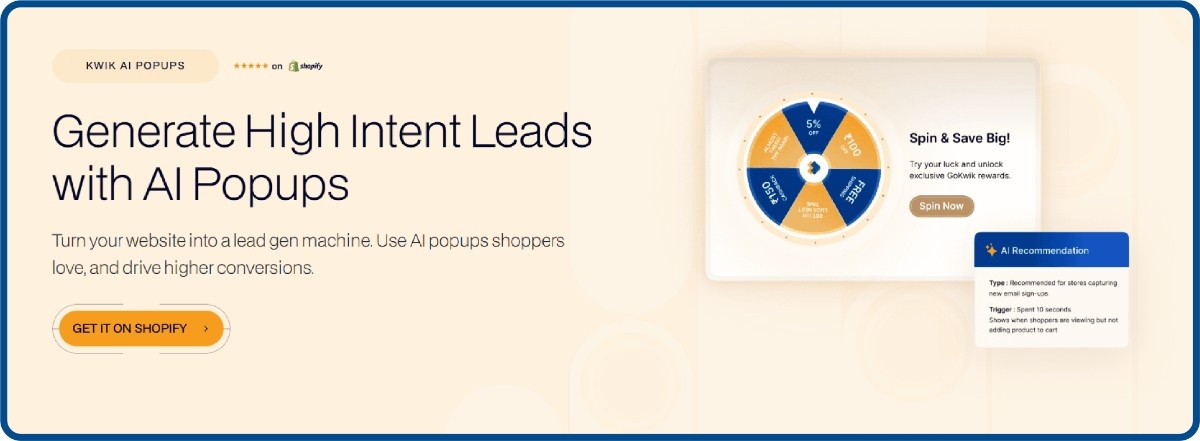
Kwik AI Pop-ups address this gap by going beyond cursor tracking and scroll detection. The tool uses live ecommerce data to personalize each offer based on what the visitor has viewed, what is in their cart, and which segment they fall into, producing a pop-up that feels relevant rather than generic.
Key Features of Kwik AI Popups for D2C Growth
- Intent-Based Triggers: Analyzes real-time visitor behavior to show popups only at moments of high purchase intent or exit friction.
- Instant User Identification: Leverages the GoKwik network to recognize anonymous shoppers and pre-fill details for faster checkouts.
- High-Conversion Formats: Includes gamified "Spin-the-Wheel," mobile-friendly bottom sheets, and urgency-driven FOMO banners.
- Seamless Retargeting: Automatically syncs captured leads with Kwik Engage for instant WhatsApp and SMS recovery sequences.
- Smart A/B Testing: Built-in tools to test different offers and designs, ensuring you deploy only the highest-performing assets.
- Performance Optimized: Lightweight architecture that captures leads without slowing down your site’s loading speed.
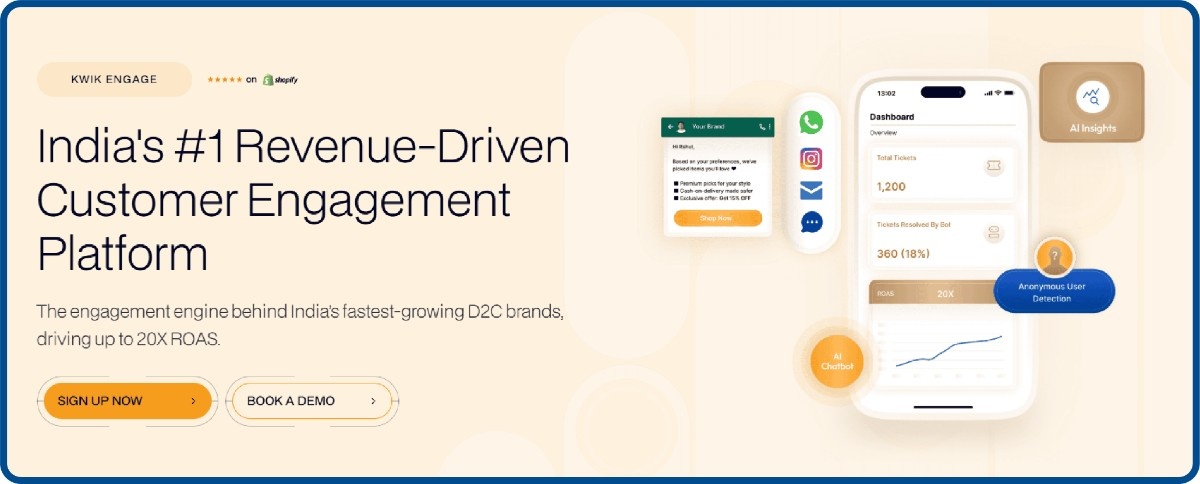
Kwik Engage operates as the safety net for visitors who leave despite seeing the pop-up. Once a shopper exits, Kwik Engage activates automated WhatsApp recovery flows using the captured session data. The follow-up message references the exact products they viewed and the offer they saw, making recovery feel personal rather than automated.
Driving Success From Exit-Intent Pop-ups
Exit intent pop-ups are no longer about just "showing a message" to a departing visitor. They are the frontline of a sophisticated revenue recovery system that bridges the gap between a lost session and a lifetime customer. By moving away from generic overlays and adopting precision triggers, behavioral segmentation, and automated follow-up flows, D2C brands can transform their exit points into high-converting entry points.
While a well-configured pop-up can recover abandoning shoppers on the spot, the real power lies in the ecosystem behind it. Tools like Kwik AI Popups ensure the right offer reaches the right person at the exact moment of hesitation, while Kwik Engage serves as the ultimate safety net, using WhatsApp recovery flows to bring back those who leave anyway.
Book a demowith GoKwik to see both tools in action.
Frequently Asked Questions

AUTHOR
Atul Bansal
Head of Marketing
Social Proof and FOMO-Led Ideas
Idea 5: Out-of-stock scarcity warning at checkout exit