How KwikAds helped Shop Unrush boost ROAS by 37% in 3 months
How KwikAds helped Shop Unrush boost ROAS by 37% in 3 months
How KwikAds helped Shop Unrush boost ROAS by 37% in 3 months
How KwikAds helped Shop Unrush boost ROAS by 37% in 3 months
Kwik Checkout
The Complete Checkout Payment Gateway Guide for D2C Brands
 22 Apr 2026
 12 Min Read
Parousia leads product marketing strategies at GoKwik, and she is an expert in driving e-commerce optimisation, conversion growth, and innovative GTM strategies. She crafts compelling messaging and creates content pertaining to D2C commerce.
Read this blog on your favourite platform
For D2C eCommerce brands, the checkout page is where conversions either happen or fall apart. According to the Baymard Institute, 70% of online shopping carts are abandoned before purchase completion, with complicated checkout processes being a leading cause. Your payment gateway sits at the heart of this critical moment.
It's not just about processing transactions; it's about supporting multiple payment methods, ensuring security, maintaining speed, and building customer trust. For Shopify stores and online brands, choosing the right payment gateway impacts conversion rates, transaction success, and revenue.
This guide breaks down the 10 essential components of a reliable payment gateway, explains how they work, covers different gateway types, and provides a practical framework for selecting the right solution for your business. Whether you're setting up your first store or optimizing an existing checkout, you'll learn what truly matters. Let's start with the basics.
What Is A Checkout Payment Gateway?
A payment gateway is the technology that securely captures paymentdetails from your eCommerce store and transmits them to financial institutions for authorization. Think of it as the digital equivalent of a card reader at a physical checkout counter, but designed specifically for online transactions.
When a customer enters their credit card information on your merchant's website, the payment gateway encrypts this sensitive data and sends it to the payment processor. The processor then communicates with the customer's bank and the acquiring bank to verify funds and approve the transaction. This entire transaction process happens in just a few seconds.
Payment gateways serve several critical functions based on your business needs:
- Security and compliance: Protects customer payment data through encryption and ensures PCI DSS compliance, reducing the risk of data breaches while maintaining strong security standards.
- Authentication and authorization: Verifies customer identity, confirms sufficient funds with the customer's bank, and communicates with the acquiring bank to authorize the transaction.
- Fraud prevention: Uses advanced detection mechanisms to identify suspicious transaction details while ensuring legitimate digital transactions process smoothly.
- Multiple payment methods: Supports credit cards, debit cards, UPI, digital wallets, net banking, and local bank integration options that match your customers' preferences.
- Seamless checkout experience: Enables fast transaction processing with saved payment methods and one-click payments that improve customer experience and reduce cart abandonment.
Selecting the right payment gateway impacts your transaction volume, cash flow, and overall business success. A reliable gateway with technical capabilities suited to your business model ensures smooth transaction processing while protecting card data for both you and your customers.

How Does A Checkout Payment Gateway Work?
Understanding the transaction process helps you identify where friction occurs and how the right gateway improves customer experience. Here's how payment gateways handle digital transactions from start to finish.
- Step 1: Customer Initiates Checkout: Customers proceed to the checkout page and enter shipping details, contact information, and select a payment method.
- Step 2: Payment Details Entry: Shoppers enter card information or select UPI and digital wallets. Modern gateways allow for secure saving of these details to speed up future purchases.
- Step 3: Secure Data Encryption: Upon clicking "Pay," the gateway encrypts sensitive data using SSL/TLS protocols to protect information during transmission.
- Step 4: Authorization Request to Acquiring Bank: Encrypted details are sent to the payment processor, which forwards them to the merchant's acquiring bank for routing through card networks.
- Step 5: Issuing Bank Verifies Transaction: The customer's bank validates balance, credit limits, and fraud indicators to protect against unauthorized transactions.
- Step 6: Authorization Response: The bank sends an approval or decline code back through the network. If declined, customers receive a reason and can attempt alternative payment methods.
- Step 7: Funds Settlement and Transfer: Authorized funds are held until settlement, typically taking 1–3 business days. The acquiring bank then deposits the funds into the business account.
- Step 8: Order Confirmation and Fulfillment: The website displays a confirmation and sends automated notifications. This completes the customer experience and initiates the order fulfillment and shipping process.
The best payment gateways handle all eight steps seamlessly while maintaining PCI DSS compliance, protecting sensitive data, and providing technical support when issues arise. Understanding this transaction process helps you evaluate which technical capabilities matter most for your business needs and business model.
What Are The Types Of Payment Gateways?
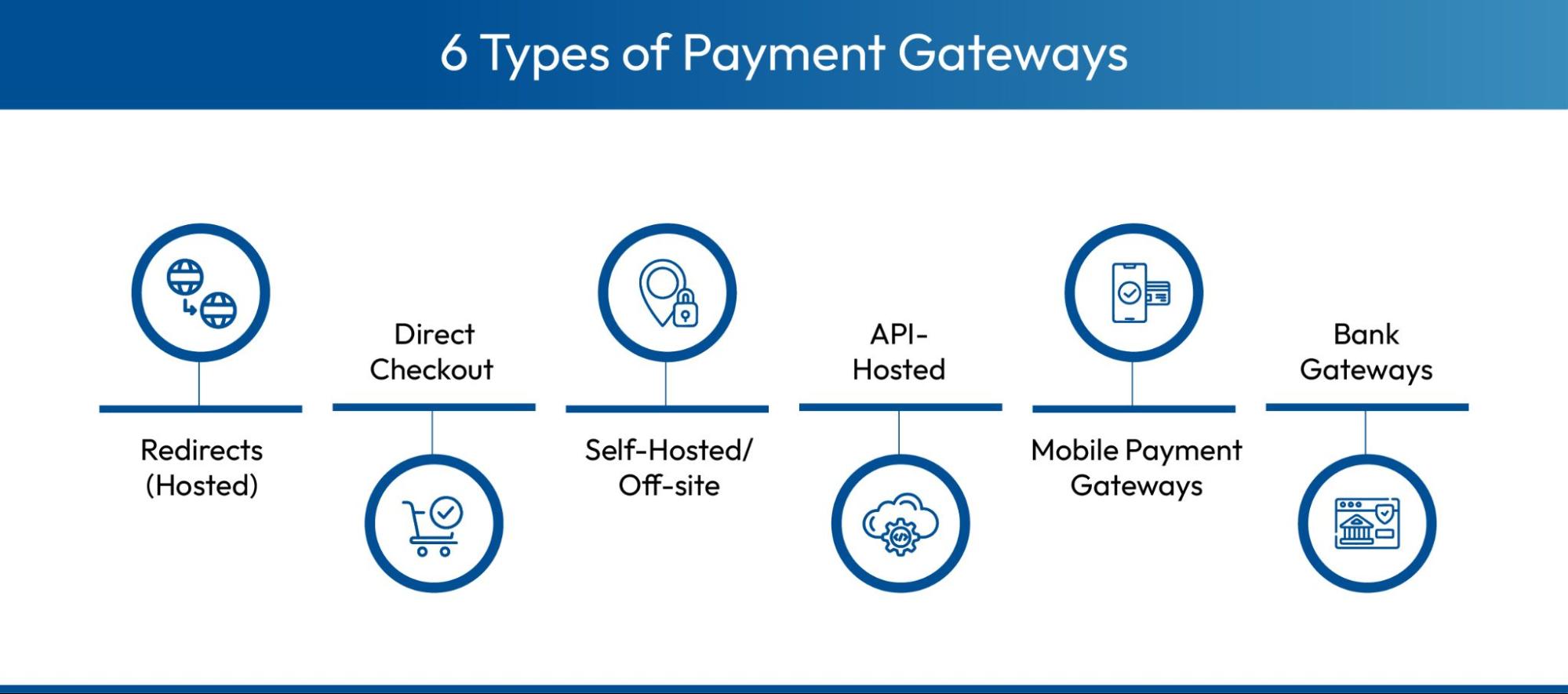
There are many different types of payment gateways. Each functions in a different manner to process payments. You must choose the type of payment gateway based on your business and eCommerce website requirements.
1. Redirects (Hosted) Payment Gateways
In redirect or hosted gateways, customers are redirected from your merchant's site to a secure external page managed by the payment service provider. Customers enter their credit card information and payment details on this secure server to complete the transaction process. Once payment is processed, customers are redirected back to your merchant's website.
This method adds a secure layer for managing sensitive data and card data. Hosted gateways allow small businesses and merchants to reduce the risk of data theft and outsource the burden of PCI DSS compliance to a third-party provider. However, you have less control over the customer experience during the payment step. Examples include PayPal, Stripe-hosted checkout, and PayU.
2. Direct Checkout Payment Gateways
Direct payment gateways allow customers to complete the checkout process without having to leave a site. Customers enter the payment information on the eCommerce website. This setup requires SSL encryption to secure the transmission of payment data. Some examples of direct payment gateways are EaseBuzz, PayU, and BillDesk, among others.
3. Self-Hosted/Off-Site Payment Gateways
Self-hosted payment gateways give merchants complete control over the entire transaction process on their own servers. The payment form is hosted on the merchant's website, and all customer payment data is collected and processed within the merchant's infrastructure before being sent to the payment processor.
This approach offers maximum customization and control over the checkout experience, allowing you to tailor every aspect of the payment flow to match your business model. However, self-hosted gateways require significant technical expertise, dedicated technical support, and full responsibility for data protection and PCI DSS compliance. This option works best for large enterprises with in-house development teams and strong security measures already in place.
4. API-hosted Payment Gateways
Application Programming Interface or API-based payment gateways enable integrating payment functionalities within the eCommerce website or application through an API. The customer does not have to leave the website in this type of payment gateway process. This type of payment gateway collects, transmits, and processes sensitive customer data within the website, following security compliance standards. Moreover, this allows eCommerce sites to have complete control over the payment process, customize it, and provide a more personalized experience to customers.
5. Mobile Payment Gateways
Mobile payment gateways are designed for mobile devices. This type of payment gateway processes payments made via mobile devices such as smartphones, tablets, etc. This type of payment gateway allows payments through mobile wallets, cards, net banking, etc. This method ensures the safe transmission of customer data. Additionally, this method also enables biometric authentication, one-click payment, etc. Thus, making transactions faster, easier, and smoother. A few examples of mobile payment gateways are Google Pay and Apple Pay, among others.
6. Bank Gateways (Local Bank Integration)
Bank gateways, also known as local bank integration gateways, connect directly with specific banks to process transactions without involving third-party payment processors. Customers are typically redirected to their bank's secure payment page to authorize the transaction using their online banking credentials.
This approach offers high trust levels since customers interact directly with their bank's interface, and it often provides better transaction fees for merchants who process high transaction volume with specific banks. Local bank integration works well for businesses targeting customers who prefer bank-based payment methods over cards. However, bank gateways may require separate integrations for each bank and can limit your reach to customers of those specific financial institutions. The technical support and setup process varies significantly depending on the acquiring bank.
10 Components Of A Good Checkout Payment Gateway
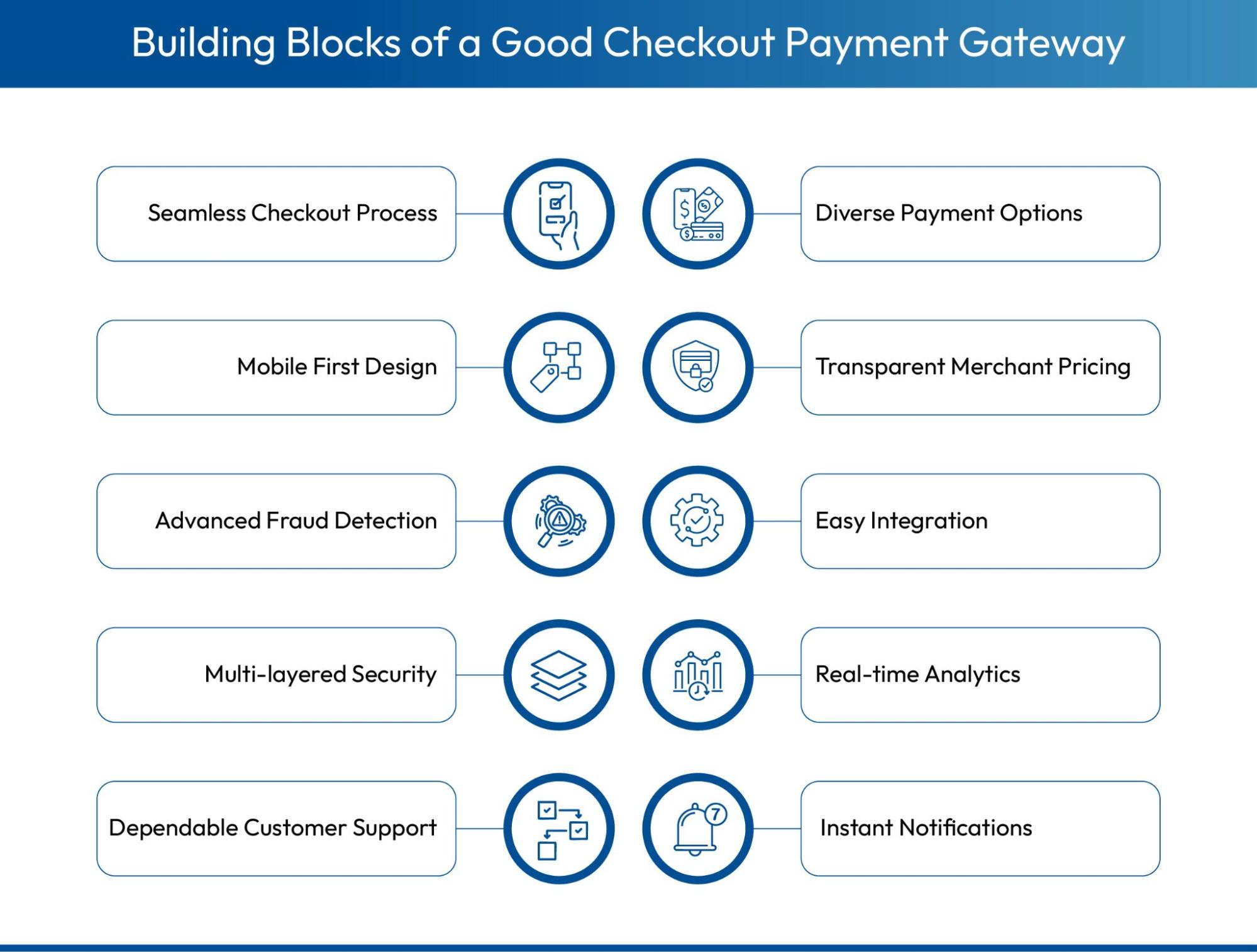
1. A Seamless Checkout Process
The hallmark of a superior payment gateway is its ability to minimize friction. Features like one-click checkout, tokenization, and autofill create a streamlined experience that encourages consecutive purchases. Amazon exemplifies this best, allowing users to store details securely for a quick, convenient transaction flow.
2. Diverse Payment Options
Modern shoppers expect flexibility. A robust gateway must support a wide spectrum of methods, including credit cards, digital wallets, UPI, Net Banking, and PayLater options. For example, GoKwik’s Kwik Payments aggregates numerous payment modes, ensuring customers can always pay via their preferred channel.
3. Mobile-First Design
With mobile commerce dominating the landscape, gateways must be optimized for smaller screens and touch interfaces. Brands like Swiss Beauty and The Man Company utilize mobile-first designs to enable secure, flawless transactions on handheld devices, ensuring the experience is just as smooth as on a desktop.
4. Transparent Merchant Pricing
Hidden fees erode trust and complicate cash flow management. A dependable gateway provides a clear pricing structure that explicitly outlines setup costs, transaction fees, and maintenance charges. This transparency allows merchants to accurately forecast expenses and calculate their true cost of doing business.
5. Advanced Fraud Detection
Security should never come at the cost of user experience. Leading gateways employ machine learning, velocity checks, and behavioral analysis to pinpoint threats in real time. This approach minimizes chargebacks and blocks fraud while ensuring legitimate transactions proceed without unnecessary friction.
6. Easy Integration and Customization
Complex integrations can stifle business growth. The ideal gateway offers developer-friendly APIs and SDKs for effortless setup. Furthermore, it should allow for deep customization, enabling merchants to brand payment forms and checkout pages to boost engagement and maintain consistency.
7. Multi-layered Security
Handling sensitive financial data requires a "defense-in-depth" approach. Essential measures include SSL/TLS encryption, PCI DSS compliance, and tokenization to safeguard data at every stage. Combined with 3D Secure authentication and CVV checks, these layers protect against breaches and build lasting customer trust.
8. Real-time Analytics
In a fast-paced market, data is currency. A gateway with robust analytics provides real-time insights into transaction trends and customer behavior. Access to immediate reporting empowers merchants to make informed, data-driven decisions instantly.
9. Dependable Customer Support
Technical glitches can disrupt revenue, making 24/7 access to expert support non-negotiable. Whether through chat, email, or phone, a responsive support team ensures that issues regarding integration or settlements are resolved quickly, minimizing downtime and operational disruption.
10. Instant Notifications
Real-time communication eliminates uncertainty. Instant alerts inform customers of payment status, whether successful, failed, or pending. For merchants, features like webhook integrations automate workflows by triggering order confirmations or inventory updates the moment a payment clears, streamlining the entire operations cycle.
Gokwik Kwik Payments: A Cut Above the Rest
Kwik Payments distinguishes itself in the crowded eCommerce market by incorporating every essential element required for a superior checkout experience.
- Comprehensive Payment Options: Supports cards, UPI, net banking, and wallets to match customer preferences and boost conversions.
- Innovative Partial COD: Enables split payments (digital + cash) to secure upfront revenue and drastically minimize RTO losses.
- Robust Gateway Partnerships: Integrates with India's leading aggregators to ensure high transaction success rates and minimize failures.
- High-Speed Processing: Delivers low latency for swift transactions, significantly reducing cart abandonment.
- Dynamic Routing: Intelligent, AI-powered system that automatically switches between multiple payment gateways to ensure the highest possible transaction success rate.
- Continuous Innovation: Constantly integrates emerging technologies to remain a future-ready partner for evolving market needs.
The Final Verdict: Turning Checkout into a Growth Engine
A payment gateway is far more than a technical utility; it is the deciding factor between a conversion and an abandoned cart. To truly scale, brands need a solution that prioritizes trust, security, and speed while adapting to distinct consumer habits. GoKwik’s Kwik Payments delivers exactly this, combining "defense-in-depth" security with innovative features like Partial COD to maximize prepaid conversions and minimize RTO losses. Choosing the right partner isn't just about accepting payments; it's about securing your revenue.
Ready to unlock 10X growth? Schedule a Kwik Payments demo today
What is a payment gateway in eCommerce?
A payment gateway is the technology that securely captures payment details from your eCommerce store and transmits them to financial institutions for authorization. It acts as the digital equivalent of a physical card reader, encrypting sensitive data like credit card numbers and sending it to the payment processor to verify funds and approve the transaction in seconds.
What is the difference between a Payment Gateway and Checkout?
While often used interchangeably, these are two distinct parts of the transaction. The checkout is the interface or process where customers take the final steps to complete a purchase, such as entering shipping and billing information. The payment gateway is the backend system that operates within that checkout process to actually initiate and process the financial transaction.
Is UPI a Payment Gateway?
No, UPI (Unified Payments Interface) is not a payment gateway itself; it is a payment method or system. A payment gateway is the service provider that supports various methods, including UPI, credit cards, and digital wallets, allowing merchants to accept these different forms of payment through a single integration.
How many types of Payment Gateways are there?
There are generally six distinct types of payment gateways available to merchants. These include Redirects (Hosted), where customers leave the site to pay, Direct Checkouts where customers stay on the site, Self-Hosted or Off-site gateways, API-hosted gateways for deep customization, Mobile Payment Gateways optimized for handheld devices, and Bank Gateways that integrate directly with local banks.
What is the difference between a Payment Gateway and a Payment Processor?
The main difference lies in their roles during the transaction. A payment gateway is the system that securely captures and encrypts customer data at the point of checkout. In contrast, payment processors are third-party companies or financial institutions that receive that data from the gateway and handle the authorization and settlement of funds with the banks.
Can Payment Gateways be integrated with any eCommerce platform?
Yes, checkout payment gateways can be easily integrated with most eCommerce platforms. Modern solutions, such as GoKwik, provide API-based integrations and specific solutions tailored to different platforms to ensure that brands can set up their payment infrastructure smoothly, regardless of their technical stack.

AUTHOR
Parousia Khan
Senior Product Marketing Manager @GoKwik