How KwikAds helped Shop Unrush boost ROAS by 37% in 3 months
How KwikAds helped Shop Unrush boost ROAS by 37% in 3 months
How KwikAds helped Shop Unrush boost ROAS by 37% in 3 months
How KwikAds helped Shop Unrush boost ROAS by 37% in 3 months
Kwik Engage
AiSensy Pricing Explained for 2026
 20 Mar 2026
 18 Min Read
Parousia leads product marketing strategies at GoKwik, and she is an expert in driving e-commerce optimisation, conversion growth, and innovative GTM strategies. She crafts compelling messaging and creates content pertaining to D2C commerce.
Read this blog on your favourite platform
Staying ahead in the digital commerce ecosystem requires understanding the financial implications of your tools. This becomes crucial, especially when your customer engagement increasingly runs through platforms like the WhatsApp Business API. Rates for these platforms change regularly, and businesses evaluating engagement platforms need the most current information for 2026.
You cannot afford to base your budget on outdated rate cards or simplified subscription fees that hide the real picture. One such popular platform is AiSensy, which follows the standard model of Meta’s conversation-based pricing plus its own platform fees.
This structure means your total AiSensy pricing depends on your usage volume and the specific add-ons you choose. It is rarely a flat fee, and costs can fluctuate significantly month over month as your marketing campaigns scale up or down.
In this article, we will examine the components of AiSensy pricing in detail. We will uncover hidden cost variables and analyze the value trade-offs you face. Our goal is to give you a transparent view so you can decide if this platform aligns with your growth strategy for the coming year.

How AiSensy pricing works?
To understand the costs, you must first look at how Meta splits WhatsApp API pricing into four distinct categories for billing purposes:
- Utility templates for order status updates
- Authentication template messages for OTPs
- Promotional messages for marketing campaigns
- Service messages for user-initiated support
Rates for each category vary by country and conversational category. For instance, marketing messages in India cost around ₹0.784 per 24-hour session in 2026. Whereas, marketing messages cost approximately ₹1.831 ($0.025) for North America and ₹4.337 (€0.049) for Western Europe.
However, these Meta-defined rates represent only one layer of the overall cost structure that businesses need to account for.
AiSensy acts as the middleware that connects you to the WhatsApp Business API, with subscription plans starting at ₹1350 per month. This base fee grants you access to their dashboard, WhatsApp automation tools, and 5 free agent seats.. However, it does not cover the variable charges payable to Meta, such as ₹0.88 for marketing templates, which are billed on top of your subscription.
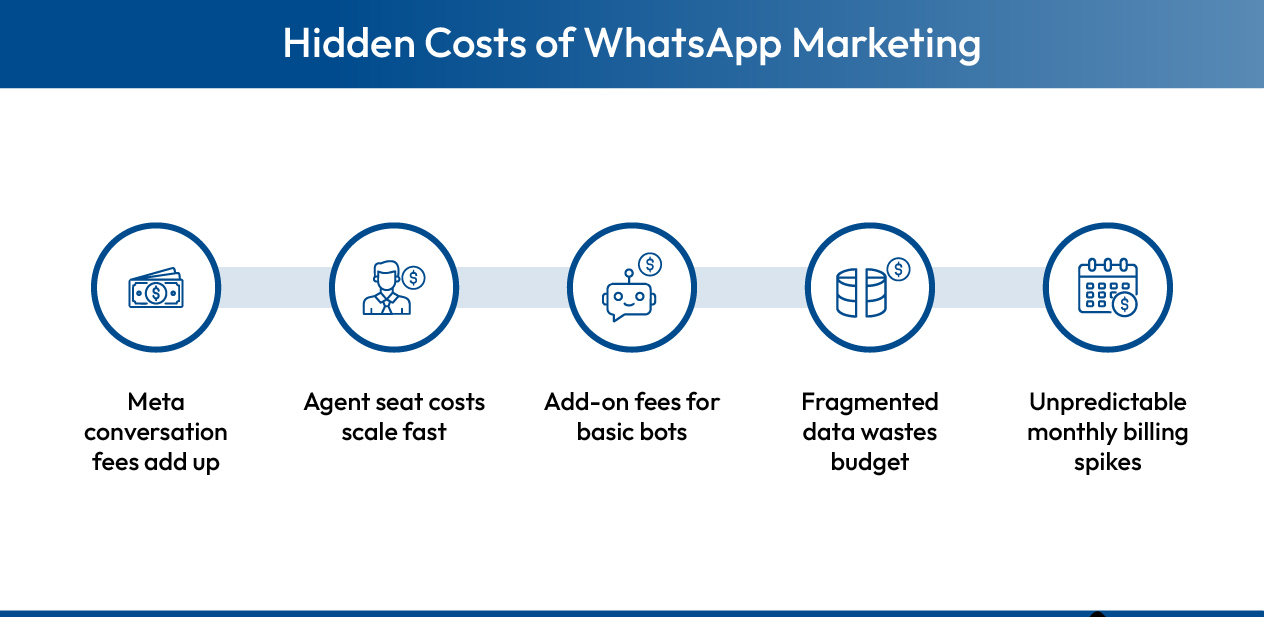
This structure means your total AiSensy pricing varies significantly based on your specific messaging volume and monthly active users. You also pay different rates depending on the campaigns you run, with simple OTP alerts costing less than complex marketing broadcasts. Consequently, your invoice is rarely consistent, fluctuating every month based on your campaign intensity and support traffic.
Because of these variable layers, the pricing details on the AiSensy website are not always fully transparent for scaling businesses. High-volume users often need to schedule a direct sales call with the AiSensy team to get the pricing details.
AiSensy subscription tiers: What’s included and what’s not
Understanding the base subscription is the first step in calculating your total platform cost. AiSensy offers public pricing tiers that cater to different stages of business growth. We will break down AiSensy’s subscription plans to identify what you get in each tier and the advanced features that might be missing.
The "Free Forever" Plan
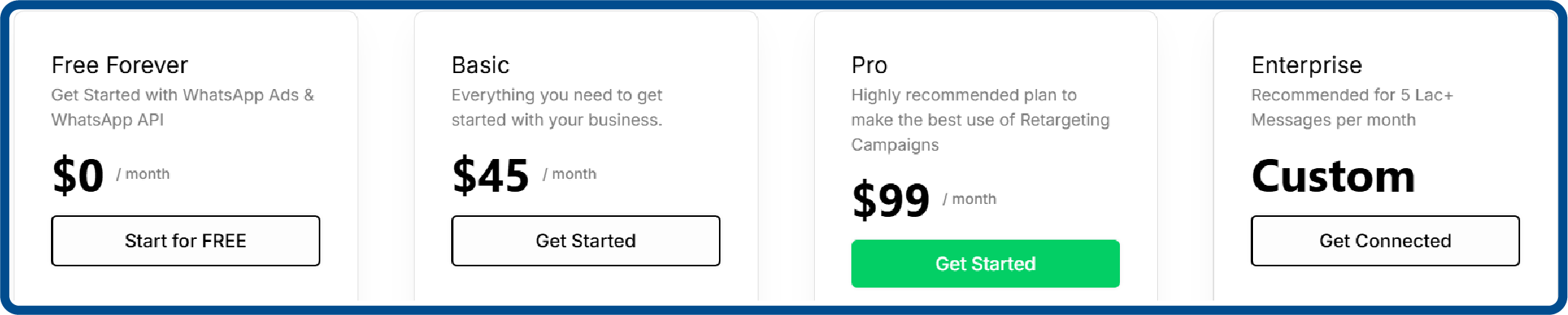
AiSensy offers a Free Forever tier advertised at ₹0/month, which often serves as the primary hook for new businesses. While the software subscription itself is waived, it is critical to understand that your monthly bill will not be zero.
- You Still Pay Meta Fees: The "Free" label applies only to the AiSensy dashboard fee. You are still billed for every conversation you initiate based on Meta’s standard rate card.
- Limited Utility: This plan is designed primarily for testing the interface rather than running a business. It typically restricts you to basic broadcast features and a limited audience size.
This tier acts as a "sandbox." It is useful for a developer testing an API connection or a very small hobby business. However, for any D2C brand intending to generate revenue, the lack of advanced automation and audience segmentation makes this plan unviable for growth.
Do not confuse "Free Subscription" with "Free Messaging." If you send 1,000 marketing messages on the Free plan, you will still receive an invoice for the Meta conversation charges.
Basic Plan
The Basic plan costs ₹1350 per month and serves as the entry point for small teams or small businesses.
- Per Template Message Pricing: You pay ₹0.88 for Marketing, ₹0.125 for Utility, and ₹0.125 for Authentication messages. Service conversations are free.
- Features: Includes all features of the Free Forever plan plus smart audience segregation and broadcasting.
- Agent Access: You get 1 Owner and 5 FREE Agents included. Additional agents cost ₹750 per month each.
- Integrations: Supports Shopify and WooCommerce integrations along with Dialogflow chatbot integration.
- Limits: Messaging speed is capped at 2400 messages per minute.
- Chatbots: You can build 5 Chatbot flows for ₹2500 which is charged separately.
Pro Plan
The Pro plan is highly recommended to make the best use of retargeting campaigns. It costs ₹2880 per month and adds advanced campaign management tools.
- Per Template Message Charges: Rates remain the same as Basic at ₹0.88 for Marketing and ₹0.125 for Utility/Authentication.
- Expanded Features: Includes everything in Basic plus up to 100 Tags and 20 Custom Attributes.
- Campaign Tools: Adds Campaign Scheduler and Campaign Click Tracking, along with Smart Agent Routing.
- Agent Access: Still includes 1 Owner and 5 FREE Agents. Additional agents are ₹750 per month each.
- Advanced Capabilities: Features User Access Control and automatic failed message retry.
- Chatbots: The 5 Chatbot flows still cost ₹2500, charged separately.
Enterprise Plan
This tier is recommended for brands sending 5 Lac+ messages per month. It uses Custom pricing and requires you to get connected with their sales team.
- Per Template Message Charges: Marketing rates are custom while Utility and Authentication remain at ₹0.125.
- Exclusive Features: Includes unlimited tags and attributes along with downloadable reports.
- Support: You get a dedicated account manager and priority customer support.
- Performance: Offers higher messaging speeds and webhooks for deeper integration.
Add-Ons
If you wish to access any additional features (beyond those mentioned above), you will be billed separately for them.
Chatbot Flows Add-On
To automate sales and support seamlessly, you need the Chatbot Flows add-on. This allows you to build multiple WhatsApp Chatbots using a simple drag-and-drop function.
- Cost: ₹2500 charged separately.
- Capability: Build 5 unique chatbots to manage catalogues and connect WhatsApp payments.
Other Add-Ons
- Virtual Number: Get an Indian virtual number for ₹299 billed quarterly. This eliminates the need to maintain a physical SIM card.
- No-Code Chatbot: The drag-and-drop builder is billed yearly at ₹2250 per month for 12 months.
Features Locked Behind Higher-tier Subscriptions
Here are the critical features usually locked behind higher tiers or add-ons that can limit your growth potential.
- Advanced segmentation: The base AiSensy pricing tiers often restrict the depth of audience segmentation you can achieve. You might find yourself unable to create granular segments based on complex user behaviors without upgrading to a custom enterprise plan which increases costs significantly.
- Omni-channel capabilities: AiSensy focuses primarily on WhatsApp which limits your ability to conduct cross-channel campaigns. You miss out on the unified revenue impact of combining SMS and email with WhatsApp unless you invest in separate tools that fragment your data and budget.
- Custom events or webhooks: Access to webhooks and custom events is often gated behind the Enterprise plan. This means growing brands on the Pro plan cannot easily trigger automated workflows based on specific website actions or external system events without paying more.
- Multi-channel analytics: The platform provides analytics specific to WhatsApp but lacks a holistic view of customer value. You cannot easily see how WhatsApp interactions influence LTV across other channels which makes it hard to calculate the true ROAS of your investment.
- Growing reliance on paid add-ons: Many essential features like chatbots and additional agents are treated as separate line items. This structure means your monthly bill can increase unexpectedly as you add functionality that modern engagement platforms often include in their core subscription price.
WhatsApp API Costs
It is crucial to remember that these charges are separate from the AiSensy pricing for the software. You are billed directly based on Meta’s conversation pricing rules, which charge for 24-hour windows initiated by business templates. Every marketing broadcast or utility update you send triggers these costs regardless of your subscription tier.
Any price changes in 2026 may impact your total monthly spend significantly, especially if you are a high-volume commerce brand.
Meta periodically adjusts rates based on market conditions and message categories. A slight increase in marketing conversation rates can inflate your budget by lakhs of Rupees if you send frequent promotional campaigns to a large user base.
Add-ons & usage-based costs
Let’s have a look at the components that can inflate your final AiSensy pricing:
- Number of user seats: You only get five free agents in the standard plans before paying extra. Scaling your live chat support team means your AiSensy costs rise by ₹750 per new person who needs access to the shared inbox dashboard.
- Additional chatbots: Advanced automation requires purchasing the chatbot flow builder add-on separately. If you need more than the basic allowance of five bots you will likely face additional charges that add to your monthly overhead.
- High-volume broadcast engine usage: Sending millions of messages requires robust infrastructure that the basic plans may not support. High-volume messaging often pushes you into the Enterprise tier where AiSensy pricing becomes less predictable compared to fixed-tier platforms.
- Advanced analytics: Deep insights into campaign performance and budget analytics are often gated features. Accessing detailed reports to optimize your spend might require moving to the Pro or Enterprise plan which raises your base subscription fee.
- Third-party integrations: While basic integrations are included connecting to custom tech stacks can be complex. You might incur development costs or need higher tier access to enable specific webhooks and APIs required for seamless data flow.
Modern engagement platforms often combine these critical features natively into their core subscription tiers. This approach reduces stack complexity by eliminating the need for multiple third-party integrations or separate add-on purchases. As a result, businesses benefit from greater cost certainty and a unified dashboard for their daily operations.
Modern engagement platforms often combine these critical features natively into their core subscription tiers. This approach reduces stack complexity by eliminating the need for multiple third-party integrations or separate add-on purchases. As a result, businesses benefit from greater cost certainty and a unified dashboard for their daily operations.
Breakdown of AiSensy’s total cost structure (with examples)
To understand the real impact of AiSensy pricing on your bottom line, we need to look at practical scenarios. The following examples show how final costs vary based on business size and usage patterns.
Scenario 1: Small India-Focused D2C Brand
Business Profile:
- 5,000 customers in database
- India-only operations
- 3-person marketing team
- Monthly activity: Welcome series, abandoned cart recovery, promotional campaigns
AiSensy Plan: Basic (₹1,350/month)
Monthly Message Breakdown:
- 10,000 Marketing messages @ ₹0.88 = ₹8,800
- 2,000 Utility messages @ ₹0.125 = ₹250
- 1,000 Authentication (OTP) @ ₹0.125 = ₹125
Total message costs: ₹9,175
Add-on Costs:
- Chatbot Flows (5 flows pack): ₹2,500
- Additional Agents: None (3 included within free limit of 5)
Total add-ons: ₹2,500
Real Monthly Cost: ₹1,350 + ₹9,175 + ₹2,500 = ₹13,025
Annual Cost: ₹1,56,300
Cost multiplier: 9.6x the advertised subscription price
Scenario 2: Growing Multi-Market eCommerce Brand
Business Profile:
- 25,000 customers (80% India, 20% International)
- 7-person team (Customer service + Marketing)
- Active engagement across customer lifecycle with segmentation
AiSensy Plan: Pro (₹2,880/month)
Monthly Message Breakdown:
- 30,000 India Marketing @ ₹0.88 = ₹26,400
- 5,000 USA Marketing @ ₹1.83 = ₹9,150
- 2,000 UK Marketing @ ₹4.34 = ₹8,680
- 5,000 Utility (India) @ ₹0.125 = ₹625
Total message costs: ₹44,855
Add-on Costs:
- Additional Agents: 2 extra @ ₹750 = ₹1,500
- Chatbot Flows (5 flows pack): ₹2,500
Total add-ons: ₹4,000
Real Monthly Cost: ₹2,880 + ₹44,855 + ₹4,000 = ₹51,735
Annual Cost: ₹6,20,820
Cost multiplier: 17.9x the advertised subscription price
Scenario 3: Mid-Size Indian D2C Brand Scaling Nationally
Business Profile:
- 100,000 customers across India
- 10-person team (CS, Marketing, Operations)
- Multiple product categories with regular launches
- Active during festive seasons
AiSensy Plan: Pro (₹2,880/month)
Monthly Message Breakdown:
- 100,000 India Marketing messages @ ₹0.88 = ₹88,000
- 20,000 Utility messages @ ₹0.125 = ₹2,500
- 10,000 Authentication (OTP) @ ₹0.125 = ₹1,250
Total message costs: ₹91,750
Add-on Costs:
- Additional Agents: 5 extra @ ₹750 = ₹3,750
- Chatbot Flows (5 flows pack): ₹2,500
Total add-ons: ₹6,250
Real Monthly Cost: ₹2,880 + ₹91,750 + ₹6,250 = ₹1,00,880
Annual Cost: ₹12,10,560
Cost multiplier: 35x the advertised subscription price
Note: These calculated examples are based on AiSensy’s published pricing and standard Meta rates for 2026. Actual costs may vary based on specific usage patterns.
The challenges businesses face with AiSensy pricing
Businesses often encounter friction when trying to scale their operations within the AiSensy pricing framework. While you may expect important updates for features, price stability is key. Here are the key challenges that you will likely face:
- Opaque pricing in higher tiers: It is difficult for brands to compare expected ROI upfront without clear pricing. Negotiating custom rates for Enterprise plans often lacks transparency which leaves businesses unsure if they are getting the best possible deal compared to competitors.
- Reliance on add-ons: Some crucial features like advanced analytics and segmentation depth are not included in base plans. You end up paying extra for essential tools for growth, which inflates the total AiSensy cost beyond the initial sticker price.
- Platform dependence on WhatsApp-only channels: Brands needing multi-channel engagement, like Facebook and email, must maintain separate tools. This forces you to pay for multiple subscriptions, increasing your overall tech stack costs and fragmenting your customer data across different silos.
- Scalability concerns: As broadcast volume increases, conversation-based charges dominate the budget. Brands look for platforms with efficiency features like smart retries and automated segmentation to control these costs, but AiSensy pricing structures offer limited relief here.
AiSensy vs modern engagement platforms: How the value differs
The market is shifting towards platforms that offer higher value than standalone WhatsApp tools. Understanding this shift explains why AiSensy pricing might feel restrictive for modern brands.
- Multi-channel integration: Multi-channel platforms often include FB and Instagram messaging or email and SMS within the same subscription. This consolidates your spend and reduces the total cost of ownership compared to paying for AiSensy cost plus separate email and SMS tools.
- Advanced retention tools: Some systems offer advanced segmentation and RFM modelling along with A/B testing inside core plans. This helps with reducing tool fragmentation and provides better value than paying for basic access and adding paid modules for analytics later.
- Smart automation efficiency: Smart automation tools like custom flows and predictive engagement or intelligent retries can reduce WhatsApp marketing costs. By optimizing delivery and targeting you save on wasted message fees which directly improves the ROI of your platform investment.
- Predictable pricing models: Predictable pricing models with fixed tiers rather than usage-heavy billing help fast-growing brands manage budget uncertainty. Knowing your core platform costs upfront allows for better resource allocation and prevents nasty surprises at the end of the month.
Where AiSensy makes sense and where it may fall short?
It is important to evaluate AiSensy pricing in the context of your specific business needs. As the costing fits some models perfectly while restricting others.
Where AiSensy Works Well
- Businesses with a WhatsApp-only engagement focus find the pricing straightforward enough.
- Teams requiring basic chat automation and simple broadcasts benefit from the low entry cost.
- Early-stage companies with smaller communication volumes appreciate the pay-as-you-go flexibility.
Where It May Fall Short
- Brands needing deeper segmentation or multi-channel orchestration will find the features lacking.
- Mid to large eCommerce operations requiring robust analytics and RFM insights face limitations.
- Teams scaling user bases quickly find that unpredictable conversation costs strain budgets.
- Businesses demanding enterprise-grade automation or custom workflows often outgrow the platform capabilities.
Kwik Engage: A stronger AiSensy alternative for growing brands in 2026
For growing brands seeking value beyond basic messaging, Kwik Engage offers a comprehensive AiSensy alternative. It shifts the focus from managing conversation costs to maximizing return on ad spend through integrated revenue tools and innovative features.
Clear modules for:
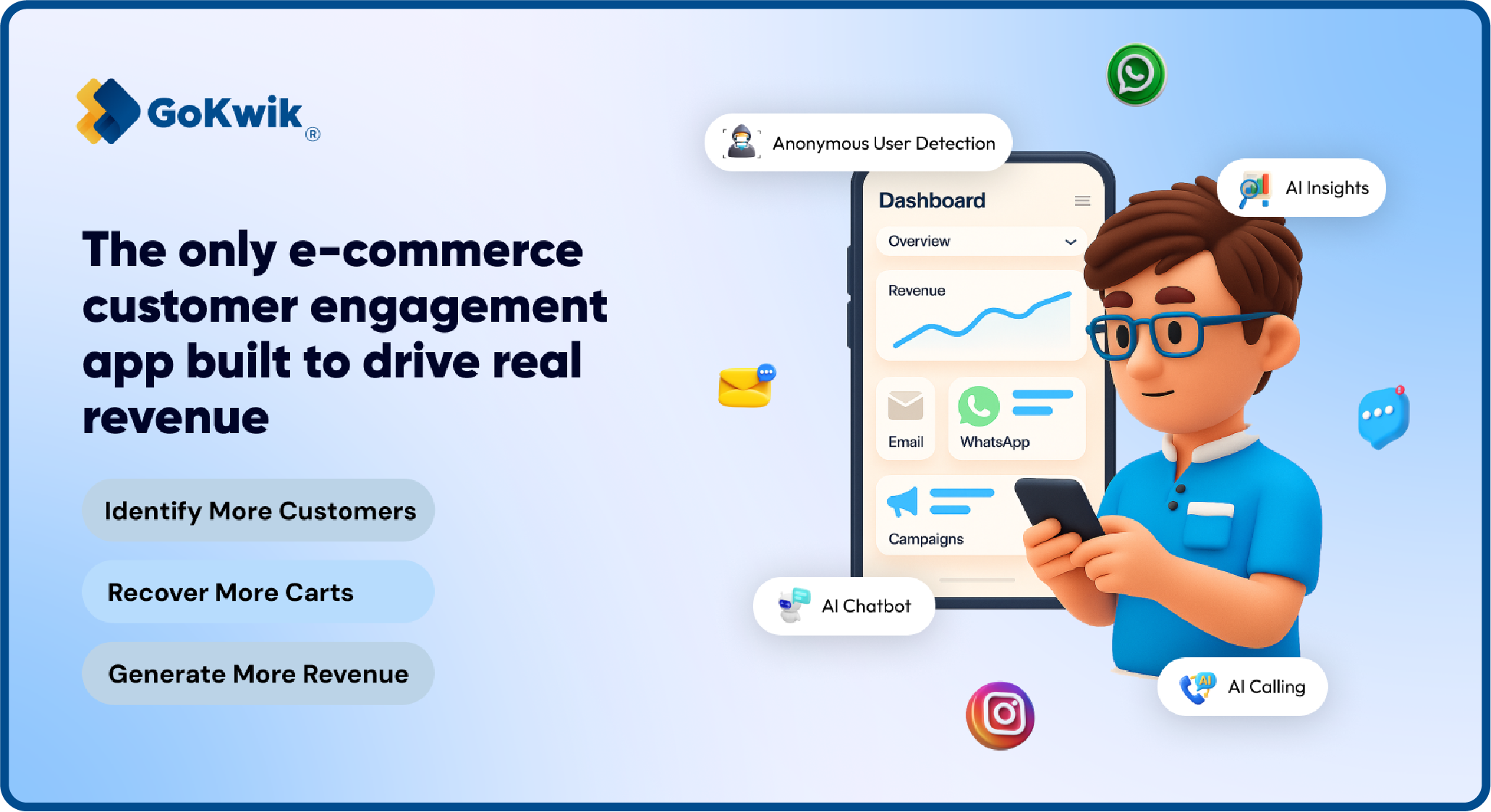
- WhatsApp+Facebook+Instagram: Unify social conversations across three major platforms into one seamless dashboard.
- Email+SMS: Orchestrate traditional messaging channels alongside chat for broader customer reach.
- Segmentation: Build granular audiences based on deep behavioral data and purchase history.
- Automation: Deploy sophisticated workflows that trigger based on specific user actions instantly.
- Insights: Access deep analytics to track revenue impact and optimize campaign performance.
All-in-One Engagement Capabilities
Kwik Engage delivers exceptional value by unifying your entire customer journey and touchpoints into a single, powerful engagement ecosystem.
- Omni-channel Support: You get unified support across WhatsApp, Instagram and Facebook DMs along with SMS and email in one place. This consolidation allows your team to manage every customer interaction from a single screen, eliminating the chaos of switching between multiple fragmented tools.
- Advanced Retention Tools: The platform includes RFM modeling and cohort analysis plus A/B testing and custom automations natively. These tools empower you to deeply understand customer lifecycles and deploy retention strategies that are typically available only in expensive enterprise-grade data platforms.
- AI-Driven Features: You access smart retry logic and AI calling along with Kwik Insights included in higher tiers. These intelligent features automatically optimize delivery rates and provide predictive analytics, helping you recover lost revenue without requiring manual intervention or complex setup.
Predictable Costs for Scaling
Unlike conversation-cost-heavy models that punish growth, many critical functions are included within our fixed monthly tiers. You pay for the capability rather than being penalized for every single interaction or agent seat you add, making budgeting easier.
Custom events, segmentation, and workflow automation are bundled with mid- to high-tier plans, thereby reducing reliance on add-ons. This bundling strategy ensures that as you grow, your AiSensy cost comparison becomes even more favorable towards Kwik Engage's predictable, value-driven model.
Why brands prefer Kwik Engage over AiSensy?
Leading brands consistently choose Kwik Engage because it aligns their operational costs directly with revenue outcomes, providing a stable foundation for long-term growth and financial planning.
- Better cost Predictability: You know exactly what your platform bill will be each month which simplifies financial planning significantly. This stability allows finance teams to allocate marketing budgets with confidence, avoiding the stress of fluctuating invoices caused by variable usage fees.
- Multi-channel Orchestration: You manage all engagement channels from one dashboard, saving immense time and multiple subscription fees. This unified approach streamlines your workflow and ensures consistent messaging across SMS, email, and WhatsApp, which is impossible to achieve with silenced tools.
- Superior Automation Depth: You build complex revenue-generating flows that basic platforms simply cannot handle due to feature limitations. Our advanced builder allows for intricate logic and behavioral triggers, enabling you to create highly personalized journeys that drive significantly higher conversion rates.
- Unified Analytics: You see the full picture of your customer journey across all channels in one view. This comprehensive data visibility allows you to track true attribution and understand exactly how different touchpoints contribute to your overall revenue and customer lifetime value.

Conclusion
AiSensy remains a viable WhatsApp-focused platform for smaller teams who need a simple tool to get started. Its entry-level AiSensy pricing is attractive for businesses with low volume and simple needs.
But in 2026, brands prioritizing multi-channel engagement and deeper retention analytics with predictable pricing prefer broader platforms like Kwik Engage. The ability to identify anonymous users and drive revenue makes it a superior investment for growth-focused companies.
If you are ready to move beyond basic broadcasting and start generating real revenue from your conversations, explore Kwik Engage today.
What is the AiSensy free forever plan?
The AiSensy free forever plan is a limited tier designed for businesses just starting out. It typically allows for basic features like sending broadcasts to a small audience and managing chats. However, you still have to pay the Meta conversation charges for any messages you send. It is a good way to test the interface before committing to a paid AiSensy subscription.
What is the price of Wati vs AiSensy?
Wati and AiSensy have competitive pricing but structurally differ. Wati pricing often starts with a slightly higher base fee but includes different feature sets. AiSensy starts lower at ₹1350/month but charges extra for add-ons like chatbots and agents. When calculating the total Wati vs AiSensy cost, you must factor in these add-ons, whereas platforms like Kwik Engage often bundle more value into core tiers.
How much does AiSensy charge per message?
AiSensy itself does not charge a markup on the Meta conversation fees in its standard plans. You pay the official Meta rates, such as roughly ₹0.78-₹0.88 for marketing conversations in India. However, your total cost per message effectively includes the subscription fee spread across your volume. High-volume sending might require the Enterprise plan, where rates are custom.
What is the use of AiSensy?
AiSensy is used primarily as a marketing and support tool on WhatsApp. Businesses use it to send promotional broadcasts, automate notifications like order updates, and handle customer queries via a shared inbox. While effective for these tasks, it lacks the deep revenue attribution and anonymous user identification that advanced alternatives like Kwik Engage provide for D2C brands.
What is the AiSensy cost for chatbots?
The cost for chatbots on AiSensy is an additional fee on top of your monthly subscription. You typically pay ₹2500 per month for the Chatbot Flows add-on, which lets you build up to 5 bots. If you need a more advanced no-code builder, that is another separate charge. This add-on model means the advertised base price is rarely your final bill.

AUTHOR
Parousia Khan
Senior Product Marketing Manager @GoKwik