|
Dimension |
D2C |
B2C |
|
Sales channel |
Brand sells through its own website or owned app. |
Brand may sell through marketplaces, retail, or its own site. |
|
Customer data |
Brand gets direct first-party data from every interaction. |
Data access depends on the platform or retailer's rules. |
|
Pricing control |
Brand controls pricing, offers, and website-level promotions. |
Marketplace discounts or retailer markups can influence pricing. |
|
Brand experience |
Brand controls product discovery, checkout, and post-purchase communication. |
Experience depends on the channel that handles the purchase. |
|
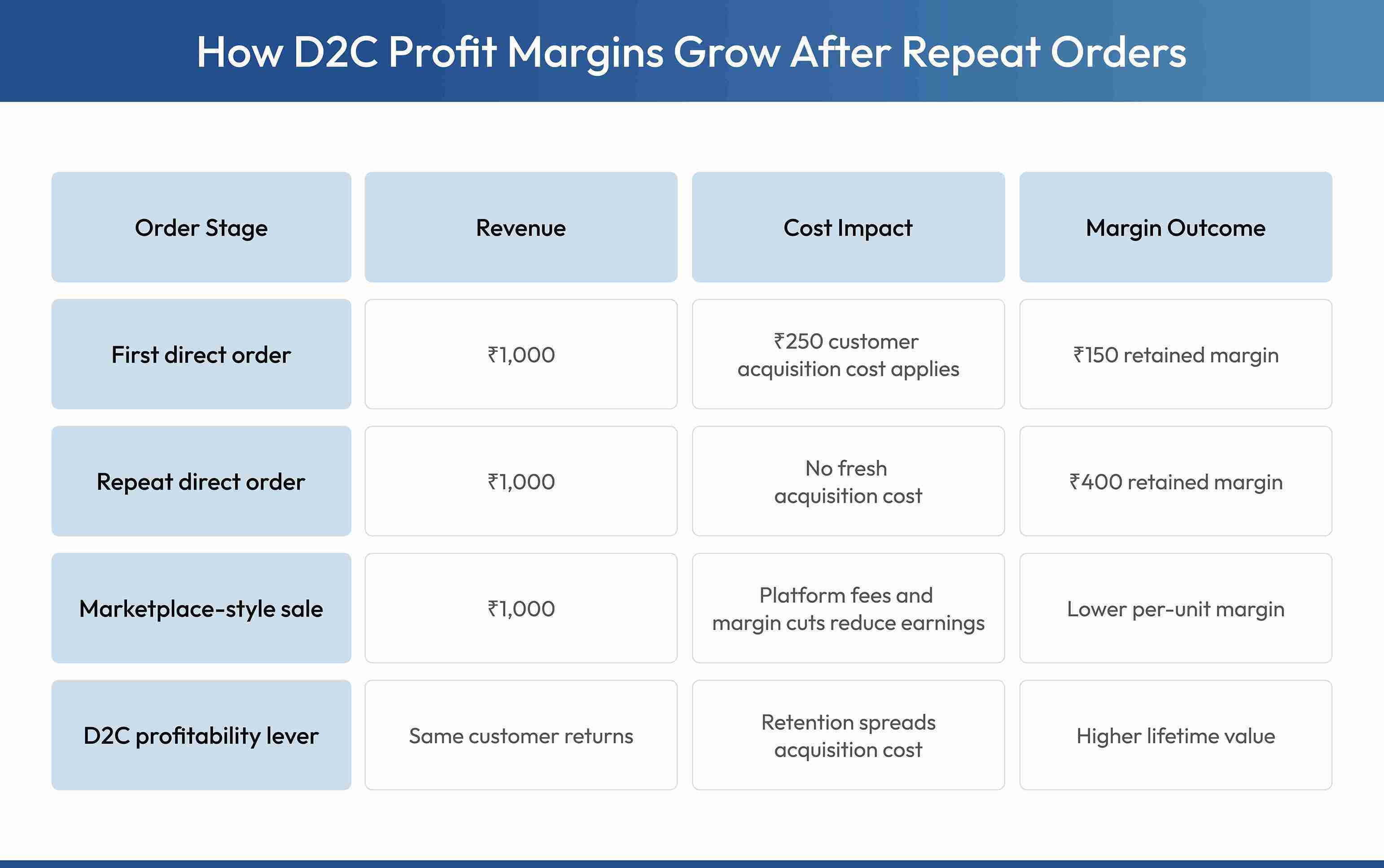
Profit margins |
Higher gross margin potential when direct costs stay controlled. |
Margins are reduced through platform commissions or distribution costs. |
|
Customer acquisition |
Brand brings traffic through paid or owned channels. |
Marketplace or retailer may provide traffic and discovery. |
|
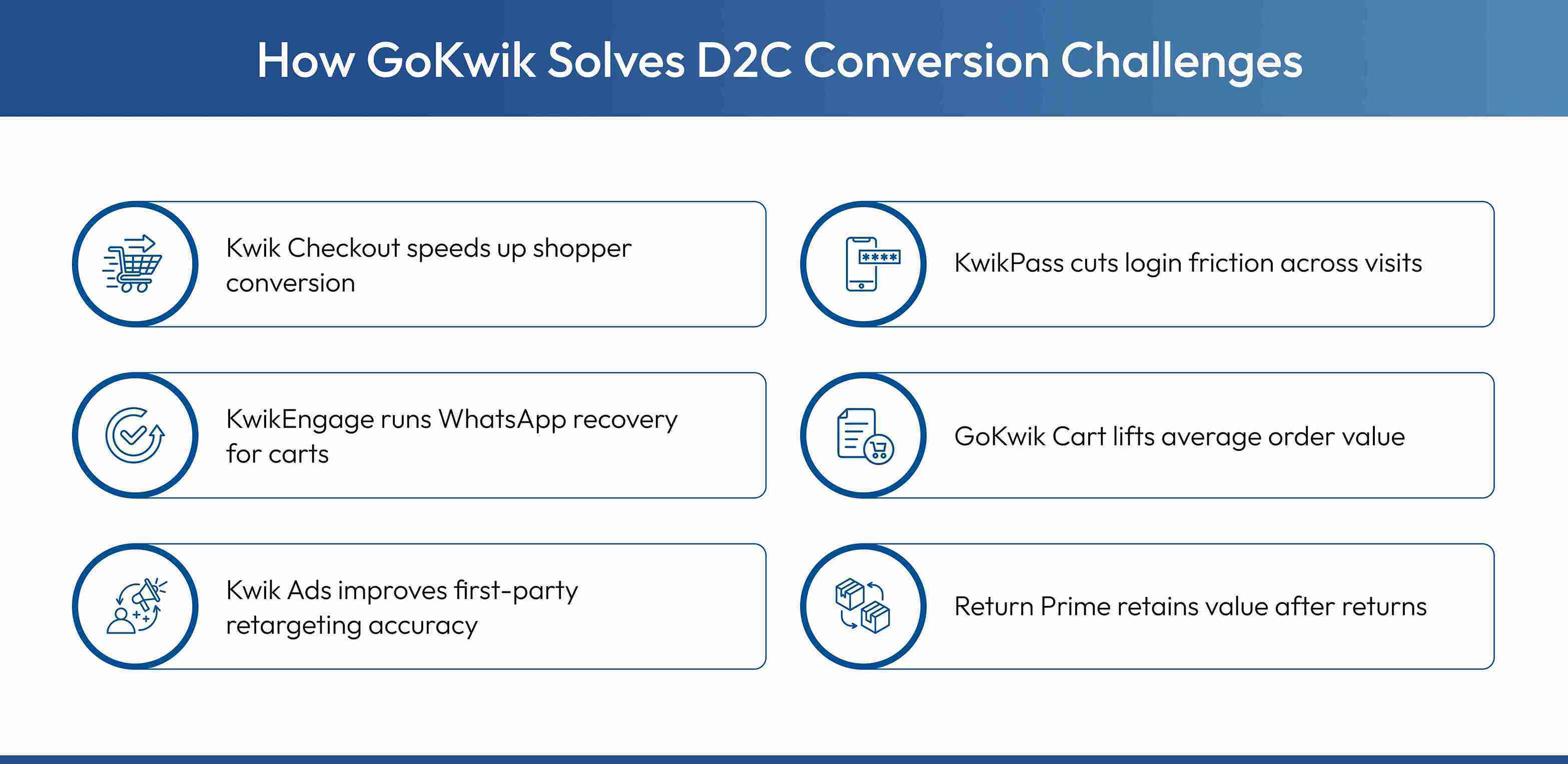
Customer retention |
Brand runs WhatsApp, email, and loyalty campaigns directly. |
Re-engagement depends on access to buyer contact data. |
|
Checkout control |
Brand controls checkout design, payment flow, and offer logic. |
Platform controls checkout and payments. |
|
RTO management |
Brand manages COD risk and failed delivery costs directly. |
Marketplace manages processes with limited visibility for sellers. |
|
Scalability |
Brand needs marketing, logistics, technology, and retention systems. |
Easier entry via existing infrastructure, but harder to differentiate from competitors on the same platform. |
Kwik Engage
D2C vs B2C Ecommerce: Understanding the Key Differences
 10 Sep 2026
 12 Min Read



_1790076136.png)