Your 2026 D2C Calendar mapped day by day - Powered by real data from India’s biggest D2C shopping network
Kwik Engage

Understanding Wati Pricing: A Detailed Analysis For 2026

06 Feb 2026
12 Min Read
Understanding Wati Pricing: A Detailed Analysis For 2026

Atul Bansal

Head of Marketing

Atul leads marketing at GoKwik, championing D2C brand building, growth strategies, scalable GTM for e-commerce, and data-driven customer acquisition. A former Amazon leader and IIFT MBA alumnus based in Bengaluru, he brings 15+ years scaling business across e-commerce, and fintech.
Share it on
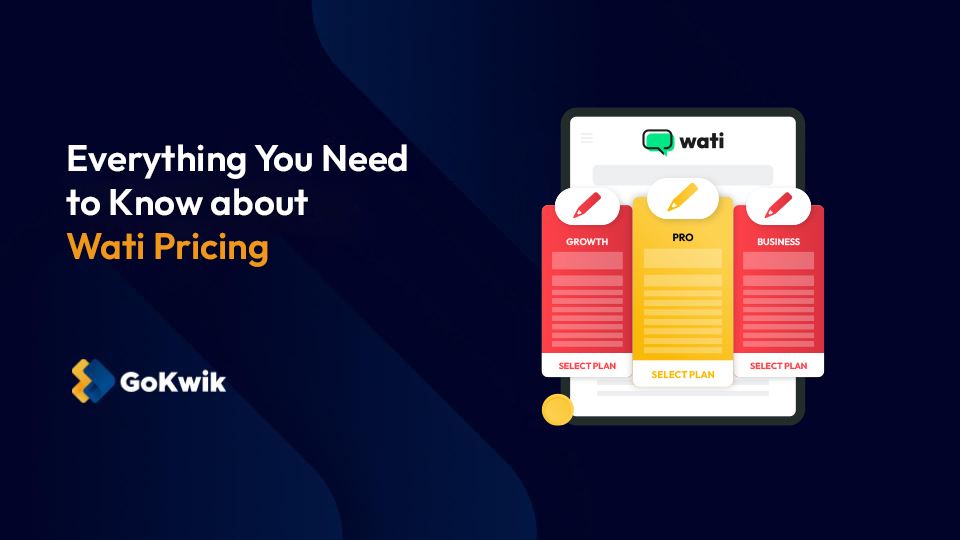
Wati uses a hybrid pricing model where the subscription fee is just the entry ticket. The real costs come from per-message charges, automation trigger overages, AI response limits, chatbot sessions, and additional users/ team expansion fees.
For Indian D2C brands scaling their WhatsApp marketing, these hidden layers can turn an affordable-looking platform into a significant monthly expense. This guide decodes what you'll actually pay when using Wati, and when it makes financial sense for your brand.

Kwikengage CTA

How Wati Pricing Actually Works?

Wati's pricing operates on three distinct layers:
  • Base subscription: ₹1,999 to ₹13,499 per month depending on which plan tier you choose
  • Per-message charges: Every WhatsApp message you send costs extra, with rates varying by the recipient's country and message type
  • Add-on fees: Automation triggers beyond your plan limit, AI responses, extra team members, and integrations
Understanding Wati's pricing structure requires looking beyond the advertised plans. Unlike the WhatsApp Business app which is free for small businesses, the official WhatsApp API (which Wati provides access to) operates on a pay-per-message model.
This means every order update, marketing message, and customer interaction adds to your bill, a reality many brands discover only after the Wati free trial ends.

Wati Pricing Plan Breakdown

To see how Wati's pricing structure works in practice, here's a complete breakdown of Wati's three main pricing plans - Growth Plan, Pro, and Business Plan - and what triggers extra charges:

*Note: "Unlimited broadcasts" means no cap on broadcast size, but you still pay per message delivered.
Now that you understand the plan structure, let's examine the four primary factors that actually determine your monthly bill.

Plan

Monthly Fee

What's Included

What You'll Pay Extra For

Growth

₹1,999

3 users, 15k broadcast limit, 1k automation triggers

Every message sent, extra triggers, cannot add users

Pro

₹4,499

5 users (+₹1,299/extra), unlimited broadcasts*, 2k automation triggers

Every message sent, extra triggers, AI responses beyond 250

Business

₹13,499

5 users (+₹3,999/extra), 5k automation triggers, dedicated CSM

Every message sent (slightly discounted rate), all overages

What Actually Drives Your Wati Pricing Bill?

1. Per-Message Charges (The Primary Cost Driver)

Every message you send through Wati incurs charges based on:
Recipient's country: Messages to Indian customers cost ₹0.94 each, UK recipients cost ₹4.65, Germany costs ₹12.01
Message type: Marketing messages cost more than utility messages, which cost more than authentication messages
For most Indian D2C brands, geography is less of a concern since 90-100% of customers are domestic. However, even at India's lower ₹0.94 rate, message volume drives significant costs. A brand sending 50,000 marketing messages monthly pays ₹47,000 just in message charges, regardless of which subscription plan they're on.

2. Automation Trigger Caps

Each plan includes a set number of automation triggers per month:
  • Growth plan: 1,000 free triggers → ₹1,600 per additional 1,000
  • Pro plan: 2,000 free triggers → ₹1,600 per additional 1,000
  • Business plan: 5,000 free triggers → ₹1,600 per additional 1,000
Depending on your automation complexity and customer base size, you may exceed these limits. A standard eCommerce workflow automation setup for WhatsApp marketing strategy (welcome series, abandoned cart, order updates, shipping notifications, post-purchase follow-up) can easily consume 1,500-3,000 triggers monthly for a brand with 10,000 active customers.
To help you with your WhatsApp automations, refer to this list of 10 powerful WhatsApp automations that boost engagement for D2C brands.

3. AI Response Limits

If you're using Wati's advanced features like the AI chatbot for customer support and customer service:
  • Pro plan: 250 free AI responses → ₹2,500 per additional 1,000
  • Business plan: 1,000 free AI responses → ₹2,500 per additional 1,000
Customer queries beyond these limits require paid add-ons. Each AI interaction counts as a chatbot session. For brands using WhatsApp as their primary customer engagement channel, these limits feel restrictive quickly.

4. Team Growth Costs

As your customer service team grows and you need access to the team inbox for additional users, platform charges additional costs:
  • Pro plan: ₹1,299 per extra user per month
  • Business plan: ₹3,999 per extra user per month
Example: A 10-person customer service and marketing team on the Business plan costs ₹13,499 + (5 × ₹3,999) = ₹33,494 monthly just for platform access, before sending a single message.

Try Kwik Engage, the best Wati alternative
With these cost drivers in mind, it's important to understand that Wati's pricing isn't just about the base subscription fee. The pricing model charges separately for WhatsApp automation, marketing tools, customer support features, and even basic workflow automations. Let's see how this plays out for actual D2C brands.

Real-World Cost Scenarios: What You'll Actually Pay

These calculated examples are based on Wati's published rate card. Actual costs may vary based on specific usage patterns.

Scenario 1: Small India-Focused D2C Brand

Business Profile:
  • 5,000 customers in database
  • India-only operations
  • 3-person marketing team
  • Monthly activity: Welcome series, abandoned cart recovery, promotional campaigns
Wati Plan: Growth (₹1,999/month)
Monthly Message Breakdown:
  • 15,000 marketing messages @ ₹0.94 = ₹14,100
  • 3,000 utility messages @ ₹0.15 = ₹450
  • 2,000 authentication (OTP) @ ₹0.15 = ₹300
  • Total message costs: ₹14,850
Add-on Costs:
  • Automation triggers: 1,500 used (500 over limit) = ₹800
  • AI responses: Within 250 limit
  • Additional users: None (3 included)
  • Total add-ons: ₹800
Real Monthly Cost:₹1,999 + ₹14,850 + ₹800 =₹17,649
Annual Cost: ₹2,11,788
Cost multiplier: 8.8x the advertised subscription price

Scenario 2: Growing Multi-Market eCommerce Brand

Business Profile:
  • 25,000 customers (70% India, 30% international)
  • 7-person team (customer service + marketing)
  • Active engagement across customer lifecycle
Wati Plan: Pro (₹4,499/month)
Monthly Message Breakdown:
  • 60,000 India marketing @ ₹0.94 = ₹56,400
  • 15,000 USA marketing @ ₹2.20 = ₹33,000
  • 5,000 UK marketing @ ₹4.65 = ₹23,250
  • 10,000 India utility @ ₹0.15 = ₹1,500
  • 8,000 authentication @ ₹0.15 = ₹1,200
  • Total message costs: ₹1,15,350
Add-on Costs:
  • Additional users: 2 extra @ ₹1,299 = ₹2,598
  • Automation triggers: 3,000 used (1,000 over limit) = ₹1,600
  • AI responses: 500 used (250 over limit) = ₹625
  • Total add-ons: ₹4,823
Real Monthly Cost: ₹4,499 + ₹1,15,350 + ₹4,823 =₹1,24,672
Annual Cost:₹14,96,064
Cost multiplier: 27.7x the advertised subscription price

Scenario 3: Mid-Size Indian D2C Brand Scaling Nationally

Business Profile:
  • 100,000 customers across India
  • 10-person team (CS, marketing, operations)
  • Multiple product categories with regular launches
  • Active during festive seasons
Wati Plan: Business (₹13,499/month)
Monthly Message Breakdown:
  • 1,50,000 India marketing messages @ ₹0.89 (Business rate) = ₹1,33,500
  • 40,000 India utility messages @ ₹0.14 = ₹5,600
  • 20,000 authentication (OTP) @ ₹0.14 = ₹2,800
  • Total message costs: ₹1,41,900
Add-on Costs:
  • Additional users: 5 extra @ ₹3,999 = ₹19,995
  • Automation triggers: 12,000 used (7,000 over limit) = ₹11,200
  • AI responses: 3,000 used (2,000 over limit) = ₹5,000
  • Professional services (averaged): ₹10,000
  • Total add-ons: ₹46,195
Real Monthly Cost: ₹13,499 + ₹1,41,900 + ₹46,195 = ₹2,01,594
Annual Cost:₹24,19,128
Cost multiplier: 14.9x the advertised subscription price

Try Kwik Engage, the best Wati alternative

Key Insights From These Scenarios

Across all three scenarios, several patterns emerge that reveal how Wati pricing scales:

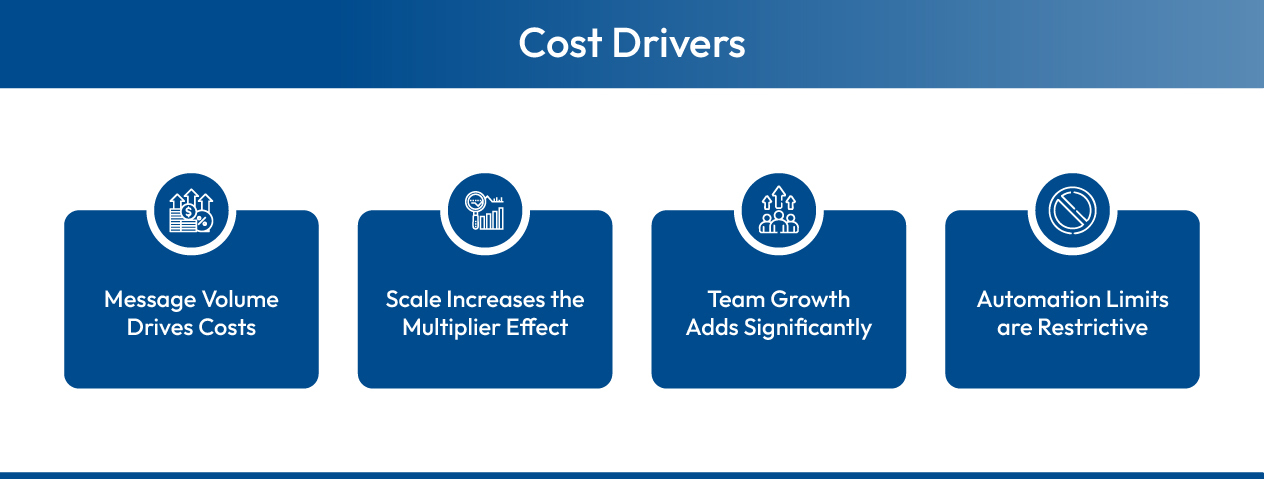
Major cost drivers of Wati Pricing
  1. Message volume drives costs exponentially: Even at India's lower ₹0.94 rate, high-volume brands pay lakhs monthly in message charges alone.
  2. Scale increases the multiplier effect: Growing from 20,000 to 2,00,000 messages increases costs 11x, not 10x, due to accumulated overages on automation and AI.
  3. Team growth adds significantly: Larger teams add ₹20,000-₹46,000 monthly just for platform access before messaging costs.
  4. Automation limits are restrictive: Standard customer journey automation (welcome + abandoned cart + post-purchase) quickly exceeds plan caps for growing brands.
Given these cost realities, when does Wati actually make financial sense for Indian D2C brands?

When Wati Pricing Makes Sense (And When It Doesn't)

Wati May Work for Indian D2C Brands If You:

  • Send under 20,000 messages monthly (early-stage brands with smaller customer bases).
  • Serve only Indian customers where the ₹0.94 per message rate applies.
  • Have a small team of 3-5 people with no immediate expansion plans.
  • Have consistent messaging patterns without festive season spikes.
  • Don't need deep revenue attribution or eCommerce-specific WhatsApp capabilities like checkout integration.
  • Value ease of use over advanced revenue tracking and can work within the limits of a single WhatsApp number.

Wati May Become Expensive for Indian D2C Brands If You:

  • Scale message volume beyond 50,000 monthly, where costs become significant.
  • Run WhatsApp ads or WhatsApp marketing campaigns that drive high message volume.
  • Experience festive season spikes (Diwali, New Year, Big Billion Days) causing unpredictable bill increases.
  • Need WhatsApp automation that exceeds basic workflow automations included in your plan for customer journeys, triggering overage fees.
  • Want to track revenue attribution and ROAS instead of just delivery metrics.
  • Are expanding to Tier 2/3 cities requiring mixed Hindi-English communication.
  • Need eCommerce-specific features like COD to prepaid conversion flows or checkout integration.
  • Operate near the international transaction limit or serve customers globally where per-message rates are 4-12x higher.
  • Handle significant customer support volume requiring extended chatbot sessions.
If you fall into the second category, you're likely looking for a Wati alternative that's built specifically for Indian eCommerce challenges. That's where platforms designed for the Indian market make a difference.

Try Kwik Engage, the best Wati alternative

The Alternative Approach: Why Kwik Engage is Built for Indian eCommerce

Indian D2C brands face unique challenges that general messaging platforms like Wati don't address:

Challenge

Impact on D2C Brands

COD Dominance

Requires specialized flows to convert to prepaid and reduce cash handling costs.

High RTO Rates

Erodes margins, demanding risk-based communication and interventions.

Tier 2/3 Expansion

Requires vernacular support due to diverse language preferences.

Thin Margins

Need to track actual revenue generated, not just message delivery rates.

Budget Predictability

Seasonal businesses need fixed costs, not variable per-message charges that spike during festive sales.

Generic Strategies

Struggle to optimize conversion-focused communication without eCommerce-specific templates.

Low Delivery Rates

Meta's evolving regulations impact campaign ROI and recovery efforts.

WhatsApp Commerce Policy Compliance

Need to follow Meta's guidelines while managing conversation costs and staying within platform limits.

Why Kwik Engage is Built for Indian eCommerce

Kwik Engagetakes a fundamentally different approach. Instead of charging per message and capping automation, it's built around predictable pricing and revenue generation.
Revenue-First Approach, Not Just Message Delivery
Kwik Engage tracks 20X ROAS as its primary metric, measuring success by rupees recovered rather than messages delivered. The platform is built around revenue generation, with built-in analytics that show GMV generated per campaign, conversion rates, and actual sales impact. Instead of monitoring delivery rates and open rates in isolation, you see how each WhatsApp campaign contributes to your bottom line.
Network Intelligence That Recovers More Revenue
Most CRMs can only engage shoppers you already know. That means a large chunk of your traffic, often 30% or more remains anonymous, unrecognized, and unmonetized.
Kwik Engage changes that. By pairing with Kwik Pass, it identifies anonymous visitors in real time and converts them into usable data for campaigns. More data to act on means more revenue opportunities.
For example, one D2C brand saw 31% of all campaign data come exclusively from Kwik Engage. Another brand went even further, with 54% of usable shopper data captured only through Kwik Engage.
This is data your current CRM simply doesn't see, and that's why brands consistently drive 2X higher revenue outcomes with Kwik Engage compared to other platforms.
Built for Indian eCommerce Realities
  • COD to prepaid conversion flows improve margins and reduce cash handling.
  • Smart Retry delivers 20% higher message delivery rates by retrying failed messages at optimal times.
  • Instant checkout on WhatsApp lets customers complete purchases without redirects.
  • Native integrations with Kwik Checkout, Indian payment gateways, and logistics providers.
  • Automated chatbot handles 80%+ of support queries without per-response fees.
Kwik Engage focuses on the metric that matters: revenue generated. While Wati caps automation and lacks revenue attribution, Kwik Engage delivers measurable returns through data-driven campaigns.
Talk to us to see how Kwik Engage can deliver predictable costs and 20X ROAS for your D2C brand.

Frequently Asked Questions About Wati Pricing

Conclusion

Enjoying this article? Share it with the world!
Atul Bansal

AUTHOR

Atul Bansal

Head of Marketing

Atul leads marketing at GoKwik, championing D2C brand building, growth strategies, scalable GTM for e-commerce, and data-driven customer acquisition. A former Amazon leader and IIFT MBA alumnus based in Bengaluru, he brings 15+ years scaling business across e-commerce, and fintech.