How KwikAds helped Shop Unrush boost ROAS by 37% in 3 months
How KwikAds helped Shop Unrush boost ROAS by 37% in 3 months
How KwikAds helped Shop Unrush boost ROAS by 37% in 3 months
How KwikAds helped Shop Unrush boost ROAS by 37% in 3 months
eCommerce
5 Tips To Supercharge Your Growth In The Indian Beauty Industry
 12 Mar 2026
 07 Min Read
Parousia leads product marketing strategies at GoKwik, and she is an expert in driving e-commerce optimisation, conversion growth, and innovative GTM strategies. She crafts compelling messaging and creates content pertaining to D2C commerce.
Read this blog on your favourite platform
The Indian beauty industry has seen significant growth over the last few years and is expected to grow touch a $31 billion mark by the end of FY 2027. Several countries are launching their products in India after studying India’s cosmetic industry and the potential market size. To give you an example, a South Korean brand, AmorePacific, recently launched its brand, Etude House, in India. It’s keen on banking on the millennial women’s industry with the rising trends in interest towards Korean products.
However, Indian brands aren’t far behind.
India’s first homegrown cosmetic brand, Lakme, was founded by JRD Tata in 1952. It paved the way for the introduction of the cosmetic industry in India. Since then we’ve seen an increasing number of Indian brands thriving over the last decade.
Some of the major players in the Indian cosmetic industry today include names like Sugar Cosmetics, Pilgrim, Foxtale, Plum Goodness, the Shark Tank featured – Recorde, herbal cosmetic products from Forest Essentials, and the 100% organic products-based brand Mama Earth. Each, with its own USPs, has thrived in its marketing efforts and has often taken the D2C approach to build a more personalised connection with its customers.
While the growth of the beauty industry in India highlights more opportunities, it also means increased competition.
Also read: Equity Vs Debt Vs Growth Financing: Which One To Choose

Also read: Equity Vs Debt Vs Growth Financing: Which One To Choose
In this blog, we’re exploring some ways in which you can supercharge your beauty business in the Indian beauty industry despite the increasing numbers.
Tips To Cut Through Competition In The Indian Beauty Industry
To thrive in the Indian cosmetics industry, brands need to go beyond just being able to offer deals and discounts. They must identify their niche and build an identity of their own to reach and engage consumers. To give you an example, Swiss Beauty may be just another brand offering make-up products, but it’s USPs – affordability, good quality, and something that resonates with today’s generation.
Listed below are some tips to cut through today’s fierce competition and emerge as a customer-loved brand.
Also read: The Ultimate Guide To Growth Financing
Also read: The Ultimate Guide To Growth Financing
1. Invest In Brand Building
Statistics suggest that 77% of customers buy an item based solely on the brand’s name instead of the product name. When your brand has a consistent identity, and customers can associate you with a certain colour, logo, or name, they will be able to trust you more.
SUGAR Cosmetics is an excellent example to quote here. Their brand-building technique is way superior to most of its competitors in the market. Launched in 2012, they began as a beauty subscription business. But, they slowly realised the importance of going digital and building a brand in the Indian beauty industry. Sugar Cosmetics then worked on brand building and created awareness about their products online.
They started working on their packaging and adopted unique low-poly illustrations to their style. They created a wave with the design and stood out as unique.
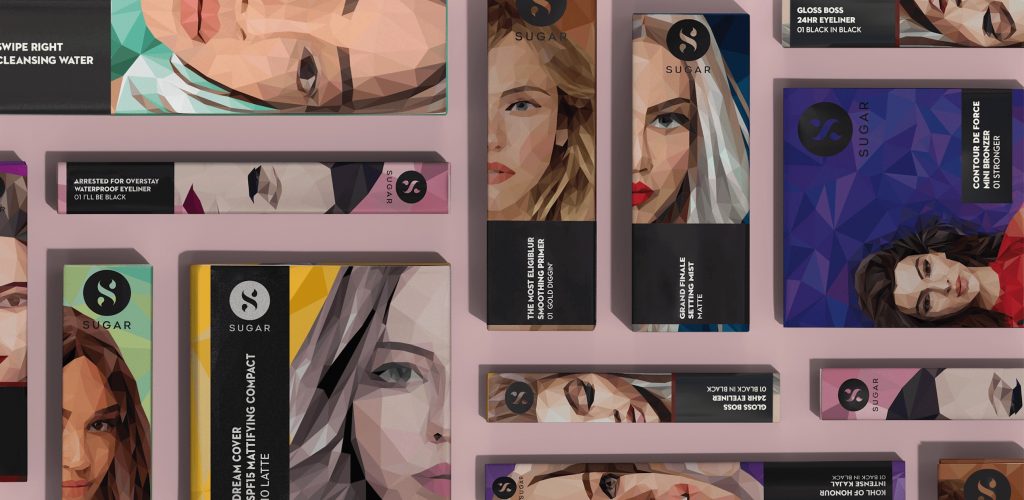
Their brand-building efforts on social media, across different distribution channels including Nykaa, and recently having opened their offline stores – SUGAR Cosmetics is pioneering the Indian beauty industry.
2. Leverage The Right Social Channels
If social media isn’t part of your marketing strategy, especially when you’re a part of the Indian cosmetic industry, then you are missing out on a lot.
According to a report, 82% of online shoppers have found a brand online via social media discovery. But as the digital landscape grows, it is becoming more important for brands to identify which channels they need to be on. And, this decision needs to be based on who your target is, what channels they use for consuming content, and where they tend to spend most of their time.
For example, most users on Facebook are over the age of 35 years. Meanwhile, Instagram has an audience base of mostly people under the age of 35 years. Pinterest, on the other hand, has a larger bracket of users under 45 years. So, apart from what features the social platform offers, look into user demographics.
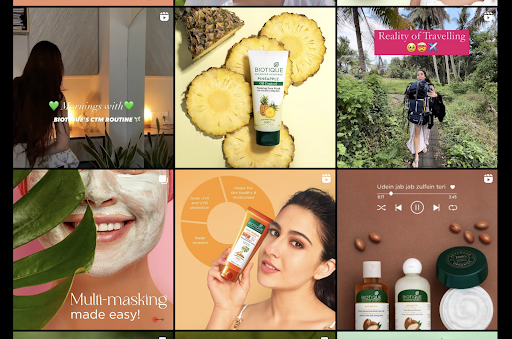
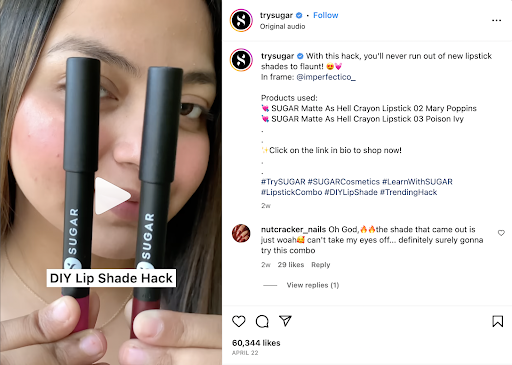
You can see brands like Biotique, SUGAR Cosmetics, VLCC, Earth Rhythem and others investing in social media marketing on channels like Instagram. They tap into creating branded visual content like images, guides, Reels and more, and also collaborate with influencers to reach their target audience faster.
3. Shorten The Sales Cycle
When you successfully drive traffic from social media to your website, you must ensure the following steps are seamless. You don’t want to make potential customers jump through hoops just to place an order.
Chances are you will end up with abandoned cards, especially when the cart abandonment rate for the cosmetic industry is 75.35%.
This is where optimising your checkout process comes into play. By adding/implementing smart abilities, brands can streamline the checkout process and increase the chances of conversions. For instance, brands can leverage GoKwik’s Kwik Checkout solution to offer,
- One-tap login reduces the hassle of creating an account
- Auto-fill address using the GoKwik Network effect eliminating the risk of drop-offs at this stage
- Multiple payment options and coupon codes to lure customers
[youtube id="H_FWyeexv3k"]
Also read:
Also read:
4. Leverage WhatsApp Commerce
Emails can be missed, and SMSs can be left unread, but people use WhatsApp regularly for personal and professional interactions. This makes WhatsApp the perfect channel for beauty and cosmetics brands to market themselves on.
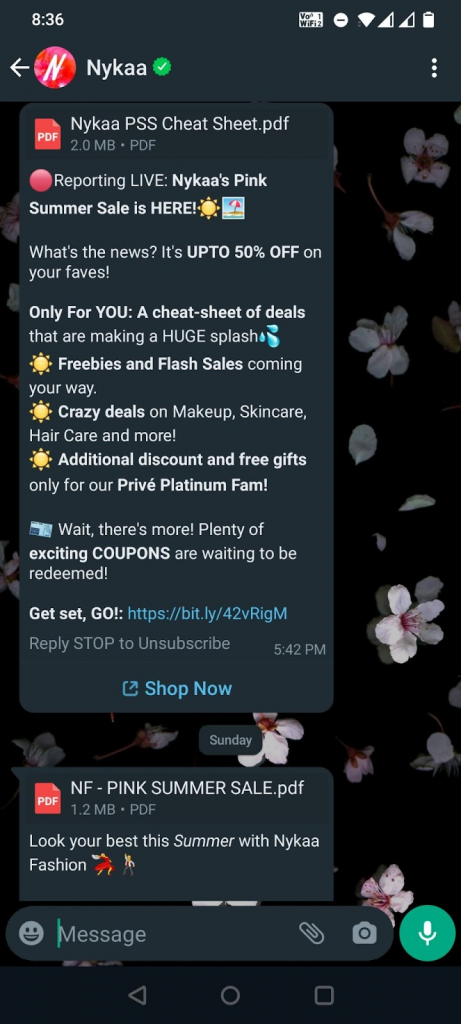
By signing up for a WhatsApp Business account, your brand can get started with using the platform for marketing purposes. Leveraging features like the WhatsApp catalogue, you can easily showcase your best-selling products and deals to subscribers on the platform. Moreover, you can run campaigns by sending broadcast messages and informing your target audience about the new and upcoming deals, sales, and more.
By signing up for a WhatsApp Business account, your brand can get started with using the platform for marketing purposes. Leveraging features like the WhatsApp catalogue, you can easily showcase your best-selling products and deals to subscribers on the platform. Moreover, you can run campaigns by sending broadcast messages and informing your target audience about the new and upcoming deals, sales, and more.
Not just that, with the help of WhatsApp Business API you can also leverage the app as new channel to generate revenue. Give customers the option to add products of their choice to cart and complete the entire purchase on the app itself. Besides this, you can also regularly send them updates on order status to keep customer anxiety at bay.
Kwik Chat is an excellent tool to leverage WhatsApp commerce to your benefit and enjoy edge in the Indian beauty industry.
5. Turn Post-Purchase Follow-ups Into Selling Opportunities
Most brands tend to stop at getting their first sale. But the ones that are winning the race are the ones that keep these customers engaged and bring them back for repeat sales.
Don’t stop at requesting product reviews and ratings; seek feedback about the products they purchased. Understand what they liked and didn’t like. These are opportunities for you to gather information on what more they’d like to see from your brand.
You can then use this information to upsell and cross-sell products across channels like WhatsApp. Send them personalised product recommendations via WhatsApp catalogue messages or discounts similar to the ones they availed, and repeat the above cycle on a loop!
Frequently Asked Questions
Is The Cosmetics Industry Profitable In India?
The cosmetics business is highly profitable in India. The average profit margin for cosmetics is reported to be between 20% – 70%. It has a 9.5% CAGR for 2022-2028.
What Is The Future Of The Cosmetics Industry In India?
The future of the cosmetic industry in India seems very profitable and bright. The Indian cosmetics brand is expected to grow to $31 billion by 2027.

AUTHOR
Parousia Khan
Senior Product Marketing Manager @GoKwik