How KwikAds helped Shop Unrush boost ROAS by 37% in 3 months
How KwikAds helped Shop Unrush boost ROAS by 37% in 3 months
How KwikAds helped Shop Unrush boost ROAS by 37% in 3 months
How KwikAds helped Shop Unrush boost ROAS by 37% in 3 months
Kwik Pay
[Updated] Enhance Customer Experience With Instant Refunds
 30 Mar 2026
 11 Min Read
![[Updated] Enhance Customer Experience With Instant Refunds](https://panel.gokwik.co/storage/app/public/images/instant_returns_and_why_they_matter_for_e-commerce_businesses_1769671788.jpg)
Parousia leads product marketing strategies at GoKwik, and she is an expert in driving e-commerce optimisation, conversion growth, and innovative GTM strategies. She crafts compelling messaging and creates content pertaining to D2C commerce.
Read this blog on your favourite platform
In the last two years, the Indian e-commerce landscape has seen many significant upgrades. While adopting technologies like one-click checkout improved buyer journeys, quicker deliveries ensured happy customers, and smooth returns enhanced customer experience, something as important as refunds was still in the back seat- and that is changing.
Owing to the industry’s fast pace and changing consumer behaviour, instant refunds are increasingly becoming critical differentiators in shaping a brand’s image in the market. That’s because traditional refunds are processed within 5-7 working days of receipt of the returned goods. This period causes frustration among consumers and erodes their trust in a brand. Instant refunds, on the other hand, change the entire narrative and keep consumers at the forefront. This not only instils a level of satisfaction in the minds of consumers but also helps brands build trust and credibility in the market.
In this blog, we’ll explain the concept of instant refunds, their benefits, and how GoKwik helps its partner merchants leverage them to enhance customer experience.
The Problem With Traditional Refunds (The "Waiting Game")
eCommerce returns are inevitable, but they don't have to be painful. Research shows that nearly 30% of all online products are returned- a stark contrast to just 8.89% in brick-and-mortar stores.
For the customer, the return experience is the moment of truth. 92% of consumers say they would buy again if the return process were easy, and 30% specifically cite fast refunds as key to a positive experience. However, traditional refund workflows often fail this test, turning a simple request into a multi-stage waiting game.
The Anatomy Of A Slow Refund
A standard refund isn't a single click; it is typically a fragmented process involving five distinct hurdles that add days (or weeks) to the timeline:
- Initiation: The customer has to proactively flag the issue, log into a portal, or contact support to request a return.
- Verification: The merchant’s team must manually intervene to check the validity of the claim against return policies.
- Approval: Even valid claims often sit in a queue waiting for a manager or finance team member to hit "approve."
- Processing: The request is handed off to financial intermediaries (banks, payment gateways), where it enters a new cycle of processing time.
- Transfer: Finally, the funds slowly make their way back to the source account, often delayed by banking holidays or batch processing cycles.
The Manual Bottleneck
The root cause of these delays is often a lack of automation. Across Shopify businesses, for instance, 65% of refunds are still performed manually, with only 35% handled by automated apps. This heavy reliance on manual workflows doesn't just frustrate customers; it creates a massive operational backlog that slows down cash flow and inventory turnover.
H2: What Are Instant Refunds And How Do They Work?
Now that we’ve touched up on how traditional returns work, let’s dive into what instant returns are and how they work.
Defining Instant Refunds
An instant refund is a real-time, automated returns process that returns funds to a customer's source account almost immediately after a return is approved. Unlike the traditional 5- to 10-day waiting period, this model uses technology to eliminate manual processing delays, ensuring customers get their money back in minutes, not weeks.
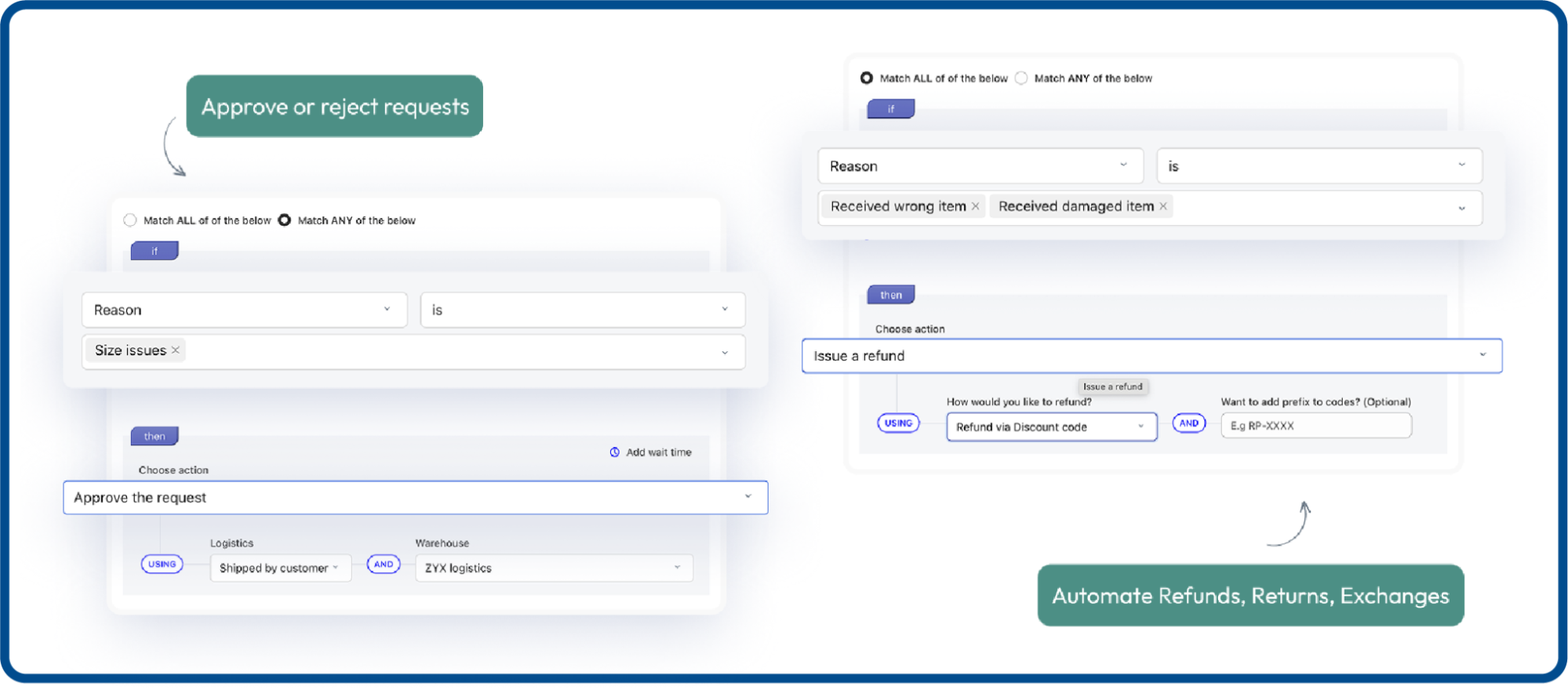
The goal is to transform a point of friction into a moment of trust. By closing the loop quickly, businesses can enhance customer satisfaction, build brand loyalty, and gain a significant competitive edge in a market where post-purchase experience is paramount.
The Backend Mechanics: How It Works In 3 Steps
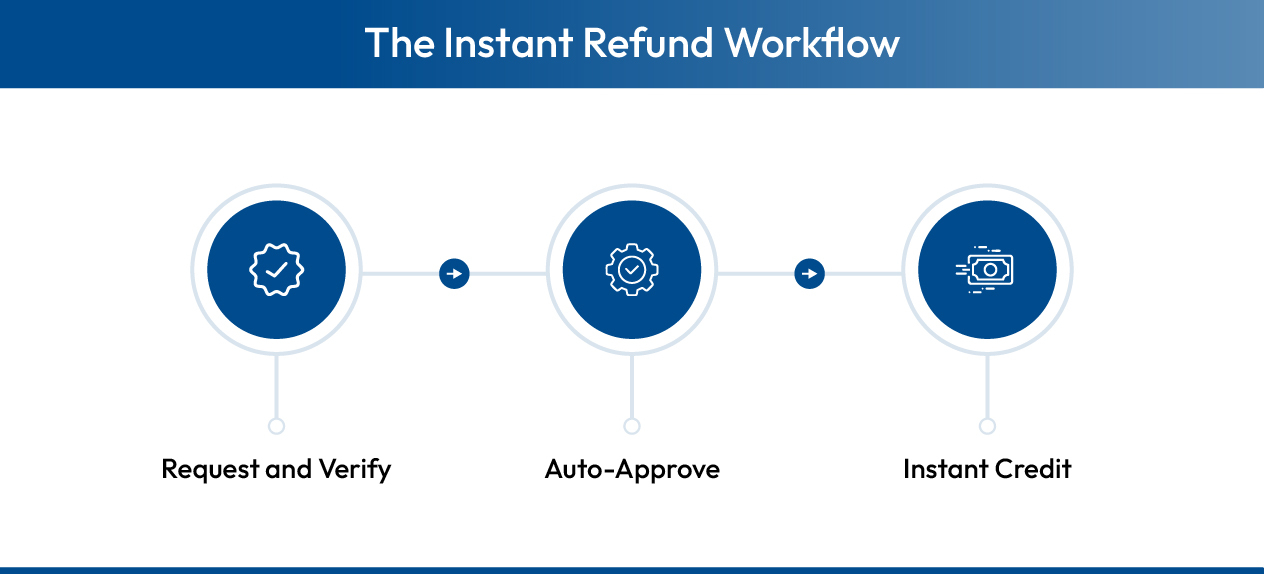
While it feels like magic to the customer, the process is powered by a seamless, automated workflow that runs in the background.
- Step 1: Customer Request & Verification
A customer initiates a return through the brand’s online portal. The system instantly verifies the request against the store's return policy, order history, and product condition rules without needing a human to check a spreadsheet. - Step 2: Automated Approval & Payout Initiation
Once the request is verified, the system automatically triggers the refund. It communicates directly with the payment gateway or financial partner to initiate a payout command, bypassing the need for manual approval queues in the finance department. - Step 3: Immediate Credit To Source Account
The funds are pushed in real-time to the customer’s original payment method, such as their UPI handle, bank account, or credit card. The customer receives a confirmation, and the entire process is completed within minutes, creating a positive and trustworthy final interaction with the brand.
Why Instant Refunds Are A Deal-Breaker For Indian Shoppers
In eCommerce, trust is the currency that matters most. For years, Cash on Delivery (COD) has dominated largely because shoppers are wary of paying up front. They worry that if the product is wrong or never arrives, their money will get stuck in a refund limbo.
Instant refunds fundamentally change this dynamic. By removing the risk of "stuck money," brands can replicate the safety of cash while enjoying the efficiency of digital payments. Here is why speed matters more than ever.
Building Trust In Prepaid Transactions
The biggest barrier to prepaid orders isn't a lack of digital literacy; it is a lack of trust in the reversal process. Shoppers often choose COD simply because they want to hold onto their cash until they are sure about the product.
When a brand guarantees instant refunds, it effectively tells the customer, "Your money is safe with us, even if you return the item." This assurance lowers the psychological barrier to paying online, encouraging more customers to switch from COD to prepaid modes like UPI or cards.
When a brand guarantees instant refunds, it effectively tells the customer, "Your money is safe with us, even if you return the item." This assurance lowers the psychological barrier to paying online, encouraging more customers to switch from COD to prepaid modes like UPI or cards.
Reducing "Where Is My Money?" Anxiety
Post-purchase anxiety peaks during a return. The gap between "Return Picked Up" and "Refund Credited" is where customers feel most vulnerable. They constantly check their bank apps and flood customer support channels with the dreaded "Where is my order?" (WISMO) queries.
Instant refunds eliminate this anxiety gap. By crediting the amount the moment the return is verified or picked up, brands validate the customer’s trust instantly, turning a potentially negative wait time into a delightful "wow" moment.
Encouraging Higher AOV And Repeat Purchases
When customers know that getting a refund is as easy as buying the product, their risk perception drops. They become more willing to experiment with new categories, try higher-ticket items, or order multiple sizes to find the perfect fit- driving up the Average Order Value (AOV).
Moreover, a seamless refund experience is a powerful retention tool. A shopper who gets their money back in minutes is far more likely to turn around and spend that same money on a different item in your store immediately, keeping the revenue within your ecosystem.
Moreover, a seamless refund experience is a powerful retention tool. A shopper who gets their money back in minutes is far more likely to turn around and spend that same money on a different item in your store immediately, keeping the revenue within your ecosystem.
The Business Case: How Instant Refunds Drive Growth
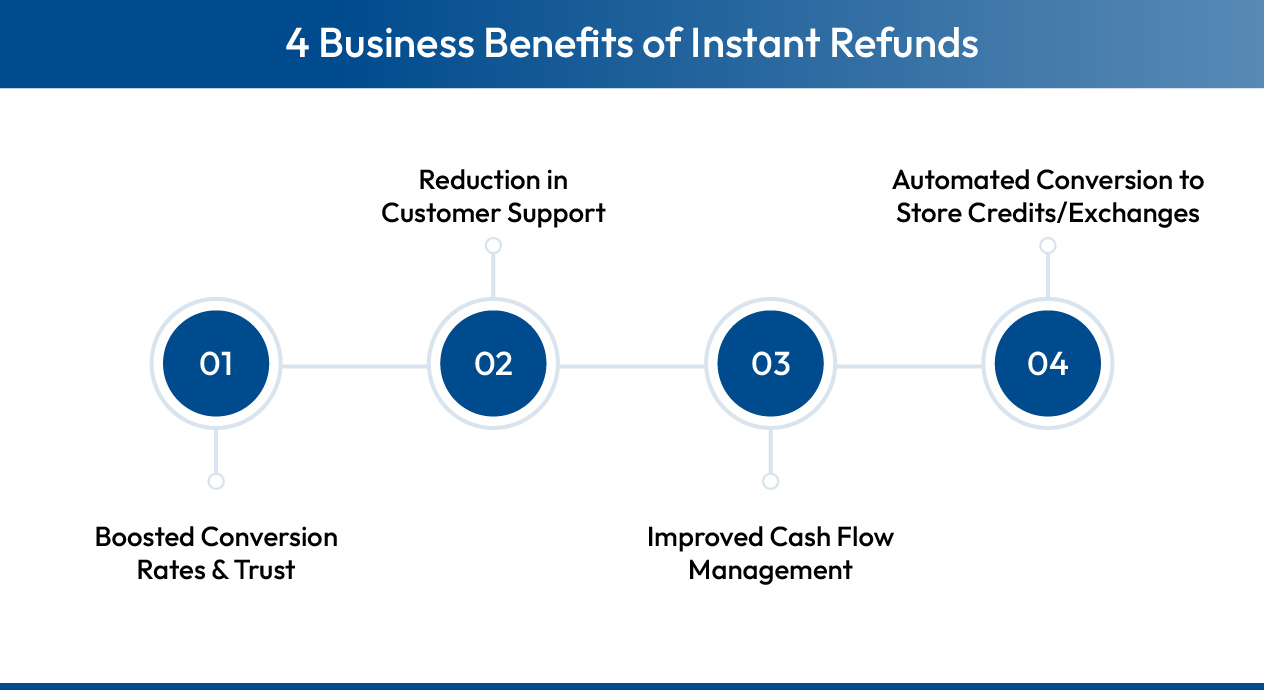
While the immediate value of instant refunds is customer satisfaction, the impact on a merchant’s bottom line is equally powerful. By shifting from manual, slow processes to automated, instant ones, brands don't just "delight" users- they streamline their entire operation.
This capability also acts as a great differentiator. When competitors are still asking customers to wait 5-7 days, offering an instant resolution positions your brand as modern, customer-first, and financially robust.
Slash Customer Support Tickets (WISMO Queries)
A significant chunk of eCommerce support tickets are simply: "Where is my refund?" (WISMO). These queries clog up support lines, consume agent bandwidth, and cost money to resolve- yet they add zero value to the business.
By processing refunds instantly, you eliminate the root cause of these tickets. Customers get their money before they even have time to worry, freeing up your support team to focus on revenue-generating activities like pre-sales queries or complex problem-solving.
Operational Efficiency At Scale (Automating The Manual Work)
Scaling a business is hard when your back-office processes are manual. During peak sale events or holiday seasons, a surge in return requests can overwhelm finance teams, leading to backlogs and errors.
Instant refunds solve this via automation. Whether you are processing 10 returns a day or 10,000, the effort remains the same. This reduces administrative overhead, eliminates manual bank transfer errors, and ensures your refund operations remain lean and cost-effective, no matter how fast you grow.
Instant refunds solve this via automation. Whether you are processing 10 returns a day or 10,000, the effort remains the same. This reduces administrative overhead, eliminates manual bank transfer errors, and ensures your refund operations remain lean and cost-effective, no matter how fast you grow.
Faster Inventory Turnover And Restocking
Speed in refunds often correlates with speed in logistics. An automated refund workflow forces the entire returns cycle to be tighter and more predictable.
By expediting the closure of a return request, brands can move faster to get the item back into inventory and ready for resale. This accelerated turnover reduces the holding costs associated with "limbo" stock and ensures that high-demand products don't sit idle in a return pile when they could be generating revenue.
Instant Refunds With GoKwik: Turning Returns Into Retention
Embracing instant refunds is no longer just a "nice-to-have"- it is a strategic necessity. GoKwik equips partner merchants with a full-stack returns management suite that transforms the refund process from a logistical headache into a loyalty-building opportunity.
By leveraging deep partnerships with multiple Payment Aggregators and Gateways (PA-PGs)across India, GoKwik ensures that your refund infrastructure is as robust as your checkout, delivering high success rates, particularly for UPI transactions.
Automated Payouts Via UPI And Bank Transfers
Speed is the ultimate trust signal. GoKwik’s infrastructure bypasses manual bank processing by automating payouts directly to the customer’s source account.
Whether it’s a UPI handle or a bank account, the system triggers the transfer the moment a return is verified. This ensures a "zero-wait" experience that rivals the speed of major marketplaces, giving independent brands a powerful edge in customer satisfaction.
Real-Time Visibility And Tracking
Uncertainty breeds anxiety. With GoKwik’s comprehensive returns dashboard (powered by Return Prime), both merchants and shoppers get complete transparency.
Customers are no longer left in the dark; they can track every stage of their request from initiation to approval and final credit. For merchants, this means a centralized view of all return activities, eliminating the chaos of manual spreadsheets and reducing support tickets related to refund status.
Converting Refunds Into Wallet Credits (Retention Loop)
The smartest refund is the one that stays in your ecosystem. GoKwik enables merchants to turn returns into a revenue driver by nudging customers toward store credits or instant exchanges instead of straight bank refunds.
By offering immediate wallet credits or seamless exchange options, you retain the revenue within your store and give the customer an instant reason to buy again. This transforms a potential churning user into a repeat purchaser, significantly boosting your Customer Lifetime Value (CLV).
How to get a refund immediately?
To receive a refund immediately, you typically need to shop with brands that support instant payout technology. Once you initiate a return request and it passes the brand's digital verification checks, the funds are automatically triggered and credited to your original payment source within minutes, rather than days.
Who qualifies for an instant refund?
Qualifying for an instant refund usually depends on the merchant's specific policy and the customer's trust score. Generally, customers with a history of genuine purchases and returns are eligible. It is most commonly available for prepaid orders or for customers who opt to receive the refund as store credit or wallet balance.
What is an immediate refund?
An immediate refund is a financial transaction where the merchant automates the reversal of payment the moment a return is approved. This process bypasses traditional manual finance checks and banking delays, ensuring the customer receives their money back in their source account or wallet almost instantly.
What apps give instant refunds?
Many leading e-commerce marketplaces like Amazon, Myntra, and Flipkart offer instant refunds. Additionally, thousands of independent D2C brands in India that are powered by checkout enablers like GoKwik also provide instant refund capabilities directly through their own websites and mobile apps.
What does instant refund mean?
The term "instant refund" refers to a seamless banking process where the time gap between a return approval and the actual fund credit is reduced to nearly zero. It means the money is transferred back to the shopper's bank account, card, or UPI handle in real-time, eliminating the standard 5-7 day waiting period.
What is the maximum time for refund processing?
For traditional refund methods, the maximum processing time can extend up to 7 to 10 business days, depending on the bank's clearing cycle. However, with modern instant refund systems, the maximum wait time is drastically reduced, typically taking no more than a few minutes to reflect in your account after approval.
Can I speed up a refund?
Yes, you can often speed up a refund by opting for "store credit" or "wallet balance" instead of a transfer to the original source, as these are processed internally. Additionally, ensuring you upload clear images and accurate details during the return request helps the system verify and approve your claim faster.

AUTHOR
Parousia Khan
Senior Product Marketing Manager @GoKwik