How KwikAds helped Shop Unrush boost ROAS by 37% in 3 months
How KwikAds helped Shop Unrush boost ROAS by 37% in 3 months
How KwikAds helped Shop Unrush boost ROAS by 37% in 3 months
How KwikAds helped Shop Unrush boost ROAS by 37% in 3 months
eCommerce
10 Best Ways To Prevent Your Business From eCommerce Frauds
 01 Mar 2024
 07 Min Read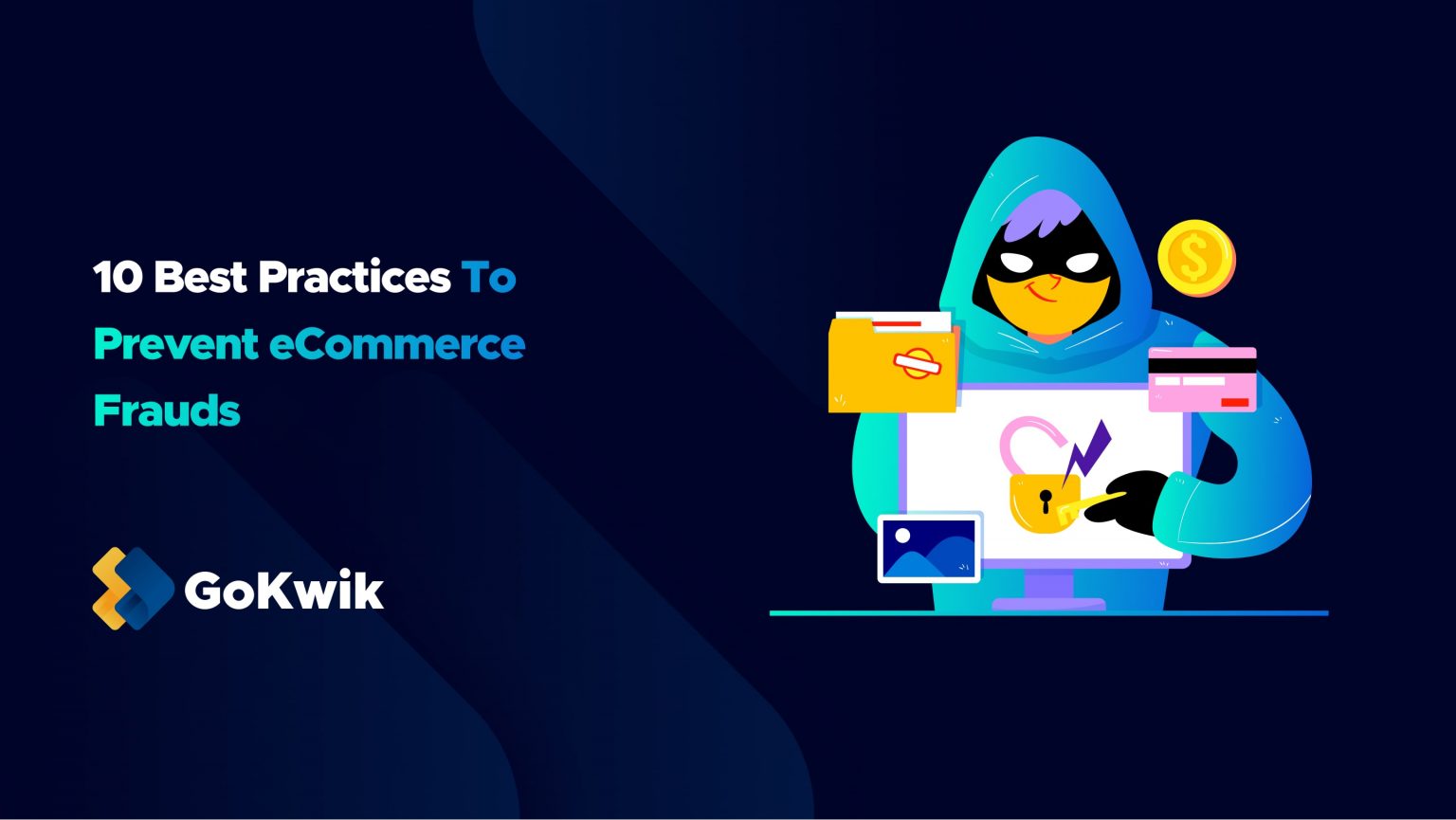
Vardhan leads product and growth initiatives at GoKwik, driving D2C e-commerce innovations, conversion optimization, and scalable growth programs for products. An ISB alumnus based in Bengaluru, he brings expertise from Unacademy, Ola, and Mahindra in building high-impact product strategies.
Read this blog on your favourite platform
As you build your eCommerce brand, you will soon realise that there are a lot of people out there to scam you. In India alone, card and internet fraud increased from 2,545 in 2021 to 3596 in 2022. eCommerce frauds mostly happen in online transactions, when someone uses deception to gain unauthorised access to someone’s personal information or payment information to steal money or goods. Meanwhile, other fraud that we’ve seen is running fake scripts and causing RTOs or return to origins. Here, scammers place fake cash on delivery orders and cancel them once the items are shipped or out for delivery.
Moreover, eCommerce frauds are riskier than offline scams since identifying these online scammers is very difficult. Stopping them right away is becoming all the more necessary today than ever considering the pace at which the eCommerce market is expanding.
But how to do so? Are there any ways to reduce these eCommerce fraudulent activities from the grass root?
Yes, there are a few ways to help stop these deceitful activities.
In this blog, we’ll talk about 10 best practices to detect and prevent eCommerce frauds and preserve your hard earned money.

1. Check The Card Verification Value(CVV) For All Purchases
Credit card scams are the most common eCommerce scams since almost 60 million people use credit cards in India. Hackers get credit card information from the dark web and then scam online eCommerce stores.
By asking for the 3-digit code on the credit cards i.e. CVV for each transaction, you can ensure that your customers have a physical card in their possession. Also, it is illegal for merchants to keep CVV data on file. So, it is not something that fraudsters can have access to. The two factors together can help reduce the chances of you getting scammed.
2. Regular Site Security Audits
A site security audit is another way to reduce eCommerce frauds. If you can detect security issues in your website before scammers do, you can rectify your website to avoid scams. By doing a site security audit, you can,
- Check whether the shopping cart software and all the plug-ins are up to date
- Remove inactive plug-ins
- Make sure all passwords are strong enough for dashboards and databases
- See if the website is scanned regularly for malware
- Check the backup frequency of the online store
- Examine if the SSL certificate is updated and working
3. Leverage Artificial Intelligence And Machine Learning Technology
A great way to protect your business is by leveraging artificial intelligence (AI) and machine learning (ML) technology.
Because AI-ML-powered systems have the ability to process larger sets of data than humans, detecting frauds becomes quicker.
To give you an example, GoKwik’s RTO Protection Suite uses artificial intelligence (AI) and machine learning (ML) technology to,
- Identify a shopper’s buying behaviour and suspicious patterns
- Classify them as high-, medium-, or low risk shoppers with high risk being the ones who showcase higher propensity of cancelling or rejecting orders at the doorstep
- Raise red flags to inform the eCommerce company about the chances of fraud or RTOs
By leveraging this information, you, as an eCommerce company, can put in place many interventions to avoid the risk of fraudulent activities. Some of these could be,
- Intelligently disabling cash on delivery as a payment option to high risk customers
- Adding friction on cash on delivery such as confirmation prompts, OTPs or captcha to check a shopper’s intent
- Double check a shopper’s address to ensure correctness and hence, low delivery defaults, and more.
4. Address Verification Service
Many companies today apart from credit card companies and issuing banks provide address verification services. These services help detect suspicious transactions by matching the billing address of the customer during the checkout with the address in the records of the issuing bank. If the address doesn’t match then the transaction is either declined or further investigated.
D2C enablers such as GoKwik also help verify customer addresses using a variety of methods. For instance, it verifies a customer’s address by running it through its own vast pool of data. In case a discrepancy is found, it sends a message to the customer to reconfirm their address. It then updates the received address in its database to avoid any fraudulent activities – intentionally or unintentionally.
5. Be PCI-DSS Compliant
To minimise online fraud, make sure your business is PCI-DSS Compliant. But, what does it mean to be PCI-DSS compliant?
It means to comply with 12 rules and regulations defined under the PCI-DSS compliance committee. To be PCI compliant:
- Have a secure network – install firewalls and don’t circulate business passwords
- Secure customer data – Never see, retain or have access to cardholder’s data
- Vulnerability management – Use and update anti-virus software on a regular basis
- Access control – Restrict cardholder data access in any form and assign unique IDs to individuals,
- Network monitoring and testing – Before launching a website, do logging, testing, and audit trials
- Information security – Maintain and adhere to policies dealing with the information security system
If you don’t want to go through the hassle of becoming PCI-DSS compliant, partner with someone that is and will take care of all these requirements for you like GoKwik, which is also PCI-DSS certified.
6. Set Purchase Limits
As a general rule of thumb, set purchase limits on each of your product offerings. This means, a customer can only buy up to a certain quantity of any of your products, say 5. Anything beyond will automatically be reconfigured to five.
This way, you’re not only allowing myriad customers to buy your products but reducing the chances of eCommerce frauds.
Note, this is especially a good technique to implement when running flash or end of season sales. Because, the chances of cancellation, frauds, and RTOs are higher during these periods.
7. Cross-Match The IP Address And Billing Address
This is another way to save yourself from eCommerce frauds. By detecting the location of the device from where the order is placed using the IP address, you can verify the customer’s billing address mentioned in your database. If it’s not a match, it might be a case of fraud.
Also, you can match the IP address location from the previous time they ordered. If it’s different and the order value is also high, then it might be worth it to call your customer first before accepting their order.
8. Keep Fraud Prevention Software Updated
Online scammers are always finding new ways to implement their scams. So, it becomes essential for you to keep your fraud prevention software updated. It ensures that even if a fraudster comes up with a new way to harm your eCommerce business, you remain safe.
9. Use HTTPS Protocol
Hypertext Transfer Protocol Secure or HTTPS is a primary protocol that exchanges data between an eCommerce online store and a customer’s web browser like Chrome. This protocol encrypts the data to protect customers’ sensitive information like addresses, credit card number, etc.
This way, hackers can’t get crucial information about any of your customers. And you can keep both your customers and yourself safe from scams.
10. Avoid Collecting Excessively Sensitive Data
As an eCommerce store, you need to collect data about your users. This data helps you provide them with the right suggestions, personalise the customer’s shopping experience, and even offer discounts to many of your long-term users.
But it’s important that you only collect relevant data from your customers. If you have too much sensitive shopper information stored in your system, it’s a cheesecake with cherry on top for scammers. The less sensitive and just apt information you have from customers, the better it is from a security point of view.
Conclusion
As long as the eCommerce market continues to expand, scammers will continue to scam merchants in new ways each time. But these best practices will reduce the risk of getting scammed and save your eCommerce store from unnecessary loss. It will not only reduce your business losses but also increase trust among your users. They will see you as a safe place to buy and your brand image will also get a positive impact out of this.

AUTHOR
Vardhan Jain
Director of Product Program @ GoKwik