Your 2026 D2C Calendar mapped day by day - Powered by real data from India’s biggest D2C shopping network
eCommerce

What Is Customer Journey Orchestration? How eCommerce Companies Can Use AI?

12 May 2024
10 Min Read
What Is Customer Journey Orchestration? How eCommerce Companies Can Use AI?

Atul Bansal

Head of Marketing

Atul leads marketing at GoKwik, championing D2C brand building, growth strategies, scalable GTM for e-commerce, and data-driven customer acquisition. A former Amazon leader and IIFT MBA alumnus based in Bengaluru, he brings 15+ years scaling business across e-commerce, and fintech.
Share it on

Table of Contents


Online shopping journeys are no longer linear. Today, customers interact across various brand touchpoints and make purchases from multiple sources. It's increasingly important for eCommerce businesses to coordinate these journeys to achieve their goals, engage customers effectively, and drive conversions. Customer journey orchestration or optimisation, is a critical approach to maintaining consistency and ensuring conversions across all platforms.
In this blog, we’ll look into what customer journey orchestration is, its benefits, how to go about it, and much more.
Let’s first start by understanding the basic meaning of customer journey orchestration.

What Is Customer Journey Orchestration In eCommerce?

Customer journey orchestration is about creating personalised, consistent, and relevant experiences across an eCommerce brand’s every customer interaction touch point which can lead to conversions.
This involves drawing a customer journey map and connecting real-time data points across multiple channels, systems, and touchpoints to get actionable insights. This data can then help eCommerce businesses in improving their strategies from journey mapping to automating communications and connecting channels.

Why Is Customer Journey Orchestration Important In eCommerce?

Let’s take a look at the reasons why eCommerce businesses need to prioritise customer journey orchestration.

Better Strategising

Customer-focused marketing is crucial for quicker conversions and better retention. To achieve this, the most basic step is to identify how consumers are finding your product - search engine, ads, word of mouth, etc. This information will help businesses set the trajectory for the rest of their journey.
Today, an average person uses more than one device to browse, surf, and shop on the internet. Think about all the devices you use - mobile phones, laptops, tablets, etc.
People use different devices for different things, depending on what they're doing and where they are. Consumers and business buyers turn to an average of nine channels to browse product inventory, look for advice, and then make purchases.
By leveraging the right customer journey mapping tools, brands can see how people find their products and what they do post-discovery. For instance, talking to customer service, or visiting a store. etc. Knowing what customers do after they buy something helps companies keep them coming back and telling their friends about the brand.
Customer journey orchestration helps with all of this.

Personalised Experience

Consider how you act as a customer. Do you switch between different devices during the day? And when you buy things, do you expect companies to remember what you like?
Chances are, you do.
That's because personalised online shopping is just what we expect nowadays. Your customers are all over the place, using lots of different websites and apps, so your brand needs to be there too, ready to talk to them.
Personalisation is no longer a ‘good to have’. It's super important for brands right now if they want to do well in today's busy digital world.
Customers get loads of ads all day long, so the companies that really catch their attention are the ones that make things personal.
By planning out each part of how a customer shops to match what they like, brands can make an experience that stands out from the rest. It's the top way to make customers like your brand more, from making them recognize it to making them want to come back again and again.

Better Communication

Your audience wants more than just ads all the time. They want you to pay attention to them. When they give you their information, like at the time of checkout etc., they expect you to use it to make their experience better.
To connect with your audience and make sure they're happy, journey orchestration is key. It's like having a conversation with them through your marketing but at the same time, ensuring that they do not get frustrated and blacklist you in their mind. You learn from each interaction and use that knowledge to make the next one even better.
For instance, GoKwik enables its partner merchants to leverage multiple social channels such as email, SMS, WhatsApp Commerce, Instagram, etc. via Kwik Engage to build excellent two-way communication with customers. To give you an example, eCommerce brands can leverage the collected data via Kwik Engage to send out meaningful campaigns like product launches, upcoming sales, how-to videos, etc., run quizzes on WhatsApp to increase customer engagement, or simply inform them about their order in transit.

Essential Steps To Map Customer Journey

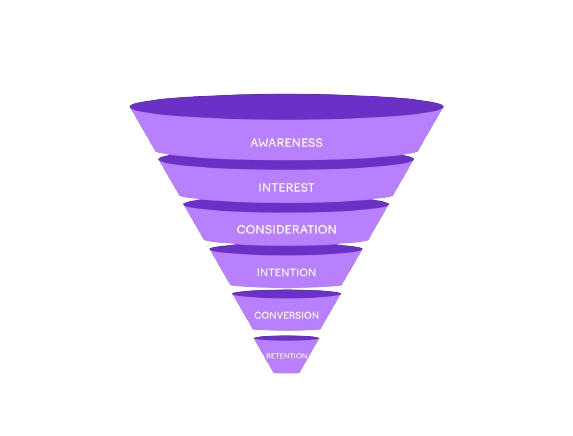
The customer journey stages usually consist of:
  • The awareness stage
  • The consideration stage
  • The decision stage
  • The retention stage
  • The advocacy stage
This is a great place to start. But these stages don’t answer the nuanced questions of today’s evolved buyers and buying journeys. Today, there is so much more to map out if you want a successful customer journey.
Let’s take a look at how you can go about it:

1. Collect And Leverage Data

To create a great journey for your customers, you need to gather the right info.
This means collecting data in the right way is super important. Everything from giving customers a consistent experience wherever they are to suggesting products they'll love and talking to them in a way that feels personal — it all depends on having the right data.
And there are lots of different kinds of data you need to look at to get what you need, like:
  • Events: This means keeping track of what people do when they visit your website or use your app.
  • Customer details: Like names, addresses, and other info about your customers.
  • Transaction information: This is all about what people buy, return, and other stuff from your online or in-store systems.
  • Customer support: This includes things like chats with your support team, how often people get in touch, and how happy they are with your service.

2. Build An Omnichannel Strategy

If you don't have a plan for selling everywhere your customers are, your customer journey might have some problems along the way.
Having an "omnichannel" way of selling means making sure all your sales channels work together smoothly. It's about giving your customers the same great experience no matter where they're shopping - whether it's on their phone, computer, or in a real store.
For a smooth journey, you need to connect with customers wherever they are, and each place they shop should feel just like your brand.

3. Analyse And Optimise

To make sure your customer journey runs smoothly, you need to use data in real-time. This means your analysis has to be quick and cover everything.
Regular analysis won't do the trick if you want to make personalized campaigns that work for each person. You need insights that help you figure out what to do next right away and even guess what customers might want in the future.
What kinds of things make people start shopping? What do they like to do next? Which buttons make them buy things?
Your reports should help you decide the best way to make your customers happy, whether it's what you say, where you say it, or when you say it.

Examples Of Customer Journey Orchestration

Now that we’re clear on what customer journey orchestration is, let’s look at some real-world examples.

BigBasket

BigBasket keeps a whopping 85% of its customers coming back for more.
They're super smart about it too - they listen closely during customer calls to learn how to do even better and cut down on complaints.
BigBasket leverages technologies such as route optimization, intelligent planning, and advanced analytics to provide agents with the tools they need to provide efficiency.

Maybelline

Maybelline knows it's important to understand and focus on different groups of people when selling makeup. They split the market into smaller groups to make special ads and products for each one. This way, they can really connect with people.
Their main customers are women aged 16 to 35. Maybelline wants to make them feel powerful with their makeup and ads. They listen to what these women want and make products just for them.
Maybelline uses social media a lot to talk to their customers and make sure everyone knows about them. They use Instagram, YouTube, and TikTok to share makeup tips and show off their products. This helps them build a community of makeup lovers.
They also work with influencers and makeup experts to reach more people and make their brand even stronger. These partnerships help spread the word about Maybelline and make people excited about their makeup.

How To Use AI For Customer Journey Orchestration?

  • Predictive Analytics: AI algorithms can analyse vast amounts of customer data to predict future behaviours and preferences. By understanding what customers are likely to do next, eCommerce businesses can anticipate their needs and tailor the customer journey accordingly, offering personalised recommendations and content.
  • Segmentation And Targeting: AI-powered segmentation tools can categorise customers into distinct groups based on their demographics, behaviours, and purchase history. This allows eCommerce businesses to target specific audience segments with relevant marketing messages and offers, increasing the likelihood of engagement and conversions.
  • Content Personalization: AI algorithms can dynamically personalise website content, product recommendations, and marketing emails based on individual customer preferences and past interactions. This level of personalization enhances the customer experience by delivering relevant and timely content at every stage of the journey.
  • Chatbots And Virtual Assistants: AI-powered chatbots and virtual assistants can provide real-time support and assistance to customers throughout their journey, answering questions, resolving issues, and guiding them through the purchasing process. By automating routine tasks and inquiries, chatbots free up human resources and provide round-the-clock support.
  • Customer Journey Orchestration AI algorithms can analyse market trends, competitor pricing, and customer behaviour to dynamically adjust pricing strategies in real-time. This ensures competitive pricing while maximising profitability and revenue based on demand fluctuations and customer preferences.
  • Predictive Customer Service: AI can predict potential customer service issues before they occur by analysing data such as browsing patterns, cart abandonment rates, and product reviews. This proactive approach allows eCommerce businesses to address concerns preemptively, reducing friction in the customer journey and improving satisfaction.
  • Recommendation Engines: AI-powered recommendation engines analyse customer data to suggest relevant products or content based on past purchases, browsing history, and similarities with other customers. These personalised recommendations increase cross-selling and upselling opportunities, driving incremental revenue.
  • Sentiment Analysis: AI algorithms can analyse customer feedback, reviews, and social media mentions to gauge sentiment and identify emerging trends or issues. This enables eCommerce businesses to adapt their strategies and offerings in response to customer feedback, fostering stronger relationships and loyalty.

Wrapping up!

AI streamlines the eCommerce process, making it easier for brands to grasp what their customers want at each step. From initial interest to final purchase, AI ensures a smoother ride, helping brands connect better with consumers.
So, if companies want to ace their customer experience, hopping on the AI train is a must.

Conclusion

Enjoying this article? Share it with the world!
Atul Bansal

AUTHOR

Atul Bansal

Head of Marketing

Atul leads marketing at GoKwik, championing D2C brand building, growth strategies, scalable GTM for e-commerce, and data-driven customer acquisition. A former Amazon leader and IIFT MBA alumnus based in Bengaluru, he brings 15+ years scaling business across e-commerce, and fintech.