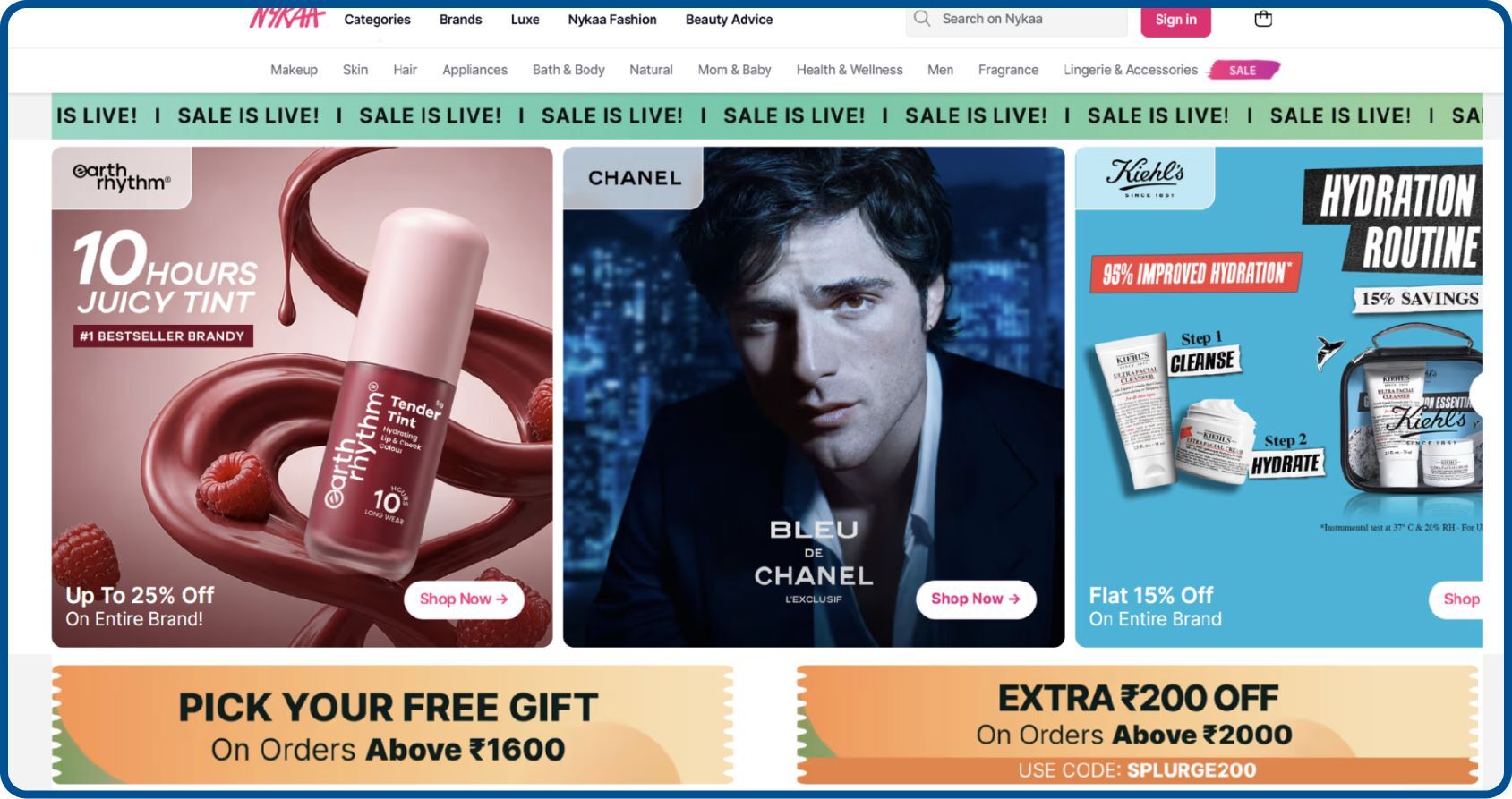
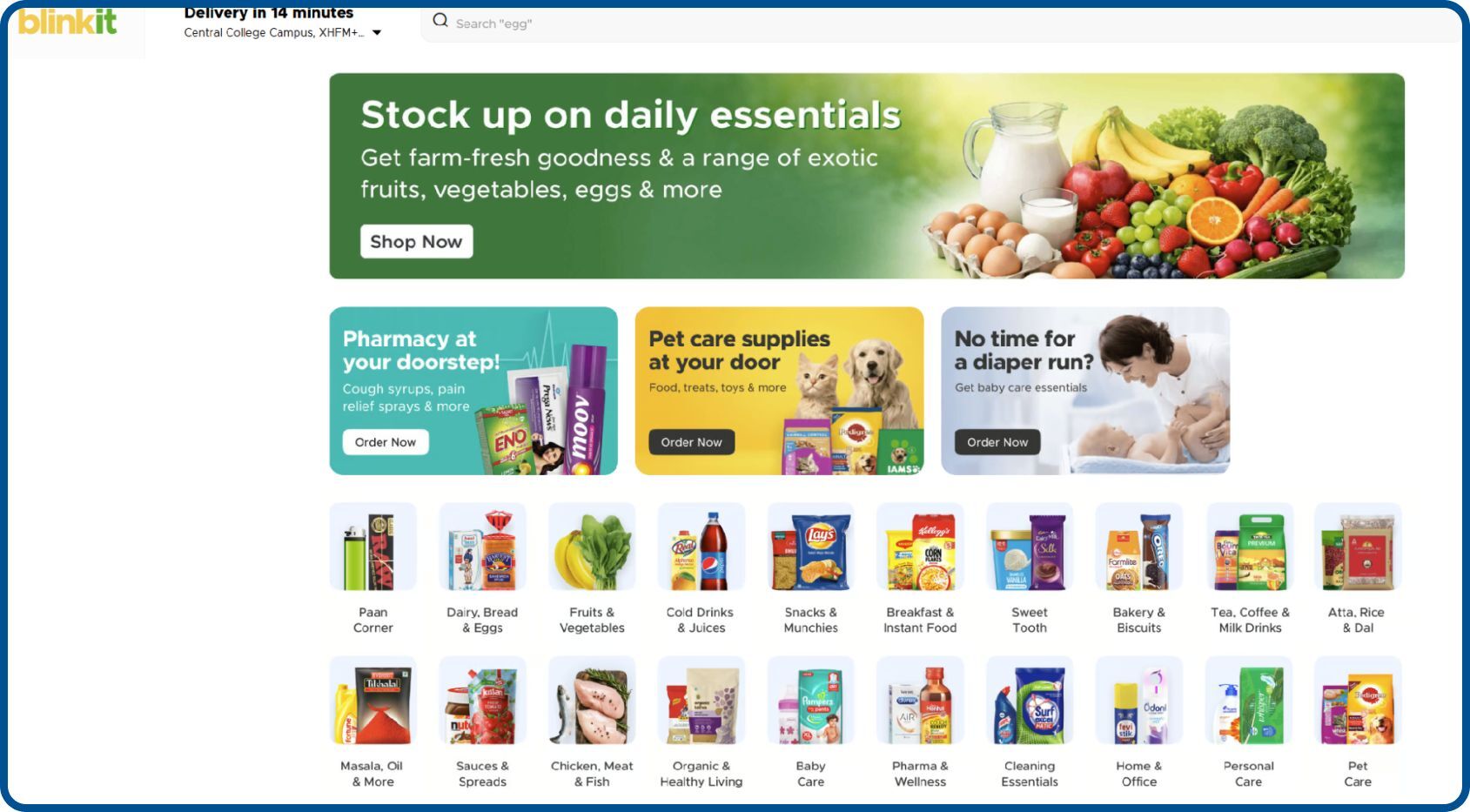
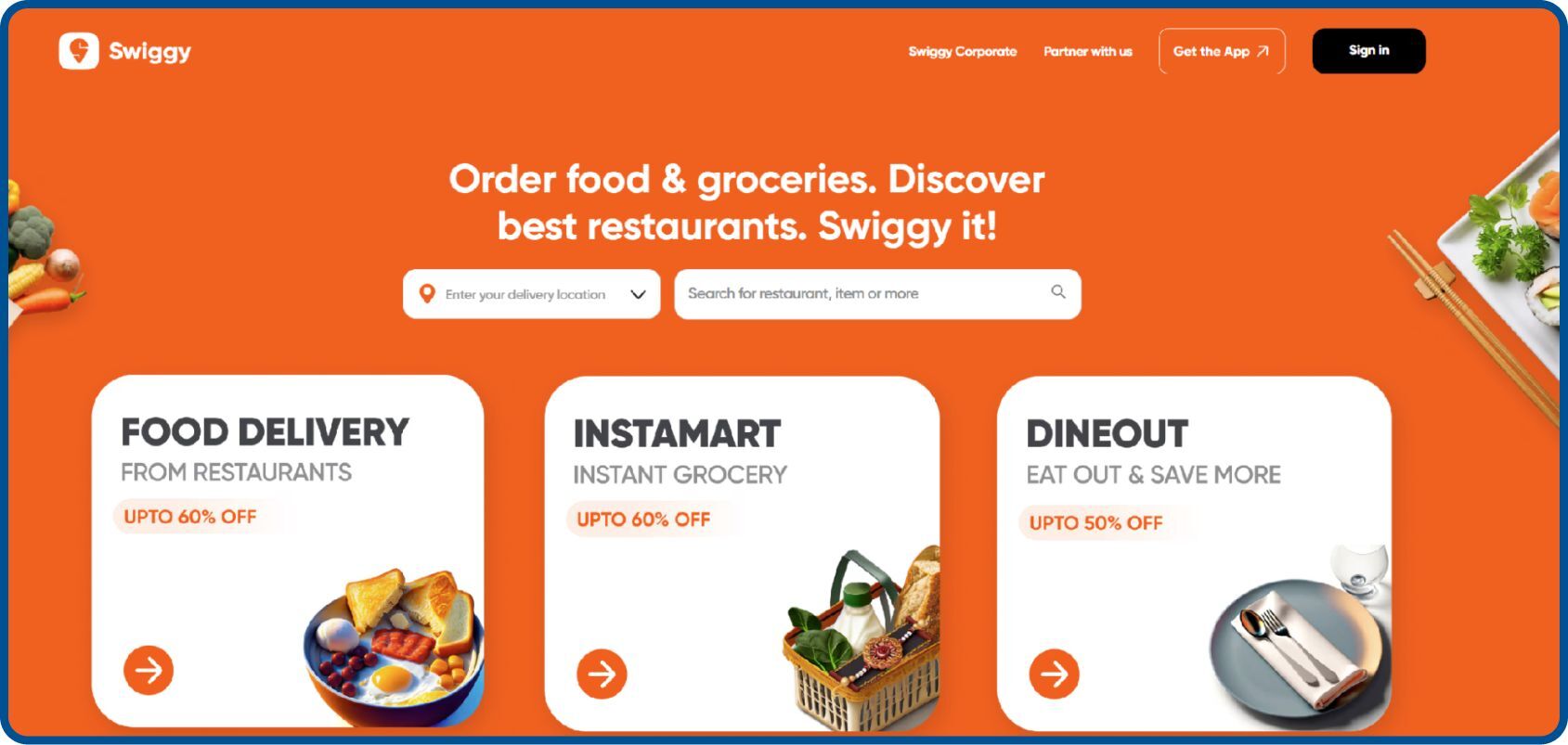
B2C stands for business-to-consumer, where a business sells products or services directly to individual consumers. It covers the shopping you do every day, from ordering groceries and skincare to booking a cab or streaming a show.
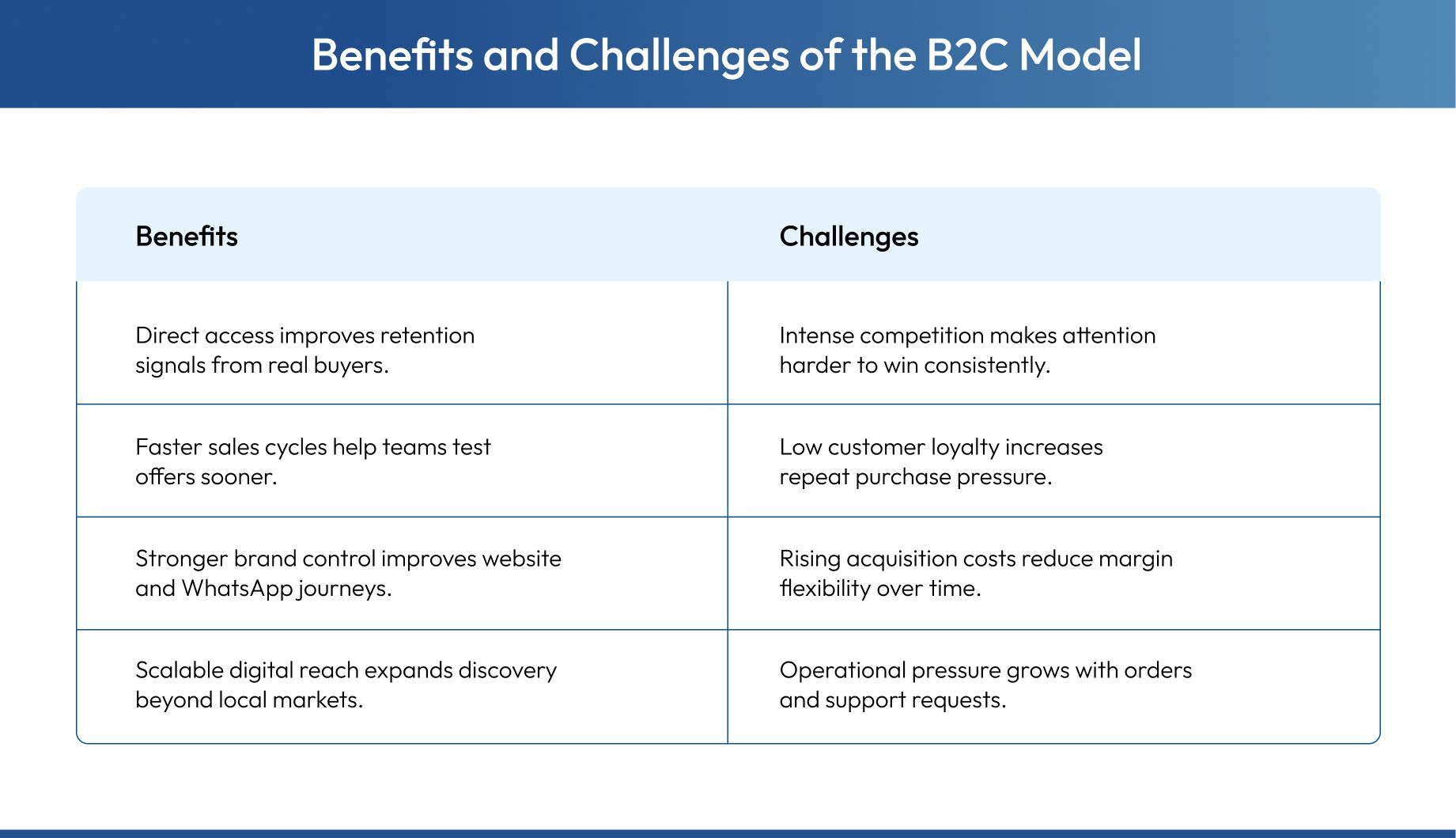
The B2C model gives brands direct control over pricing, branding, customer data, and repeat journeys.
India's ecommerce market is expected to cross $160 billion by 2028, driven largely by direct-to-consumer brands selling straight to shoppers.
This blog explains what is B2C in simple terms with real examples, business types, marketing strategies, and GoKwik use cases. You will also learn how B2C differs from B2B and how consumer brands convert shoppers into repeat buyers.
What Are the Main Types of B2C Business Models?
There are different B2C business models that companies use to reach consumers. Some brands sell their own products, some connect buyers with sellers, and some earn through subscriptions or advertising space.
Here are the main types of B2C models:
Choosing the right B2C business model starts with understanding customer needs and the way consumers prefer to buy. A shopper who wants quick discovery may choose a marketplace, while someone who already trusts a brand may buy directly from its website.
Pricing also must match that buying habit. Direct sellers need strong product trust and clear brand recall, whereas online intermediaries need enough seller depth to make comparison easy. On the other hand, subscription brands need steady value over time, so renewal feels like the natural next step.
|
B2C Model
|
How It Works
|
Example
|
|
Direct sellers
|
Sell own products directly to buyers
|
Mamaearth
|
|
Online intermediaries
|
Connect buyers with third-party sellers
|
Amazon
|
|
Advertising-based
|
Offer free content and sell advertising space
|
YouTube
|
|
Community-based
|
Monetize interest-based target audiences
|
Reddit
|
|
Subscription-based
|
Charge recurring fees for access
|
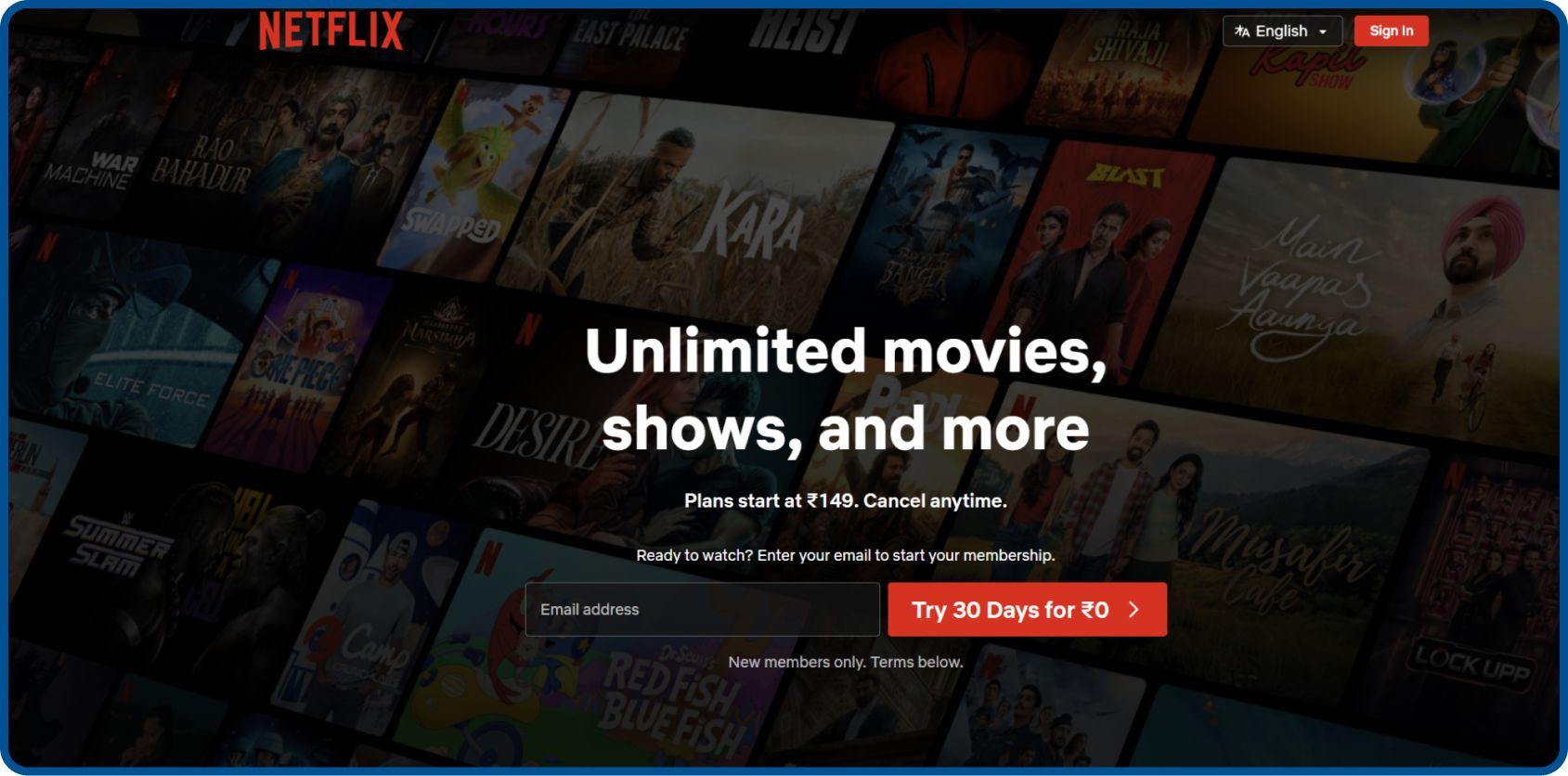
Netflix
|
The Differences Between B2C vs B2B vs D2C
A B2C vs B2B comparison usually starts with the buyer. B2B brands sell to companies, while B2C brands sell to individual shoppers. D2C goes one step deeper because the brand sells directly through its own website, WhatsApp, app, or store.
The key differences become clearer when you look at the sales cycle, purchase value, marketing focus, and who owns the customer relationship after purchase.
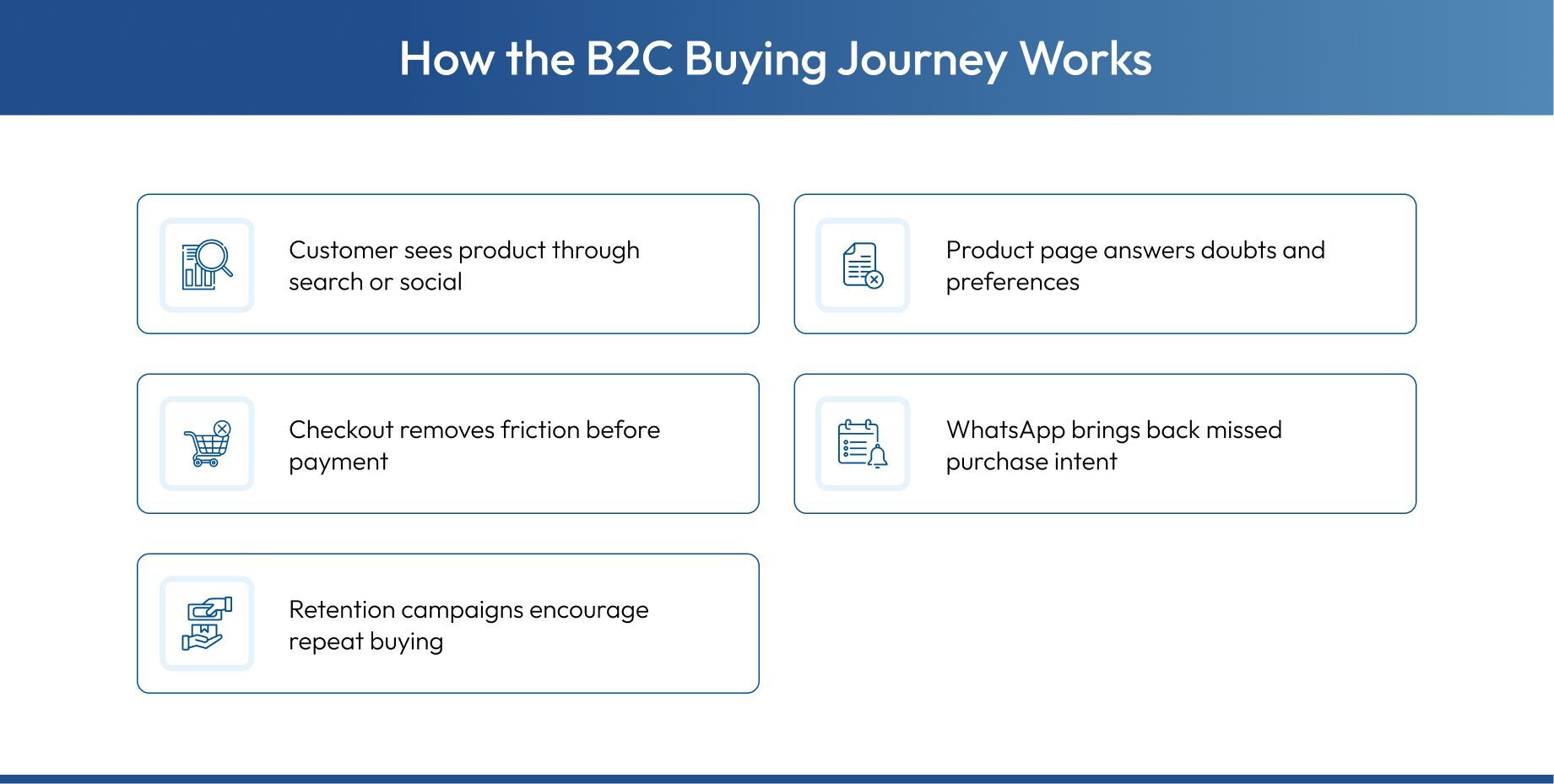
B2B brands spend more time supporting a purchasing decision because several people may be involved. B2C brands need shoppers to understand the offer quickly and take immediate action. D2C brands also need speed, yet they carry deeper ownership of customer relationship management because they manage discovery, checkout, support, and reorders through their own channels.
These differences highlight why B2C brands need stronger revenue systems, since every step after discovery must move shoppers closer to purchase or repeat buying.
|
Factor
|
B2B
|
B2C
|
D2C
|
|
Buyer
|
Business team or procurement owner
|
Individual customer buying for personal use
|
Individual customer buying directly from the brand
|
|
Decision speed
|
Slower evaluation with longer sales cycles
|
Faster decision shaped by personal need
|
Fast decision shaped by trust and experience
|
|
Purchase value
|
Higher order value with larger quantities
|
Lower order value across frequent purchases
|
Varies by category and repeat purchase behavior
|
|
Marketing focus
|
ROI proof, qualified leads and account value
|
Trust, convenience, recall and immediate action
|
Brand story, education, retention and repeat orders
|
|
Sales process
|
Demos, trade shows and dedicated support
|
Shorter sales processes with fewer approvals
|
Website, WhatsApp, checkout and delivery flow
|
|
Example
|
Retailer buying inventory software
|
Customer buying shoes online
|
Customer buying skincare from a brand website
|

_1790076136.png)

 12 Sep 2026
 13 Min Read