With the introduction of new technologies, consumers are expecting more from eCommerce brands. And brands, too, are continuously focusing on digitally meeting consumer needs. Those businesses that ignore tech trends are at risk of getting left behind. Here are 11 top tech trends for the future of internet commerce.
1. AI Influencers
AI influencers are sort of digital clones or doppelgangers that replace human influencers. With audiences becoming more comfortable with the virtual world, the popularity and acceptance of AI influencers is growing. It’s a D2C technology worth considering for ambitious and progressive brands.
AI influencers have many benefits for brands. For instance, AI influencers are,
- Cost-effective
- Provide more freedom to brands
- Give more control to brands
- Uniqueness in a saturated market
- Offers more creative possibilities
- Makes real-time engagement possible
Here’s an example of AI influencer Li Miquela who has 2.6 million followers on Instagram and is named Time Magazine’s 25 most influential people on the internet.
2. Augmented Reality
Virtually try out clothes or see how a particular shade of wall paint will transform the look of your home—virtual reality (VR) and augmented reality (AR) are creating new experiences for the future of commerce. And customers love how these technologies are helping them shop remotely. Currently valued at $38.6 billion, it is projected to grow at an annual rate of
10% to $58 billion by 2028.
Benefits of AR for brands:
- New ways of increasing sales
- Competitive advantage over brands that don’t offer these experiences
- Increase the ability to scale businesses
- Create delightful experiences for customers
Example:
Virtual fragrance shopping is taking the online fragrance and perfume shopping experience to another level.
3. Voice Commerce
There’s one more way customers are shopping these days — via voice search and voice-enabled shopping. It involves a speaker that converts words into electronic commands and an AI-driven voice assistant that interprets the words and determines the next actions. This D2C technology provides many benefits to brands.
Voice commerce helps brands in many ways:
- Reduces shopping time
- Improves customer engagement and satisfaction
- Can share relevant product recommendations
- Helps gather customer data
- It’s a new method of shopping hence improving engagement
Now let’s see why you must consider voice commerce for your brand:
- 75% of consumers are expected to own a smart voice device by 2025
- 65% of people in the age group of 25 to 49 use their voice assistance every day
- 93% of consumers are satisfied with voice assistants
The above statistics point to an increasing adoption of voice-enabled shopping. If you’re not giving it a thought, there are many reasons you should, so you don’t get left behind in the market.
4. Customer Journey Orchestration
Customer journey orchestration is the process of understanding customer behavior and patterns across channels. The data is then used to create personalized shopping experiences. In short, customer journey orchestration is a strategy to meet your customers at every touchpoint to increase engagement and sales. And it is going to play a critical role in the future of commerce.
Here’s how customer journey orchestration helps brands:
- You can create personalized experiences for customers
- Helps provide efficient real-time customer support
- Collect insightful data
- Improve conversion rate with targeted engagement
And, here are some tips for successful customer journey orchestration:
- Create an omnichannel experience for your customers
- Collect relevant data
- Analyze insights and optimize
- Enable an effective chat service across your channels
5. Visual Search And Image Recognition
Visual search or image recognition is an AI-based technology that allows shoppers to search for products using images, unlike the usual method of searching through texts or keywords.
Why you must consider visual search for your brand:
- It helps attract and engage young consumers
- People browse social media to search for products, hence brands receive more traffic
- Makes shopping convenient and easy for customers, increasing sales
- You can create hyper-personalized experiences
And, here’s how you can apply visual search on your eCommerce site:
- Visual search: customers upload images and eCommerce websites show similar products
- Product recommendations: AI-powered technology displays products of similar style, colour, cut, design, etc.
- Personalized recommendations: Brands can use image recognition technology to recommend products based on data collected from customers’ viewing activities
- Smart mirrors: Brands can offer recommendations based on what the customer is already wearing when in front of the smart mirror
An example of a visual search: the UK-based fashion brand ASOS. Customers upload images into a feature on the site, ‘Style Match’. The website then displays related and similar product recommendations.
6. Dynamic Pricing And Demand Forecasting
For eCommerce retailers, dynamic pricing is a key strategy to boost sales. It involves changing and adjusting prices based on factors such as demand for a product.
Why you must include dynamic pricing as a strategy:
- Dynamic pricing improves revenue
- Add a competitive advantage to your business
- Improves inventory management through supply and demand balance
- Personalised pricing helps improve customer engagement
Here are some tips for a dynamic pricing strategy for your brand:
- Define your objectives and metrics for dynamic pricing
- Analyze data, and understand the factors that impact pricing
- Choose a dynamic pricing type and how to change prices
- Test your dynamic pricing strategy and optimize
Here’s an example of Amazon’s dynamic pricing:
7. Chatbots: Future Of Conversational Commerce
Gone are the days when customers' only source of information was advertisements and websites of brands. Today, customers prefer to interact, ask questions, clear their doubts, gain more understanding of products they wish to buy, and only then make purchases. That’s what brings us to
conversational commerce and chatbots. According to Juniper Research, global retail spending through conversational commerce will increase to
$43 billion by 2028.
- Chatbots enable customers to interact with brands
- Make conversations and interactions more relevant
- Personalize communication with one-on-one interaction
- Offer personalized incentives and deals
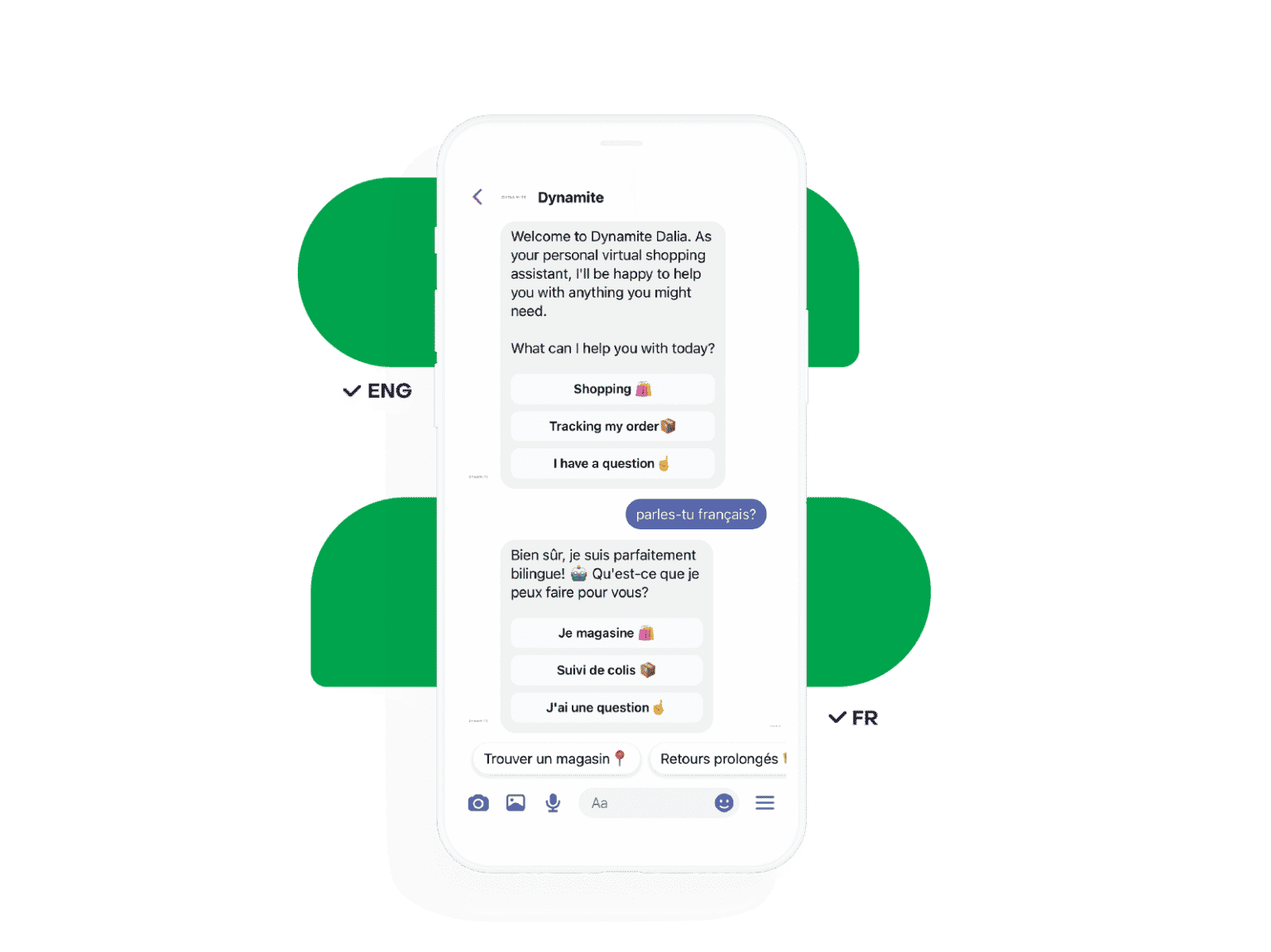
Here’s an example of an eCommerce chatbot offering multiple language options.
8. Predictive Inventory Management And Supply Chain Optimisation
Another key trend in the future of commerce will be the application of predictive analytics in inventory management and supply chains.
How does that work? Predictive analytics analyzes factors such as sales data, market trends, and consumer patterns, among other factors. These insights are used to predict inventory and supply chain needs.
Predictive inventory management can help,
- Make informed and measured inventory decisions
- Reduces losses
- Prevent stockouts and excess inventory
- Identify and address risks and gaps
- Easily manage order fulfillment and replenishment
- Improve overall efficiency and customer satisfaction
9. Behavioral Targeting And Personalized Recommendations
Personalization has been and will be a key part of the future of commerce. Behavioural targeting and personalization go hand in hand—the analyses of customer behaviour data provide insights that can be utilised to create personalized customer experiences.
Behavioural targeting has many benefits for businesses:
- Gather insights on customer preferences, likes, interests, etc.
- Personalize recommendations for products and services based on the insights
- Increase customer engagement and conversions
- Improve customer satisfaction and loyalty
How to implement behavioural targeting and personalization:
- Collect and analyze data from various channels
- Use data for customer segmentation
- Create targeted marketing campaigns and recommendations
- Gather and use real-time data for personalization
- Test and optimize continuously
Example: Spotify playlist recommendations
10. Sentiment Analysis And Social Listening
Brands that understand their customers are more likely to be successful. As the world of commerce gets more crowded and competitive, only those brands that understand and connect with customers in a more personalized manner can stay competitive.
One way to understand customers better is through sentiment analysis and social listening. These methods gather information about how customers talk about your products, services, and brand. And there are advanced D2C technology tools available to automate these processes.
Additionally, sentiment analysis throws light on customer's emotions, attitudes, and feelings, enhancing your understanding of customers.
Sentiment analysis and social listening will play a huge role in the future of commerce by helping,
- In reputation and crisis management
- Product or service development and improvement
- Listen to what consumers are saying about your competitors
- Understand customer's emotions and feelings
11. Ai-Powered Fraud Detection
The world of online commerce is fraught with the challenges of fraud—identity theft, phishing, credit card fraud, and consumer scams, among others. These challenges can have a huge collective impact on the future of commerce if left unattended.
Consider these statistics:
- Global B2C fraud losses are predicted to grow by 40% from 2023 to 2028
- The eCommerce fraud detection and prevention market is predicted to grow 2X by 2027
- The most common types of fraud are promo abuse, friendly fraud, credit card fraud, identity theft, brand impersonation, and account takeover
Brands can fight online fraud with the help of AI-powered fraud detection methods and strategies. Machine learning, risk scoring, behavioural analysis and artificial intelligence are some of the more prevalent fraud detection measures.
Here’s how it can help your brand:
- Real-time fraud detection and prevention
- AI-powered fraud detection provides scalability
- Cost-effective method to reduce losses due to fraud
- Accurate and reliable information
Incorporate Top Tech Trends Into The Future Of Your eCommerce Store
Here, we’ve shared just a few of the most advantageous tech trends that are taking the world of eCommerce by storm. But AI is still evolving. There’s a lot more that’s going to come in the future.
However, the sooner you start on this transformational journey, the faster you can impact and influence your target market.
There are many advanced tech tools for eCommerce to help brands like you. GoKwik offers a suite of products and solutions to help put your brand on the route to high-speed growth.