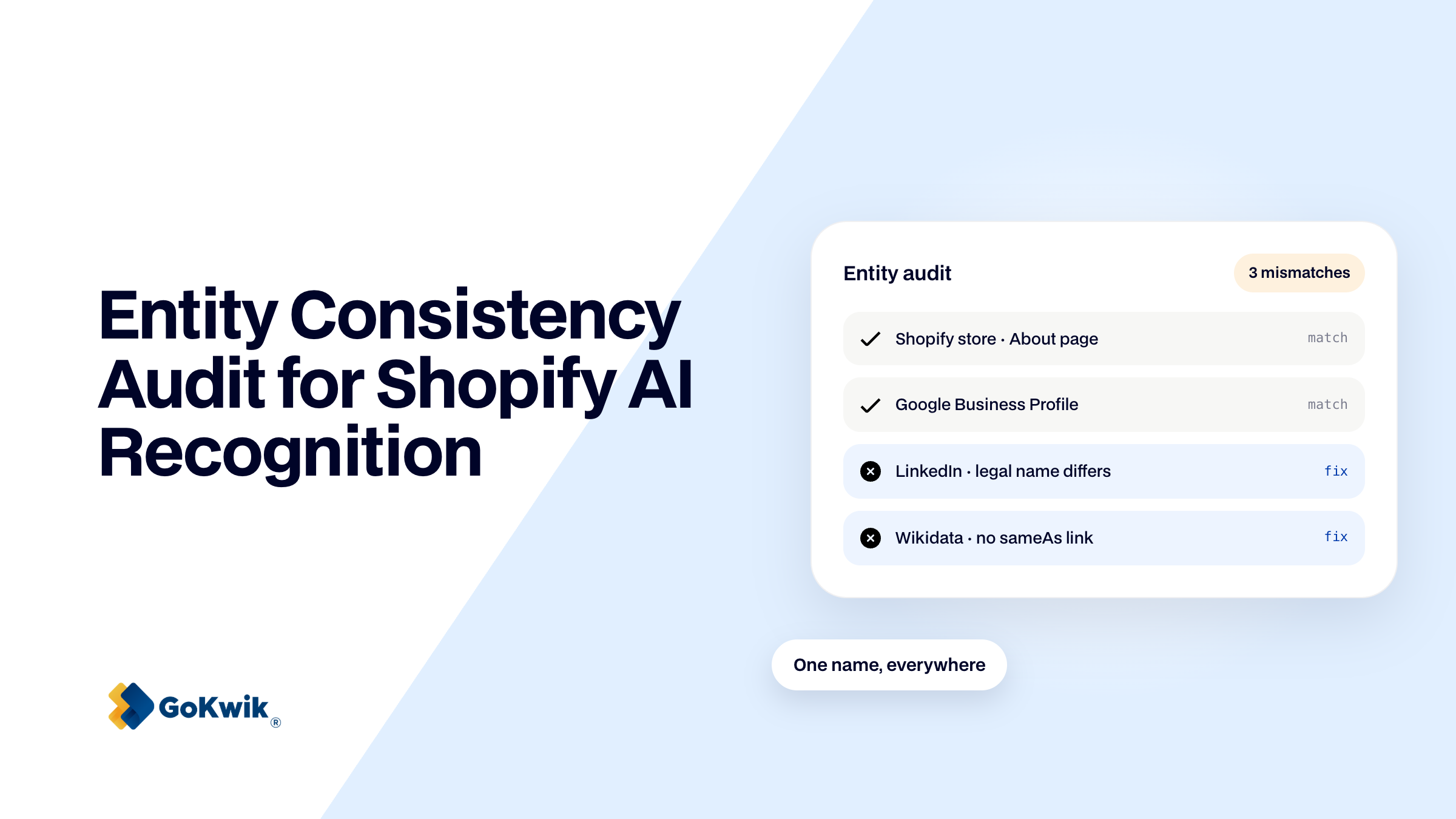
1. Brand name and description consistency. Search your brand name and check how it's described across your homepage, your Instagram bio, your LinkedIn page, and any directory listings. Are you consistently described the same way, or does one channel call you a "skincare brand" while another says "wellness company"?
2. Structured data accuracy. Confirm your Organization schema, if implemented, matches your current business description, logo, and social profile links. Outdated schema pointing to an old Instagram handle or a discontinued tagline actively works against you.
3. Third-party listing accuracy. Check how your brand appears on Google Business Profile, marketplace listings, and any industry directories. Outdated addresses, discontinued product lines, or old contact information create the exact contradiction an AI system weighs against you.
4. Social profile alignment. Your bio, pinned content, and most recent posts across platforms should tell a consistent story about what your brand does and who it's for. A brand that pivoted categories last year but still has old positioning live on one channel creates confusion.
5. Press and review consistency. Search for how journalists, reviewers, and customers describe your brand. If there's a meaningful gap between how you describe yourself and how others describe you, that gap is worth investigating, since it might mean your own positioning needs to catch up to how you're actually perceived, or it might mean outdated third-party content needs a correction request.
6. Founder and leadership consistency, where relevant. If your brand story includes a specific founder narrative, make sure it's told consistently, since AI systems synthesizing "who founded this brand" pull from whichever sources are most consistent and most recent.



_1790076136.png)