As an eCommerce brand, you can leverage a variety of discounts to boost conversions and generate high business revenue. Some of top, most popular, and conversion-centric discounting types are as follows.
1. Bundled Discounts
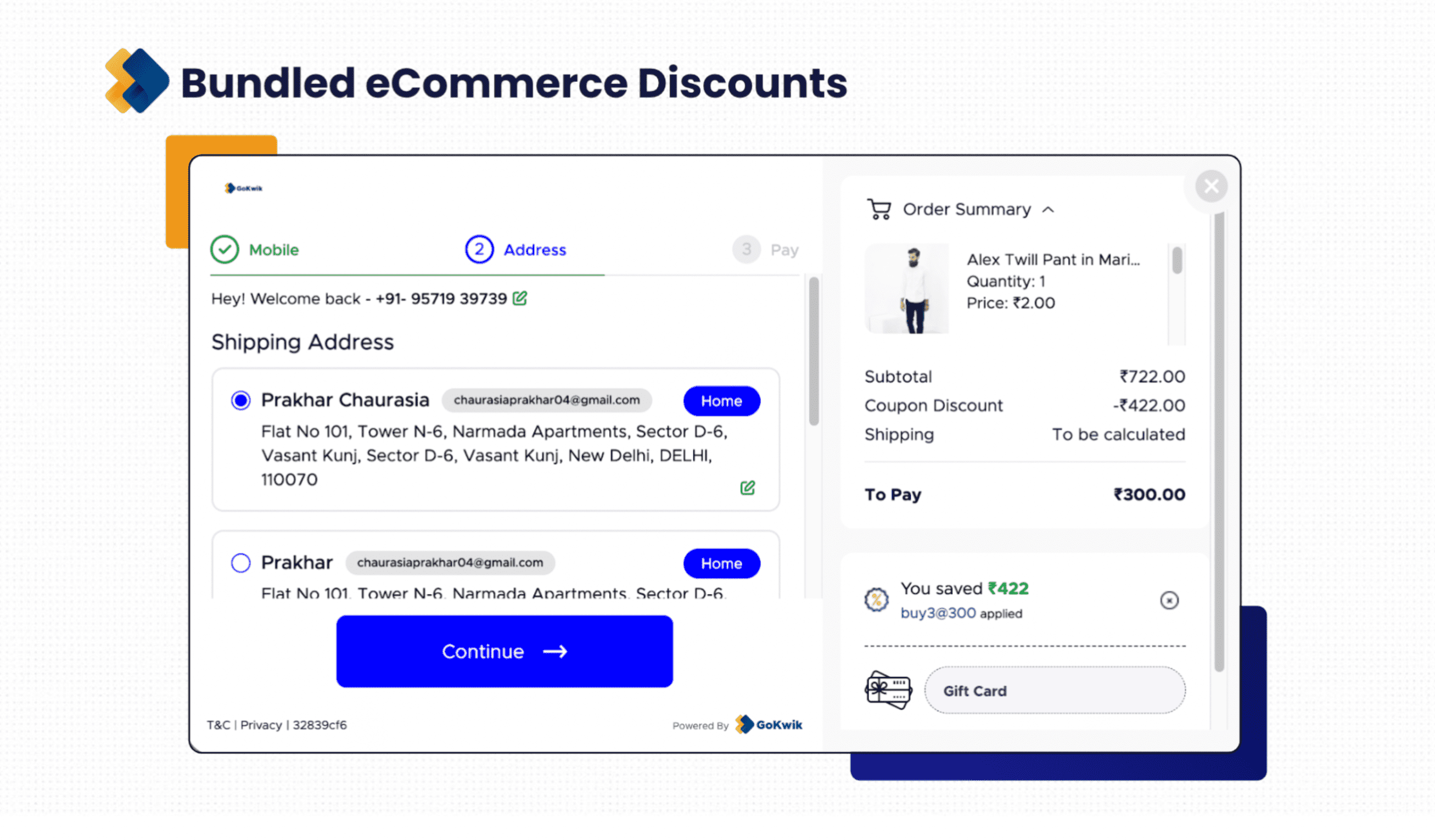
Bundled discounts are ideally those eCommerce discounts that allow you to offer multiple products together at a reduced combined price as compared to purchasing each of them separately or individually. The discount approach has many advantages. They,
- Encourage higher purchases
- Help clear old & dead stock
- Increase average order value
- Promote up-sells & cross-sells
- Optimise discount burns
- Uplift business conversion rate
For instance, "Buy 3 products at just INR 999/-,” “Buy 2 products for just INR 399/-," “Get 10% off on a purchase worth INR 2000/-,” “Buy products worth INR 3000/- and get a 30% off on total cart value," and more.

Bundled discounts work best for those eCommerce brands where customers want to buy,
- Different varieties of the same products such as clothing, fragrance, beauty products, etc.
- Complimentary products together such as grooming products, stationary, FMCG, etc.
2. Percentage Discount
As the name suggests, percentage discount refers to those types of eCommerce discounts where a brand offers a certain percentage off on a purchase made by a buyer. In other words, a brand deducts a certain percentage from the original price of a product or order to entice customers to make the purchase. They are often expressed as a percentage off the regular price.
The primary purpose behind offering such eCommerce discounts is to,
- Increase sales volume
- Ensure better customer acquisition
- Increase brand loyalty and repeat business
- Effective market products and drive high traffic to the website.
There are many ways to offer Percentage discounts. For instance,
- Percentage off on a specific product, such as “Get 20% off on all electronic items"
- Percentage off on entire order, such as “Get 10% off on the total cart value”
- Percentage off on entire order with maximum capping, such as “Get 15% off on the total cart value up to INR 250”
- Pricing tier-based percentage discounts, such as “Get 10% off on purchases above INR 399,” “Get 20% off on a purchase above INR 599,” etc.
Percentage discounts help pique a shopper’s interest and give them an extra push to buy their desired products at a cost lower than the MRP.
GoKwik recommends using this discounting type on high-value items. Percentage off makes the product seem more desirable, hence, increasing the chances of conversions.

3. Absolute Discounts
Absolute discounts are those where a specific amount is subtracted from the original price of the product or order. They’re more like a fixed reduction in price when compared to percentage discounts. The benefits of offering such discounts are as follows.
- Clear business savings Savings
- Fixed cost control
- Maintain profit margins
- Simpler promotion, reduce confusion
The best example of absolute eCommerce discounts would be, “Save INR 399/- on your purchase of INR 3999/- or more," or “Get 200 off on the purchase of items worth INR 1499.”
Read More:
Maximise Black Friday Sale Profits With GoKwik’s 200+ Discount Configurations4. Loyalty Discount
A loyalty discount is a way to reward your loyal customers with incentives on price or discount rates. It’s a way of showing appreciation to customers who stand by your business.
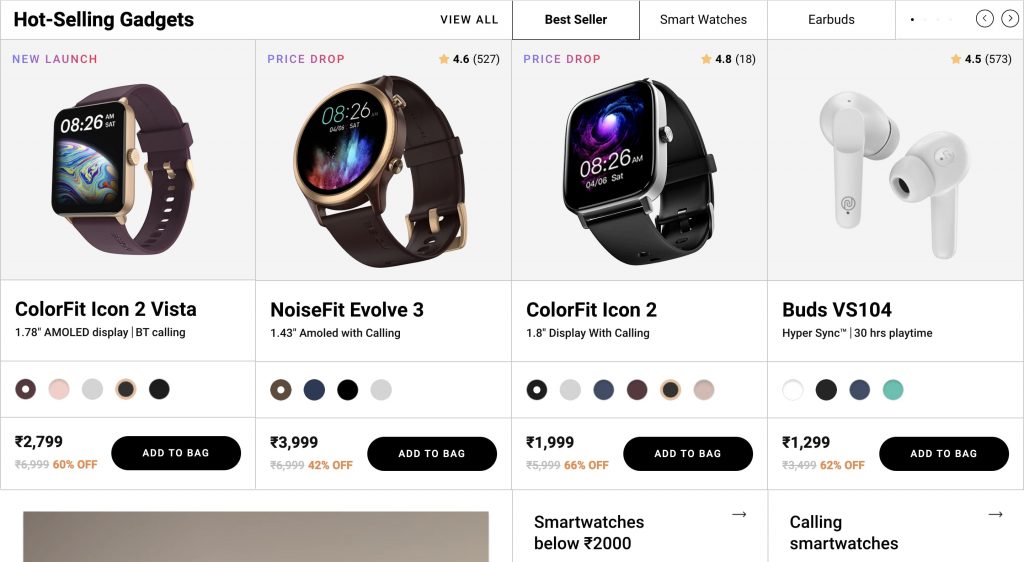
A good example of this discounting strategy in eCommerce is Fire Boltt. The audio and wearables brand has developed a unique
loyalty program for its users in the form of gamification. Every time a user walks a certain number of steps, listens to music on the Boltt Play App or plays a game, they earn coins. Users can then use these coins to make in-app purchases.
The core value? Customers think that they’re buying products for free at discounted prices, but Fire-Boltt is gaining in terms of engagements, app downloads, brand loyalty, and even increased conversions.
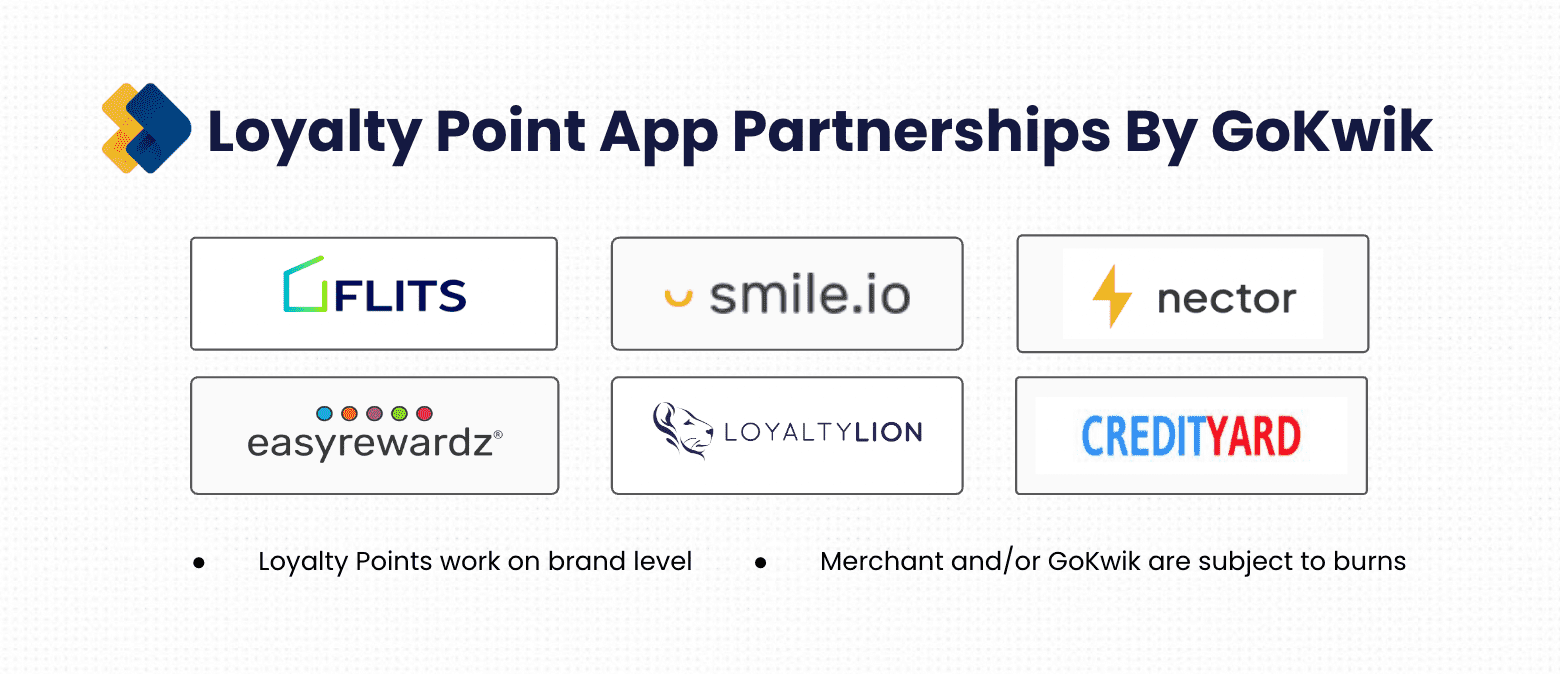
Similar to Fire-Boltt, GoKwik has partnered with some leading Loyalty Points apps enabling many of its D2C partner merchants to allow their customers to earn and burn points while increasing the brand’s GMV as well as conversion rates.
4. Buy X, Get Y Discounts
Buy X, Get Y eCommerce discounts are by far the most effective and widely used pricing discount strategies used by online retailers in India. Here, shoppers ideally purchase one or more items at the regular price and receive additional items at reduced or discounted prices, or for free. Such deals are highly effective because they,
- Encourage better customer acquisition
- Uplift conversion rate
- Ensure larger purchases
- Promote up-sells & cross-sells
- Help clear out inventory
- Increase average order value
Dr Vaidya’s a great example to quote here. One of the leading ayurvedic brands of India, Dr. Vaidya’s uses BX,GY eCommerce discounts to incentivise shoppers to purchase more items.
Another great thing about using BX,GY eCommerce discounts is that you can create personalised product bundles that make sense to your buyers. This, in turn, helps increase the chances of conversions and even repeats. From a business perspective, you move your surplus products or increase the sale of less desirable items out of the warehouse faster than usual.
Some possible BX,GY discounting conditions and examples are as follows.
1. Condition 1: Buy X, Get Y Free
Example: "Buy one pair of everyday slippers, get another pair for free."
2. Condition 2: Buy X, Get Y% Off
Example: "Buy a Dress at Full Price, Get the Second Dress (of equal or lesser value) at 50% off."
3. Condition 3: Buy X Quantity (Product/Category/Collection), Get Y% Off (on lower-priced item)
Example: "Buy one hoodie and one pair of jeans, and get the lower-priced item at 50% off."
4. Condition 4: Buy X Quantity (Product/Category/Collection), Get Y% Off (Complimentary Product)
Example: "Buy a laptop, and get 30% off any laptop bag."
5. Condition 5: By X (Cart Value), Get Free Shipping
Example: "Purchase items worth INR 799/-, and Get Free Shipping on Your Entire Order"
6. Condition 6: By X (Product/Category), Get Y Brand Item Free
Example: "Buy Beauty Products Worth INR 5999/-, and Get Noise Cancellation Headphones By Y Brand Free"
5. Promotional Discount
It’s basically an eCommerce sales strategy where brands try to attract prospects and customers by reducing the prices of products for a short period. The short-time discount boosts the value of a product as it creates a sense of scarcity. Cost-conscious customers are very much attracted to making purchases.
For instance, as you can see in the image below,
OZiva is running a Super Summer Deal offer for customers to avail up to 40% discount on select products but for a limited time period only.
_1697114527.png)
6. Payment Discounts
While the above-mentioned discounts on online shopping are great,
prepaid payment discounting can act as the cherry on top. Offering discounts on payment methods such as “10% discount on UPI payment” can help eCommerce businesses increase prepaid orders. This discounting technique is especially useful for businesses where return-to-origin as a result of cash-on-delivery orders is very high.
To give you an example,
Ek By Ekta Kapoor increased prepaid orders from 43.75% to 51.78% by implementing GoKwik-powered Payment Discounts on its website.
Offering discounts on payment methods lures shoppers to avail additional rebates on their purchases. From a business point of view, you reduce the chances of CODs resulting in RTOs, get those funds faster in your account, and register more profits. Moreover, prepaid payment discounts can,
- Increase cash flow
- Incentivise customer loyalty
- Cost-effective payment options
- Reduce payment processing fees
7. Tiered Threshold Discounts
Tiered threshold discounts are another way to encourage shoppers to shop more and increase their average order value. Some examples here could be “Purchase 4 items, get a free Perfume worth INR 999,” “Get 20% off your purchase of INR 2000,” “Shop for items worth INR 149 and get free delivery,” etc.
This discounting technique is especially useful for eCommerce businesses that sell low-value ticket items, like online grocery stores, beauty stores, etc.
See how smartly
Sugar Cosmetics uses Tiered Threshold Discounts to their leverage.
_1697114527.png)
8. Gift Cards
Gift cards make for another great discount type for eCommerce businesses. These are an appropriate gifting option that you can send to your customers to lure them to purchase on your eCommerce website. These could be promotional or could be sent to loyal customers to tell them that they’re valued.
Besides, from an economic point of view, offering gift cards helps reduce the instances of exchanges and returns. That’s because gift cards, once used, cannot be redeemed again if a person returns the item. it comes with an under-written statement that if you use it once, it cannot be used again.